At a glance
| Thymalin | Thymogen | |
|---|---|---|
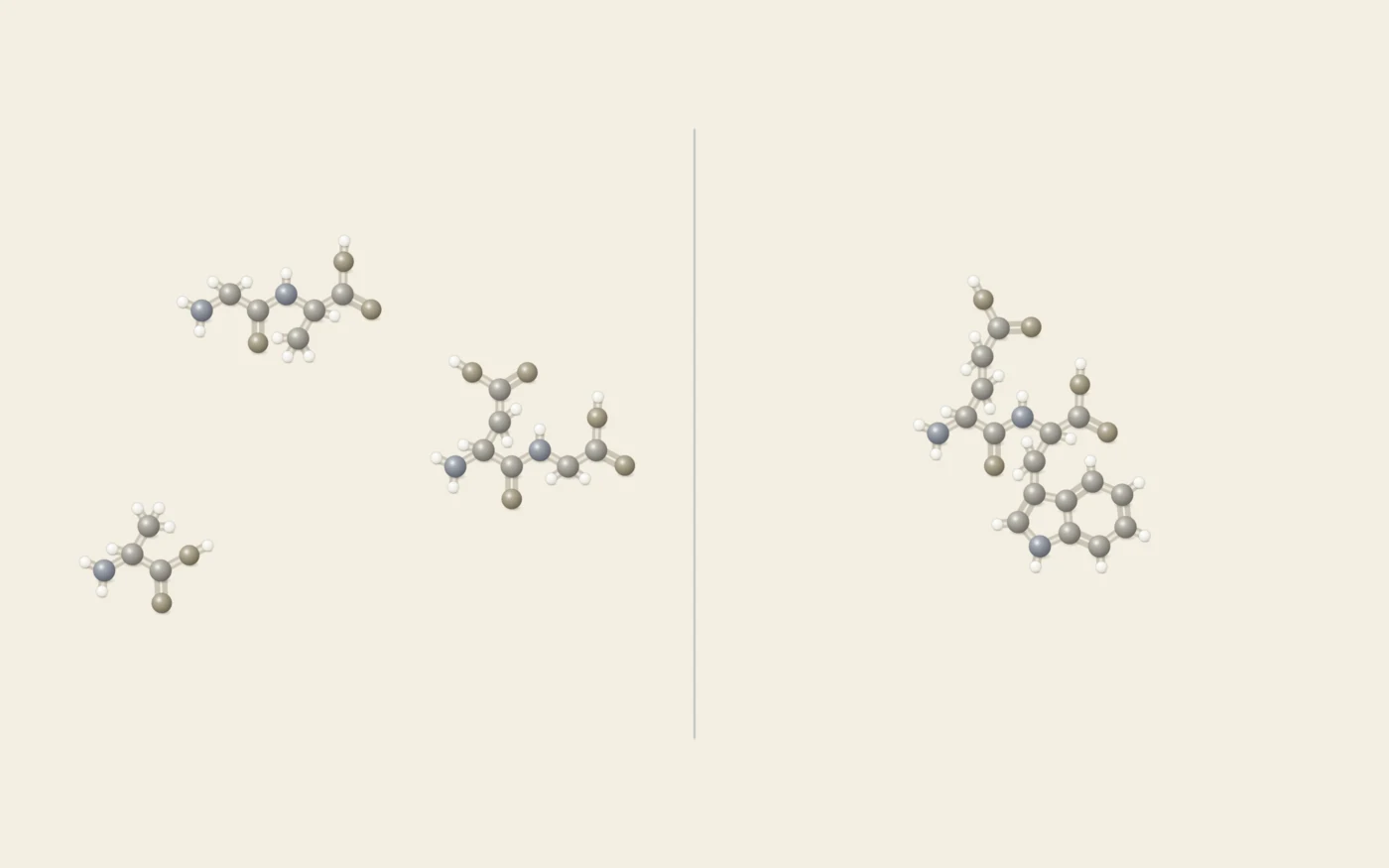
| What it is | Polypeptide extract, a mixture from calf thymus | Single synthetic dipeptide, Glu-Trp (L-glutamyl-L-tryptophan) |
| Origin | Isolated from thymus glands of young calves | The active fragment isolated from Thymalin, then synthesised |
| Molecular definition | Complex, batch-variable, harder to standardise | Clean, defined, reproducible, no animal tissue |
| Format | Injectable only (intramuscular) | Injectable (IM) and intranasal solution/spray |
| Human evidence | Deeper, a multi-year mortality cohort and a COVID-19 RCT | Thinner, small studies, mostly Russian-language, little independent replication |
| Regulatory status | Registered medicine in Russia; not FDA/EMA/MHRA approved | Registered medicine in Russia; not FDA/EMA/MHRA approved |
| Best thought of as | The compound with more studies attached | The cleaner molecule with the thinner file |
Last reviewed: 19 July 2026
Thymalin and Thymogen are the two thymus-derived immune bioregulators people most often confuse, and the confusion is understandable, because one literally came out of the other. Thymalin is the older calf-thymus extract; Thymogen is the single active dipeptide that researchers isolated from that extract and then made synthetically.
They share a lineage, a target organ, and a marketing category, which is exactly why sales pages tend to blur them into one.
They should not be blurred. The honest core of this comparison is a trade-off between two different kinds of quality. Thymalin is the messier molecule with the better human data, including the often-cited long-term work in older patients. Thymogen is the cleaner, defined molecule with a markedly thinner human evidence base of its own.
Neither is approved in the UK, US, or EU, and both reach Western buyers only through the grey market. This page is education, not a recommendation to obtain or dose either one.
Thymalin vs Thymogen: The Short Answer
If what you care about is the weight of human evidence, Thymalin wins. Not because its studies are high quality by Western standards, but because it simply has more attached to it: a multi-year mortality cohort and a randomised COVID-19 trial.
If what you care about is a defined, reproducible molecule with no animal-tissue variability and a needle-free format option, Thymogen wins.
Put plainly: when we trace it, most of the deeper human immunocorrection data that people cite for “thymus peptides” belongs to Thymalin, the extract, not to Thymogen, the dipeptide. Anyone selling you Thymogen on the strength of Thymalin’s cohort studies is laundering one compound’s evidence into the other’s column.
Keeping those two files separate is the single most useful thing a buyer can do here. Neither, it should be said, has independent Western trial evidence for the everyday immune-boosting use most people are actually contemplating.
What Thymalin Is Best For
Thymalin’s case rests on having the strongest human literature in the whole bioregulator range, with the caveat, repeated on its own page, that “strongest in this field” is still weak by Western standards.
The headline is a long-term study in which Khavinson and Morozov followed 266 elderly people given thymus (Thymalin) and pineal peptide preparations in annual courses over a 6–8 year period, reporting mortality in the Thymalin group roughly 2.0–2.1 times lower than untreated controls.¹
It is the best human signal in the category. When we traced the mortality claim, though, it led back to the group that developed the drug, and it has never been independently replicated.
More recently, Thymalin was tested in a single-blind randomised controlled trial of 80 older patients with severe COVID-19, where the treated group showed faster normalisation of lymphocyte counts, C-reactive protein, and other immune markers.²
That is a real randomised trial and a reasonable proof-of-concept for the immunomodulation story. It is also, again, small, single-centre, and run by the originating group.
So Thymalin is “best for” the reader who wants the compound with the most human studies behind it and is willing to accept an animal-derived, injectable-only, unstandardised product to get them.
The life-extension claim in particular is the most exciting thing here and the least secure. Our read is that a single, non-independent study is a promising lead, not an established fact.
What Thymogen Is Best For
Thymogen’s case is the mirror image: it trades depth of human evidence for molecular cleanliness and format flexibility.
Because it is a synthetic dipeptide, just glutamic acid joined to tryptophan: it can be manufactured to a defined standard rather than extracted from tissue batch by batch. That removes the biological variability that dogs the extract, and the theoretical immunogenicity and prion questions that come with animal-derived preparations.
When the marketing calls Thymogen “cleaner” than Thymalin, that specific claim is fair.³ It is also the more practical format for the needle-averse: alongside the intramuscular injection, Thymogen exists as an intranasal solution, which Thymalin does not.
Its own human data is thinner and narrower.
The clearest example in the recent literature is a study of 50 patients with severe psoriasis given intramuscular Thymogen, where mean PASI severity scores reportedly fell by around 70% over three weeks.⁵ That is an encouraging signal for a specific inflammatory condition, not independent, placebo-controlled evidence for general immune support.
Thymogen is “best for” the reader who prioritises a defined, consistent molecule and possibly a needle-free option, and who is honest with themselves that the deep human file belongs to the other compound.
How Thymalin and Thymogen Compare on Evidence
This is where the two genuinely diverge, so we will be blunt. The comparison is not “strong vs weak”: it is more human data, lower standardisation (Thymalin) versus cleaner molecule, thinner human data (Thymogen).
Both share the same structural weaknesses: the human studies are overwhelmingly from or near the originating Russian group, small, frequently single-blind or open, and rarely replicated by independent Western teams. Where they differ is depth.
Thymalin carries the 266-patient long-term mortality cohort¹ and the 80-patient COVID-19 RCT.²
Thymogen’s specific human evidence is largely the small psoriasis study⁵ and scattered reports, sitting on top of a more developed preclinical base. That base includes a rodent study in which the dipeptide L-Glu-L-Trp was reported to slow ageing markers and reduce spontaneous tumours over a year of dosing.⁴
Consistent animal data on top of thin human data is an honest place for a compound to be. Our read is that it earns cautious interest, not confidence, and the rat longevity finding is a long way from any human claim.
One mechanistic point is worth flagging because it favours neither in outcome terms, yet it is worth understanding: in the original comparative work, both preparations enhanced T-cell differentiation and cytokine production, but the synthetic dipeptide lacked the antioxidant effects of the natural extract.³
The extract is not simply “Thymogen plus filler”. The mixture may do things the isolated fragment does not, which is part of why the deeper data still attaches to Thymalin.
How Thymalin and Thymogen Compare on Format and Dosing
The formats are not interchangeable, and the difference is one of the more practical reasons to choose between them.
Thymalin is injectable only.
It ships as a lyophilised powder reconstituted immediately before intramuscular injection, studied and prescribed as short pulsed courses, typically around 10 mg once daily for 5–10 days, sometimes repeated annually rather than run continuously.¹ There is, functionally, no oral Thymalin; the oral thymus-peptide product is a separate compound, Vladonix, with far less behind it.
Thymogen offers two routes: an intramuscular injection and an intranasal solution. As prescribed in Russia it is given in short courses, commonly a low-microgram intramuscular dose (on the order of 100 µg) once daily, or the nasal solution daily, for roughly three to ten days.
The nasal option is lower-intensity and needle-free, which is part of its appeal.
Both figures describe how each compound has been studied and prescribed under supervision in one country. They are not our recommendation to self-administer, and neither drug’s “just add it to your stack indefinitely” framing survives contact with the literature, which uses pulsed courses throughout.
If you want a thymus bioregulator without any injection at all, Thymogen’s nasal route or the oral Vladonix capsule are the honest options to weigh, with the reminder that ease of format and weight of evidence point in different directions here.
Which Should You Choose?
There is no clean winner, so match the compound to what you actually value.
Choose Thymalin if the depth of human evidence is what moves you, and you accept an animal-derived, injectable-only, batch-variable product to get the compound with the multi-year cohort¹ and the COVID-19 RCT² attached.
It is the better choice for the reader who wants “the one with the most studies,” eyes open to the fact that those studies are non-independent.
Choose Thymogen if you prioritise a defined, reproducible molecule with no animal-tissue variability, or you want a needle-free nasal option. You are choosing molecular cleanliness over depth of data, a legitimate preference, provided you do not import Thymalin’s results to justify it.
Choose neither yet if your goal is general immune “optimisation” in an already-healthy adult. For that specific use, both compounds are extrapolations well beyond where their data goes, and neither has independent Western evidence to support it.
That decision, like any immune-modulating one, belongs with a qualified clinician, not a forum thread or a supplier’s website, particularly for anyone with an autoimmune condition or on immune-active medication.
Frequently Asked Questions
Is Thymogen the same as Thymalin?
No. Thymalin is the calf-thymus extract, a mixture of polypeptides. Thymogen is the single synthetic dipeptide (Glu-Trp) that researchers isolated from that extract and then reproduced synthetically. Thymogen is the cleaner, more defined molecule; Thymalin carries the deeper human evidence. Don’t treat the two evidence bases as one.
Which has better evidence, Thymalin or Thymogen?
Thymalin has more human data attached, a 266-patient long-term mortality cohort¹ and an 80-patient COVID-19 randomised trial.² Thymogen’s own human evidence is thinner, largely a small psoriasis study⁵ plus preclinical work. Both come mostly from the originating Russian group and lack independent Western replication, so “better” here means “more,” not “high quality.”
Is Thymalin or Thymogen better for immune support?
Neither has independent Western trial evidence for general immune support in a healthy adult. Thymalin has the deeper (if non-independent) human file; Thymogen has the cleaner molecule and a needle-free nasal format. The right choice depends on whether you value depth of data or molecular definition, a decision to make with a clinician.
Can you take Thymalin or Thymogen without injections?
Thymalin is injectable only. Thymogen also comes as an intranasal solution, which is needle-free. If you want a fully oral thymus-peptide option, that is a different compound, Vladonix, with far less evidence behind it.
Are Thymalin and Thymogen approved in the UK or US?
No. Both are registered medicines in Russia but are not approved by the MHRA, FDA, or EMA. Buying and using either outside its approved market is unregulated and at your own risk.
Author: Bioregulator Peptides Editorial Team
Last reviewed: 19 July 2026
References
- Khavinson VKh, Morozov VG. Peptides of pineal gland and thymus prolong human life. Neuro Endocrinol Lett. 2003;24(3-4):233–240. PMID: 14523363. https://pubmed.ncbi.nlm.nih.gov/14523363/ (Controlled long-term follow-up of 266 elderly subjects given Thymalin and Epithalamin in annual courses over 6–8 years; conducted and published by the originating group, not independently replicated.)
- Kuznik BI, Khavinson VKh, Shapovalov KG, et al. Peptide Drug Thymalin Regulates Immune Status in Severe COVID-19 Older Patients. Advances in Gerontology. 2021;11(4):368–376. DOI: 10.1134/S2079057021040068. (Prospective, single-blind, randomised controlled trial; n=80, 36 Thymalin + standard care vs 44 standard care. Not PubMed-indexed; verified via publisher.)
- Morozov VG, Khavinson VK. Natural and synthetic thymic peptides as therapeutics for immune dysfunction. International Journal of Immunopharmacology. 1997;19(9–10):501–505. PMID: 9637345. DOI: 10.1016/S0192-0561(97)00058-1. https://pubmed.ncbi.nlm.nih.gov/9637345/
- Anisimov VN, Khavinson VK, Morozov VG. Immunomodulatory synthetic dipeptide L-Glu-L-Trp slows down aging and inhibits spontaneous carcinogenesis in rats. Biogerontology. 2000;1(1):55–59. PMID: 11707921. DOI: 10.1023/A:1010042008969. https://pubmed.ncbi.nlm.nih.gov/11707921/
- Deigin V, Linkova N, Vinogradova J, et al. The First Reciprocal Activities of Chiral Peptide Pharmaceuticals: Thymogen and Thymodepressin, as Examples. International Journal of Molecular Sciences. 2024;25(9):5042. DOI: 10.3390/ijms25095042. PMCID: PMC11084461. https://pmc.ncbi.nlm.nih.gov/articles/PMC11084461/
Dosing and contraindication statements reflect Russian prescribing practice for Thymalin and Thymogen as described in the cited literature; verify against the current manufacturer label for the buyer’s jurisdiction before relying on them.
Medical disclaimer. This article is for education and research information only. It is not medical advice, and nothing here is a recommendation to obtain, dose, or self-administer Thymalin, Thymogen, or any peptide. Both are registered medicines only in the jurisdictions where they are approved and are unregulated elsewhere. Immunomodulators can alter immune function in ways that matter for people with autoimmune conditions or on immune-active medication, consult a qualified medical professional before making any health decision. Statements about benefits reflect the current research literature, including its limitations, and have not been evaluated by the FDA, MHRA, or EMA.