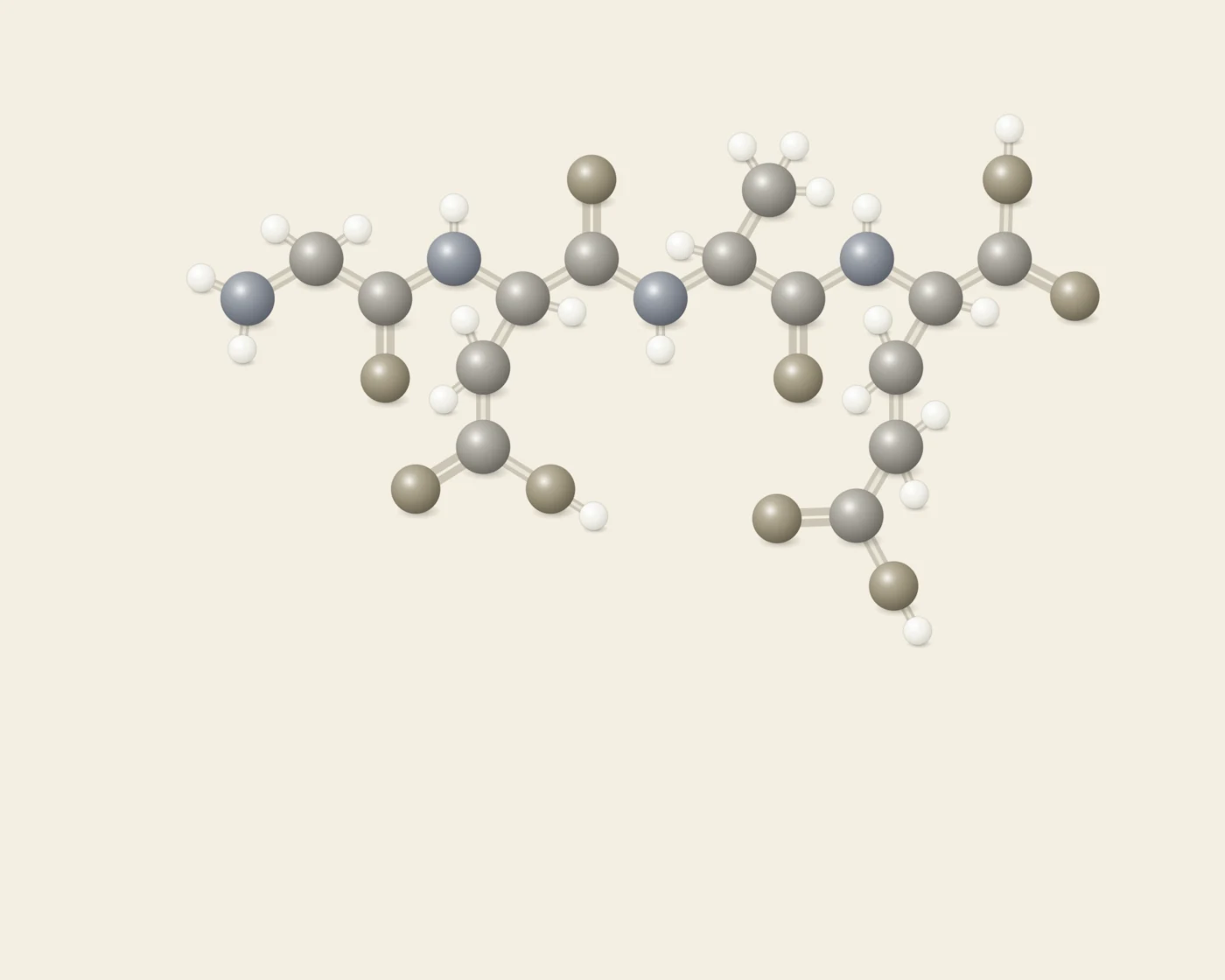
What Pielotax is
Pielotax is the kidney-directed capsule in the oral Cytomax range: a low-molecular-weight peptide fraction extracted from the kidney tissue of young calves, pressed into a capsule and sold to people worried about ageing kidney and urinary function. It comes out of Khavinson's St Petersburg school of bioregulators.
Before anything else, it matters to you that Pielotax is an organ extract, not a defined synthetic peptide. It is a mix of short peptides and amino acids drawn from tissue, so its exact composition is not a single published formula the way a lab-made peptide is.
That is why Pielotax cannot simply borrow the evidence of the synthetic kidney peptides it is related to. It is not made the way they are made, and it cannot be checked the way they can.
Pielotax is a Cytomax extract, not a Cytogen synthetic
The bioregulator range splits in two. Cytomax products like Pielotax are the crude tissue extracts. Cytogen products are the short synthetic peptides, made to a single defined sequence in a lab.
Almost all of the real kidney-peptide research was run on synthetic peptides and on an injected calf-kidney complex, not on the swallowed Cytomax capsule you are likely to be sold. When a listing lends that research to Pielotax, it is quietly swapping one product for another.
Why a kidney peptide raises the stakes
Kidney function is a sensible thing to care about as you age. Filtration drifts down across adult life, the kidneys do quiet work you only notice when it fails, and there is no over-the-counter lever that convincingly protects them.
A capsule that claims to restore kidney function lands straight into that gap. Impaired kidneys also change how your body clears everything else you take, so the stakes here are not the usual supplement stakes.
02 / MechanismHow Pielotax is proposed to work in the kidneys
The premise, shared across the whole bioregulator family, is that peptides drawn from a specific organ carry signalling information relevant to that same organ in the person who takes them. For Pielotax, kidney peptides are meant to speak to your kidneys.
The renal cytomedin idea behind Pielotax
These tissue extracts were originally called cytomedins: peptide fractions thought to regulate the tissue they came from. A renal cytomedin was reported to normalise blood coagulation and lipid peroxidation in 30 rats with experimental Heymann nephritis, an induced kidney disease.1
That is a real 1991 result, and it is the historical root of Pielotax. It is also a rat model of the injected extract, which is a long way from an oral capsule in your body.
How the synthetic kidney peptides are said to bind DNA
The proposed upstream mechanism is that these short peptides enter the cell and bind specific sequences in the DNA double-helix, shifting which genes are read. In renal cell culture, models were constructed showing the peptides AED and EDL form their most favourable complexes with a repeating d(ATATATATAT) sequence in the minor groove of DNA.2
Note the sleight of hand this invites. The DNA-binding and gene-expression work was done on synthetic tripeptides, AED and EDL, not on the calf-kidney extract inside a Pielotax capsule. The mechanism belongs to the Cytogen peptides, and it gets loaned to the Cytomax product.
What the mechanism does not tell you
Even taken at face value, a peptide binding DNA in a dish says nothing about whether an oral fraction survives your gut, reaches your kidney, and does anything measurable there. The mechanism is a hypothesis about how the effect could happen, not evidence that it does.
03 / The evidenceWhat the Pielotax evidence actually shows
The story about Pielotax is a story about borrowed evidence. Real cell and animal work exists, some of it competently done, but none of it tested the Pielotax capsule in a person.
The cell column and the animal column both have entries in them. The human column is empty, and the entries in the other two were made by different compounds.
Kidney peptides in cell and in-vitro studies
A polypeptide complex isolated from calf kidney, plus the short peptides AED and EDL, was tested on ageing primary kidney cell cultures. The complex and AED activated cell-renewal markers such as Ki-67 and p53, while EDL acted on the matrix enzyme MMP-14.3 The closest study to the material in Pielotax, and a dish.
A companion paper reported that AED and EDL increased cell proliferation in ageing renal cell culture, lowered the ageing markers p16, p21 and p53, and raised SIRT-6.2 A coherent anti-senescence signal, in cultured cells, from the synthetic peptides rather than the extract.
That is a tidy in-vitro story about kidney-derived peptides nudging renal cells towards renewal. None of it is evidence that a capsule does anything in you.
Animal studies on the kidney peptide complex
In rats with cisplatin-induced acute renal failure, a polypeptide complex from the kidney and the peptides EDL and AEDG normalised diuresis, creatinine in the urine, glomerular filtration rate and sodium resorption. The authors reported that EDL produced a potent nephroprotective effect.4
EDL peptide was reported to protect rat kidneys against gentamicin-induced nephropathy and ischaemia-reperfusion injury, preventing oliguria and azotemia and reducing proteinuria.5 A second, consistent animal result for the synthetic peptide, not the extract.
In old rats, a polypeptide kidney complex and peptides AED and EDL increased diuresis by 1.2 to 1.4 times, and reduced urine protein and its excretion by 1.5 to 2.8 times. The peptide AEDG reduced glomerular filtration rate by 21 per cent.6 The authors judged the peptides free of nephrotoxic effects in this model.
The animal signal for kidney-directed peptides is real and internally consistent, and we rate it the strongest part of this file. It was also carried by injected synthetic peptides and an injected complex, in rats, from one collaborating group. None of it was the Pielotax capsule.
Human studies on Pielotax: the short version
PubMed indexes no human efficacy trial of Pielotax, the oral kidney capsule, in any language. Not a randomised trial, not an open-label cohort, not a case series.
Everything above was cells and rats. So when a vendor tells you Pielotax supports kidney health, understand that the human column is empty, and the animal and cell columns are filled by different products.
What remains unproven
No human evidence shows that swallowing Pielotax improves kidney function, slows kidney ageing, or protects against kidney disease.
The supportive data belongs to injected synthetic peptides and an injected extract, in animals and cell culture. We would not call the capsule fraudulent. We would say the evidence sold with it was generated using something you are not buying, by a route you are not using.
04 / Benefits by evidencePielotax benefits: the claims, and what the evidence supports
Restoring human kidney function is the line printed on the box, and no human study of Pielotax stands behind it. The two claims underneath are real findings about something other than the capsule.
Real in cell culture, for the related peptides. AED, EDL and a calf-kidney complex shifted renewal and senescence markers in cultured renal cells.2,3 Whether an oral capsule reproduces any of that in your kidney is untested.
Demonstrated in rat models of acute kidney injury, again mostly for injected EDL.4,5 Suggestive, single-source, and a long step from a person taking capsules to prevent everyday kidney ageing.
Unsupported. This is the headline claim on sales pages, and it rests on zero human studies of Pielotax. Treat any promise to restore your kidney function as marketing, not a finding.
Fixing your kidneys, the claim on the front of the box, has no human evidence at all. That kidney peptides can influence renal cells in a dish is the one thing here that holds up.
05 / Dosage and protocolPielotax dosage and protocol
No clinical trial has ever set a dose for the Pielotax capsule. What follows is label convention, and a label convention is a poor thing to titrate against when the organ in question is the one that clears what you take.
The capsule dose and course length as sold
Vendor labelling commonly suggests one to two capsules daily for a course of around one month, repeated a few times a year. The typical capsule is stated at roughly 10 mg of the peptide complex, though this is a label figure, not a tested dose.
Why the research doses do not transfer
The kidney studies you might see cited used injected material in rats: a polypeptide complex or synthetic peptides given by injection, at animal doses, for short courses.4,5,6 There is no way to convert those into a capsule dose for a person.
So a page presenting a Pielotax dosing schedule as clinically established is dressing label convention up as science. Nobody knows the right human dose, because nobody has run the trial.
Does an oral kidney peptide survive digestion?
Pielotax is oral by design, which raises the obvious problem for any peptide: how much of a kidney-derived peptide fraction survives digestion, reaches the bloodstream and acts on your kidney is unestablished. The work that showed an effect largely bypassed the gut with an injection.
06 / Safety and side effectsPielotax safety and side effects
The animal work reported the kidney peptides as well tolerated, with the 2018 old-rat study noting an absence of nephrotoxic effects in that model.6 That is a finding about rats, and about injections.
Why "well tolerated" in rats says little about side effects
Those were short animal studies looking for benefit, not human safety trials looking for harm. There is no human safety data on Pielotax at all. Absence of reported harm in a handful of rat experiments is not evidence that a capsule is safe for you over months or years.
Pielotax with reduced kidney function: the real hazard
If you have reduced kidney function, or diagnosed chronic kidney disease, the kidney is exactly the organ where a wrong decision is dangerous, because impaired kidneys change how your body handles everything else you take.
Reaching for an unregulated capsule instead of getting your kidney function properly measured is the real hazard here. A falling filtration rate is something a clinician should assess with blood and urine tests, not something to self-treat on the strength of a rat study.
The unregulated risk in a calf kidney extract
Then there is the product itself. Pielotax is an animal-tissue extract sold as an unregulated supplement, so what is actually in the capsule, its purity and its consistency between batches are not guaranteed by any medicines regulator.
Pielotax contraindications: who should not use it
Anyone with existing kidney disease or reduced kidney function, without a doctor's involvement; anyone who is pregnant or breastfeeding, since it is untested there; and anyone tempted to use it in place of proper investigation of a kidney problem.
Kidney function is one of the few things on this page that can actually be measured. Get a filtration rate and a urine protein result from a doctor before you decide anything about a capsule. We would do that first, whatever you then choose to buy.
07 / SourcingWhere to buy Pielotax safely in the UK
Because Pielotax is an extract rather than a defined molecule, you cannot verify it the way you can verify a synthetic peptide. There is no single sequence and mass to check it against, which is a real limitation you should carry into any purchase.
What you can and cannot verify about Pielotax purity
You can look for a reputable manufacturer, a batch number, and any certificate stating the peptide content and confirming the material is free of contamination. What you cannot do is confirm that a crude tissue fraction contains the specific active peptides the marketing implies, because those are the synthetic ones from separate studies.
Watch the claim, not just the capsule
The most useful check is on the language. If a listing cites nephroprotection or DNA-binding research to sell you Pielotax, remember that work used injected synthetic peptides or an injected complex, not this oral capsule.2,4,6
A vendor borrowing that evidence for a capsule is not lying about the studies existing. They are letting you assume the studies were about the thing in your hand, and they were not. We hold that omission against a seller.
08 / ComparisonPielotax versus the synthetic kidney peptides
The instructive comparison is not Pielotax against another organ capsule, but Pielotax against the synthetic peptides it borrows from. EDL, a defined tripeptide, is the compound that actually carried the nephroprotection and cell-culture results.3,4,5 Pielotax is the crude calf-kidney extract that shares a research programme with it but not its evidence.
Against the rest of the bioregulator family, Pielotax sits with the other Cytomax organ extracts: same premise, same thin human evidence, same oral-capsule question about what survives digestion.
If you want to see how the kidney capsule lines up against the other organ-directed bioregulators and their synthetic counterparts, our types of bioregulators guide sets them side by side.
Frequently asked questions about Pielotax
Is there clinical evidence for Pielotax?
No. PubMed indexes no human efficacy trial of the Pielotax capsule. The supporting research was done in rats and in kidney cell cultures, and mostly used injected synthetic peptides or an injected calf-kidney complex, not the oral capsule.
What is Pielotax made from?
It is a low-molecular-weight peptide fraction extracted from the kidney tissue of young calves: a mix of short peptides and amino acids, not a single defined molecule. That is why its exact composition is not published the way a synthetic peptide's sequence is.
Pielotax vs EDL peptide: what is the difference?
EDL is a defined synthetic tripeptide that carried most of the kidney research, including the nephroprotection and cell-renewal results. Pielotax is the crude calf-kidney extract from the same programme. They are related, but the studies you see cited were largely run on EDL, not on the capsule.
What is the recommended Pielotax dosage?
There is no validated human dose. Vendor labelling commonly suggests one to two capsules a day for about a month, repeated a few times a year, with capsules often stated at around 10 mg. These are conventions from the label, not doses established in a trial.
What is Pielotax used for?
It is sold for kidney and urinary support in ageing. Kidney-directed peptides showed nephroprotection in rat models of acute injury, but that was injected peptide in animals, and there is no human evidence that the oral capsule protects or restores kidney function. Treat a restoration claim as marketing.
Is Pielotax safe for people with chronic kidney disease?
This is exactly the situation to be cautious about. There is no human safety data, and reduced kidney function changes how your body handles what you take. If your kidneys are impaired, this is a conversation for your doctor before anything goes in your mouth.
Is Pielotax a licensed medicine in the UK?
No. Pielotax is sold as a food supplement and is not approved by the FDA, EMA or MHRA. It is not evaluated as a treatment for any kidney condition, and using it is unregulated and at your own risk.
Can Pielotax replace seeing a doctor about a kidney problem?
No. A change in kidney function is something a clinician should measure with blood and urine tests. Using an unregulated capsule in place of that assessment is the real risk with this product, not the peptide itself.
Is Pielotax the same as Bioregulator A-9 or BioKidney?
Vendors present them as the same thing: a calf-kidney peptide complex sold under different names. Listings use A-9, Bioregulator 9, BioKidney and the spelling Pyelotax. You cannot confirm they are identical material, because a tissue extract has no published specification to compare one against another.
What do Pielotax reviews actually tell you?
They tell you how people felt on the capsule, not whether it changed their kidney function, because no trial has measured that. There is no published human efficacy trial of Pielotax, so a review is a personal impression, not an endpoint. Purity and batch consistency are not guaranteed either.
- Mishchenko VP, Kaĭdashev IP, Silenko IuI, Khavinson VKh. [Effect of renal peptides-cytomedins on blood coagulation and lipid peroxidation in experimental Heymann nephritis]. Patol Fiziol Eksp Ter. 1991;(5):35–36. PMID: 1806891.
- Khavinson VKh, Tarnovskaia SI, Lin'kova NS, et al. [Tripeptides slow down aging process in renal cell culture]. Adv Gerontol. 2014;27(4):651–656. PMID: 25946838.
- Khavinson VKh, Lin'kova NS, Polyakova VO, et al. Peptides regulate expression of signaling molecules in kidney cell cultures during in vitro aging. Bull Exp Biol Med. 2014;157(2):261–264. PMID: 24958378.
- Zamorskii II, Shchudrova TS, Lin'kova NS, Nichik TE, Khavinson VKh. Peptides Restore Functional State of the Kidneys During Cisplatin-Induced Acute Renal Failure. Bull Exp Biol Med. 2015;159(6):736–739. PMID: 26515176.
- Zamorskii II, Shchudrova TS, Lin'kova NS, Nichik TE, Khavinson VK. Nephroprotective Effect of EDL Peptide at Acute Injury of Kidneys of Different Genesis. Bull Exp Biol Med. 2017;163(3):389–393. PMID: 28744634.
- Zamorskii II, Shchudrova TS, Zeleniuk VG, Linkova NS, Nichik TE, Khavinson VK. [The influence of peptides on the morphofunctional state of old rats kidneys]. Adv Gerontol. 2018;31(4):498–504. PMID: 30607912.