What Suprefort is
Suprefort is the pancreas entry in the Cytomax range, the extracted half of Vladimir Khavinson's bioregulator programme. It is an oral capsule made from a crude peptide fraction pulled from the pancreas of young cattle, taken in short courses, and sold for metabolic and blood-sugar support.
What you are buying is an organ extract rather than a defined molecule: a mixture of low-molecular-weight peptides whose composition no vendor publishes and no certificate can pin down.
The extraction technology is real, and the ageing pancreas is a reasonable organ to be interested in. Neither of those facts is evidence that swallowing this extract does anything to your blood sugar.
Suprefort is not Pancragen
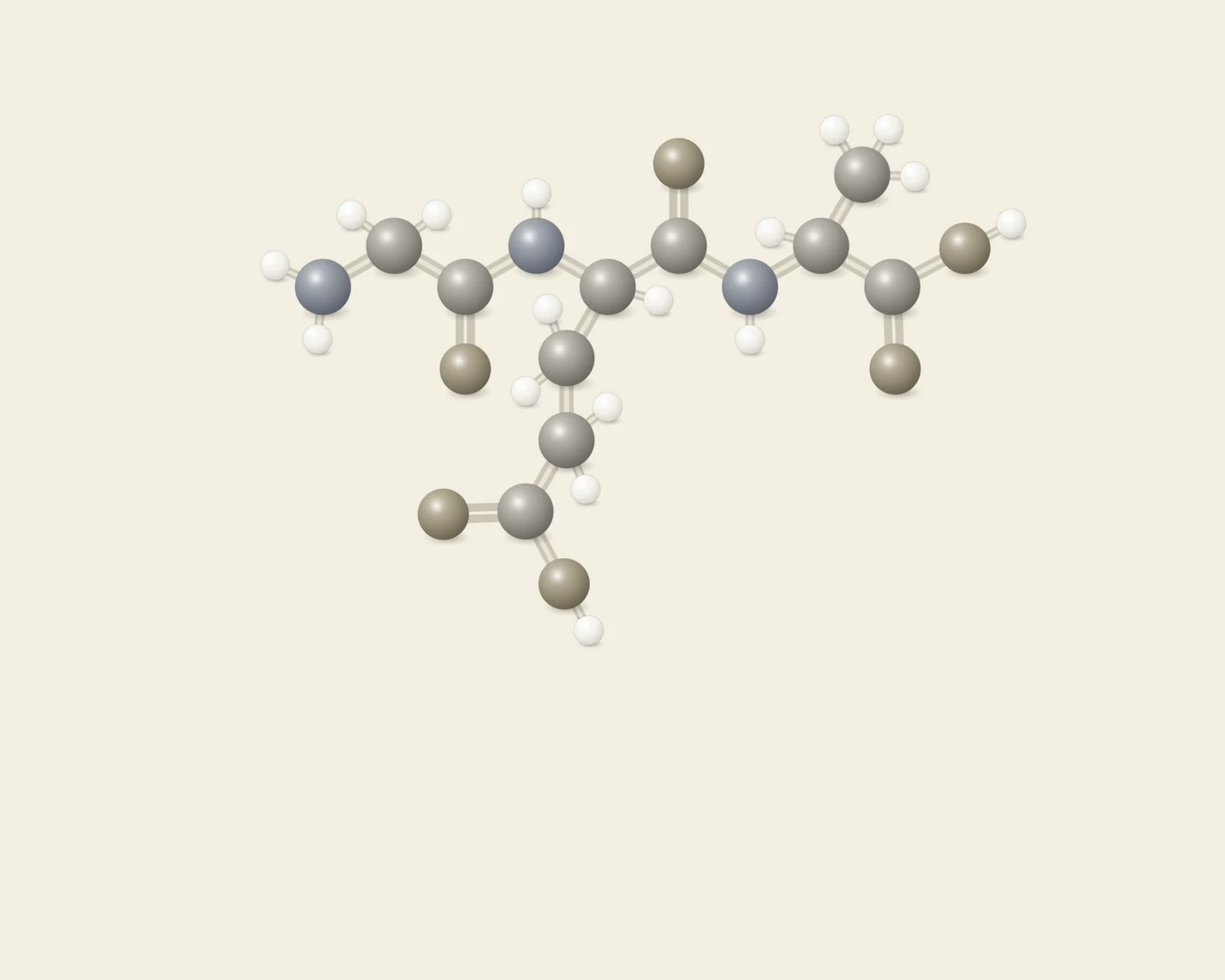
Suprefort is the crude oral cattle-pancreas extract. Pancragen is a different product from the same stable: a single synthetic tetrapeptide, Lys-Glu-Asp-Trp (KEDW), given by injection in the studies.
Nearly all the pancreas-peptide research, the cell work, the rat and monkey studies, the one small human study, was done on Pancragen.1,2,4 A vendor who lends that record to a capsule has swapped one product for another.
So when you read that Suprefort is "clinically studied for glucose metabolism," check whose data that is. On the evidence indexed in PubMed, it is the synthetic sibling's, and the synthetic sibling was injected, not swallowed.
The capsule and sublingual forms: oral only, and unproven that way
Suprefort is sold as capsules and a sublingual version, never as an injectable. A peptide taken by mouth faces digestion in the gut, and how much of an intact signalling peptide survives to reach the pancreas is unestablished for this product.
The Pancragen research that gives the family its reputation mostly used injection.2,7 The route that carries the evidence is not the route Suprefort uses.
02 / MechanismHow Suprefort is proposed to work
One idea sits under the whole Cytomax range: peptides drawn from a specific organ are said to carry signalling information for that same organ, nudging its cells back toward younger behaviour.
For the pancreas, the proposed target is the tissue that makes insulin and manages blood sugar. Whether a crude oral extract delivers anything there is a separate question, and a much weaker one.
The pancreatic differentiation-factor story, and whose it is
The most specific mechanism on offer comes from cell-culture work, and it belongs to Pancragen. In aged human pancreatic cultures, the synthetic tetrapeptide raised the expression of differentiation factors including Pdx1, Pax6, Pax4, Foxa2 and Nkx2.2.4
A companion study reported that it increased markers of functional activity, including MMP2, MMP9, PCNA and Ki67, while decreasing the pro-apoptotic protein p53 in aged pancreatic cells.5 Read as cell biology, that is a coherent, specific mechanism.
Every one of those results used the defined synthetic peptide in a dish, not Suprefort's extract in a person. The mechanism is Pancragen's, borrowed to sell a capsule.
In culture the mechanism is real enough. The leap the marketing makes is from "a synthetic tetrapeptide shifts differentiation markers in a pancreatic cell line" to "this cattle-pancreas capsule supports your blood sugar." That is several unproven steps, not one.
What the Suprefort evidence actually shows
Suprefort's evidence base is Pancragen's evidence base. Every study below tested a synthetic tetrapeptide, usually by injection, and none of them tested the capsule.
Suprefort's own clinical evidence
PubMed indexes no studies of Suprefort, human or otherwise, in any language. Its own supporting document is a small, open-label, manufacturer-run report that was never peer-reviewed, and we count that as no clinical evidence at all.
Pancreatic cell and in-vitro studies (Pancragen, not Suprefort)
Khavinson and colleagues reported that Pancragen stimulated differentiation factors (Pdx1, Ptf1a, Pax6, Pax4, Foxa2, Nkx2.2) in young and aged human pancreatic cultures, and proposed this as its anti-diabetic mechanism.4
A related study reported the tetrapeptide raised MMP2, MMP9, serotonin, PCNA and Ki67 and lowered p53 in aged pancreatic cell cultures.5 Interesting in a dish, and no more than that.
In cultures of human cells, Pancragen tissue-specifically stimulated the differentiation factors CXCL12 and Hoxa3 in pancreatic cells.6 An earlier organotypic-culture screen used it at 0.05 ng/ml.9
Three studies, one laboratory, one tidy in-vitro story about a synthetic peptide. Nothing in it was ever swallowed, and nothing in it was Suprefort's extract.
Animal studies on the pancreas peptide (Pancragen)
In Wistar rats with streptozotocin-induced diabetes, oral Pancragen produced what the authors called a pronounced hypoglycaemic effect, and injected Pancragen normalised the adhesion of mesenteric capillary endothelium without changing permeability.7
A further rat study assessed Lys-Glu-Asp-Trp in streptozotocin diabetes, framed as a model of rapid experimental ageing, by metabolic parameters linked to apoptosis.8
In old female rhesus monkeys, Pancragen at 50 µg per animal per day for 10 days by injection raised the glucose disappearance rate and normalised insulin and C-peptide, an effect that partially remained 3 weeks after dosing stopped.2
A comparison in 9 old rhesus females set Pancragen (0.05 mg per animal per day) against the diabetes drug glimepiride (4 mg per day); both lowered basal glucose, with glimepiride's effect the stronger.3
We rate the monkey work the strongest thing this family has, and it is real animal pharmacology. Every one of these studies injected the synthetic peptide, came from the originating group, and remains unreplicated elsewhere.
Human studies on the pancreas peptide: read the small print
There is exactly one small human study in this set, and it is Pancragen's, not Suprefort's.
Korkushko and colleagues studied 30 healthy older people and 33 with type 2 diabetes; in the diabetic group Pancragen lowered fasting and post-load glucose and reduced insulin and the insulin-resistance index, while nocturnal melatonin was 70% lower than in healthy peers.1
That is a genuine human signal, and we would not dismiss it. It is also small, open-label, single-group, run by the people who developed the peptide, and it tested the injected synthetic rather than the capsule.1
For Suprefort itself the count of indexed human trials is zero. Everything a listing implies about the capsule's metabolic effects is inference from a different molecule given a different way.
What remains unproven
No study indexed in PubMed shows that Suprefort, the oral extract, changes blood sugar, insulin, or pancreatic function in anyone.
That does not make the pancreas an uninteresting target or the extraction fake. It makes Suprefort a product whose entire reputation is on loan from a synthetic sibling that was injected, studied by its makers, and never tested as this capsule.
04 / Benefits by evidenceSuprefort benefits: the claims, and what the evidence supports
What separates the claims below is how many steps of inference each one needs before it reaches you. All three start in the same place, with work done on Pancragen, which is not what is in the capsule.
Most plausible only for the synthetic sibling. Pancragen moved glucose and insulin markers in rats, monkeys and one small human group.1,2,7 None of that was Suprefort, and none of it was oral in people.
Unproven. It rests on the bioregulator hypothesis and on Pancragen's cell-differentiation work,4,5 not on any outcome measured in a person taking the capsule.
Least supported. This is marketing framing built on animal and cell studies of a different molecule. Treat any such claim for Suprefort as a hypothesis with no human capsule data behind it.
Metabolic renewal is the biggest promise and the emptiest. The one claim with real data behind it, a glucose effect, belongs to an injected peptide that is not in the capsule you are being sold.
05 / Dosage and protocolSuprefort dosage and protocol
No dose-finding trial exists for Suprefort. What follows is vendor convention, set down so you can tell it apart from the injected doses used in the Pancragen studies, and it is not a recommendation to dose yourself.
Typical Suprefort dose and course length, per vendor labels
Sold as capsules, Suprefort is commonly taken as one to two capsules a day for ten to fifteen days, with the course repeated once or twice a year. These are Cytomax-tradition and vendor-label figures, not clinical ones.
What the Pancragen research actually dosed
The doses that exist in the literature are Pancragen's, and they are not capsule doses. The monkey work injected 50 µg per animal per day, or 0.05 mg, for 10 days.2,3 The human study used the injected synthetic peptide.1
None of that tells you what an oral extract capsule does or how it should be dosed. A page presenting the injection figures as if they validated the capsule is converting one product's protocol into another's claim.
Oral capsules versus injected Pancragen
The evidence that exists used injection; the product you can buy is oral. How much of a pancreatic peptide fraction survives digestion intact is unestablished, so the oral route is precisely the one the research has not validated.2,7
06 / Safety and side effectsSuprefort safety and side effects
The serious risk attached to Suprefort has nothing to do with what is in the capsule. It comes from the condition the product circles: diabetes, and the medication people take for it.
Diabetes and blood sugar: why the Suprefort framing carries real risk
Diabetes is a diagnosed condition managed with prescribed medicine and monitoring. Marketing a capsule for "blood-sugar support" invites people with that condition to treat it as though it were part of that management.
The synthetic sibling did lower glucose in animals and in one human group.1,2,7 Assume the capsule does the same, skip or reduce a prescribed dose on that assumption, and the harm comes from the missing medication rather than from the peptide.
Nothing here treats diabetes, lowers blood glucose, or replaces insulin or any medication. If you manage diabetes, the person to talk to before adding any supplement is your doctor, and you should not change your treatment on the strength of a capsule.
Side effects of Suprefort: why "well tolerated" is misleading
The manufacturer report describes Suprefort as well tolerated, and the Pancragen studies noted no serious adverse events.3 No side-effect profile has ever been catalogued for the capsule, because no study has gone looking for one.
None of those were safety trials. They were small, short, and looking for a benefit signal in glucose numbers.
A crude extract taken in repeated annual courses over years is not a use anyone has studied for a fortnight, let alone a decade. Nothing has been reported because nothing has been recorded.
The risks of a crude pancreas extract
A crude cattle-pancreas extract raises questions of source-tissue quality, contamination and honest labelling. An unregulated supplement carries no guarantee that the box and the contents agree, and no route by which you could find out.
Who should be especially cautious with Suprefort
Anyone managing diabetes or on glucose-lowering medication, given the blood-sugar framing; anyone pregnant or breastfeeding, since it is untested there; and anyone inclined to substitute a capsule for prescribed care. Any of those situations is a conversation with the clinician who holds your blood results.
07 / SourcingWhere to buy Suprefort safely in the UK
Suprefort is an extract, not a defined molecule, and that shapes what you can and cannot verify. You cannot ask for a sequence and mass to confirm identity, because there is no single sequence; it is a mixture.
What to check before you buy Suprefort
Buy from vendors who are specific about the source tissue and manufacturing, who publish any testing they do, and who do not dress the capsule in Pancragen's trial data. Treat a price far below the market as a warning to you, not a bargain.
The pancreas extract versus the synthetic Pancragen peptide
If a listing leans on glucose-metabolism research, monkey studies or a human trial, that work is Pancragen's, the injected synthetic tetrapeptide, and a Suprefort capsule is not the thing that was studied.1,2,3
Neither is wrong to buy, but you should know which one is in your hand and what evidence really attaches to it. For the capsule, in our reading, that evidence is close to none.
08 / ComparisonSuprefort versus Pancragen and the Cytomax range
Suprefort sits in the extracted Cytomax line, alongside organ capsules such as the thymus, prostate and brain entries, all built on the same bioregulator idea and the same thin capsule-level evidence. You can see the whole range on our types of bioregulator guide.
Its closest and most confusing neighbour is Pancragen: same programme, same organ, but a defined synthetic tetrapeptide given by injection, and the holder of essentially all the pancreas-peptide research.1,2,4 Suprefort borrows that record; Pancragen earned it. Hold the two names apart and most of the marketing for the capsule falls away with them.
Frequently Asked Questions
What is Suprefort made from?
It is a crude peptide fraction extracted from the pancreas of young cattle, sold as an oral capsule. That is an organ extract rather than a defined molecule, so you cannot ask a vendor for a sequence and mass to confirm what you have. Pancragen, by contrast, is a single synthetic tetrapeptide.
What is the difference between Suprefort and Pancragen?
The molecule and the route. Suprefort is a crude oral cattle-pancreas extract. Pancragen is a synthetic tetrapeptide, Lys-Glu-Asp-Trp, given by injection in the studies. They share a programme and an organ, but the pancreas-peptide research is Pancragen's, not Suprefort's.1,2
Can Suprefort help with type 2 diabetes or blood sugar?
No study indexed in PubMed shows Suprefort changes blood sugar in anyone. The glucose effects you read about were shown with injected Pancragen in rats, monkeys and one small human group.1,2,7 Suprefort is not a diabetes treatment, and you should not change prescribed medication for it.
Is there any clinical evidence for Suprefort?
No. A PubMed search for Suprefort returns no indexed studies of any kind. Its own supporting document is a small, open-label, manufacturer report that was never peer-reviewed.
What is the recommended Suprefort dosage?
There is no validated dose. Vendors commonly suggest one to two capsules a day for ten to fifteen days, once or twice a year. That is Cytomax tradition, not a clinically established dose.
Does the oral route work for Suprefort?
Oral is the only form, but it is also the route the research did not use. The Pancragen studies mostly injected the peptide,2,7 and how much of an oral pancreatic extract survives digestion is unestablished.
Can you take Suprefort with other bioregulators?
There is no combination or interaction data for Suprefort with any other bioregulator, so vendor stacking suggestions are convention, not evidence. A PubMed search returns no indexed Suprefort studies of any kind, which covers combinations too. If you take prescribed medicine, ask your doctor before adding it.
Is Suprefort safe?
The reports that exist call it well tolerated, but none were safety trials, so that means little. The real risk is behavioural: treating a blood-sugar supplement as if it managed diabetes. If you have a metabolic condition, talk to your doctor first.
Is Suprefort legal in the UK?
It is not an approved medicine in the UK, US or EU, and is not evaluated by the MHRA, FDA or EMA. It is sold as a supplement or peptide bioregulator, so nobody has assessed whether it does what the listing says before you swallow it.
Where can I buy Suprefort in the UK?
Not from a UK pharmacy: it is not an approved medicine here, so it is sold as a supplement by specialist peptide retailers. Buy from vendors who name the source tissue and publish their testing, and treat a price far below the market as a warning. Our where to buy guide has more.
- Korkushko OV, Khavinson VKh, Shatilo VB, Antonyk-Sheglova IA, Bondarenko EV. Prospects of using pancragen for correction of metabolic disorders in elderly people. Bull Exp Biol Med. 2011;151(4):454–456. PMID: 22448364.
- Goncharova ND, Ivanova LG, Oganian TE, Vengerin AA, Khavinson VKh. Impact of tetrapeptide pancragen on endocrine function of the pancreas in old monkeys. Adv Gerontol. 2014;27(4):662–667. PMID: 25946840.
- Goncharova ND, Ivanova LG, Oganyan TE, Vengerin AA, Khavinson VK. Correction of impaired glucose tolerance using tetrapeptide (Pancragen) in old female rhesus monkeys. Adv Gerontol. 2015;28(3):579–585. PMID: 28509500.
- Khavinson VKh, Durnova AO, Polyakova VO, Tolibova GH, Linkova NS, Kvetnoy IM, et al. Effects of pancragen on the differentiation of pancreatic cells during their ageing. Bull Exp Biol Med. 2013;154(4):501–504. PMID: 23486591.
- Khavinson VKh, Sevost'ianova NN, Durnova AO, Lin'kova NS, Tarnovskaia SI, Dudkov AV, et al. Tetrapeptide stimulates functional activity of the pancreatic cells in aging. Adv Gerontol. 2012;25(4):680–684. PMID: 23734516.
- Khavinson VKh, Linkova NS, Polyakova VO, Kheifets OV, Tarnovskaya SI, Kvetnoy IM. Peptides tissue-specifically stimulate cell differentiation during their aging. Bull Exp Biol Med. 2012;153(1):148–151. PMID: 22808515.
- Khavinson VKh, Gavrisheva NA, Malinin VV, Chefu SG, Trofimov EL. Effect of pancragen on blood glucose level, capillary permeability and adhesion in rats with experimental diabetes mellitus. Bull Exp Biol Med. 2007;144(4):559–562. PMID: 18642713.
- Khavinson VKh, Gapparov MM, Sharanova NE, Vasilyev AV, Ryzhak GA. Study of biological activity of Lys-Glu-Asp-Trp-NH2 endogenous tetrapeptide. Bull Exp Biol Med. 2010;149(3):351–353. PMID: 21246099.
- Zakutskiĭ AN, Chalisova NI, Ryzhak GA, Aniskina AI, Filippov SV, Zeziulin PN. The tissue-specific effect of synthetic peptides-biologic regulators in organotypic tissue culture in young and old rats. Adv Gerontol. 2006;19:93–96. PMID: 17152728.