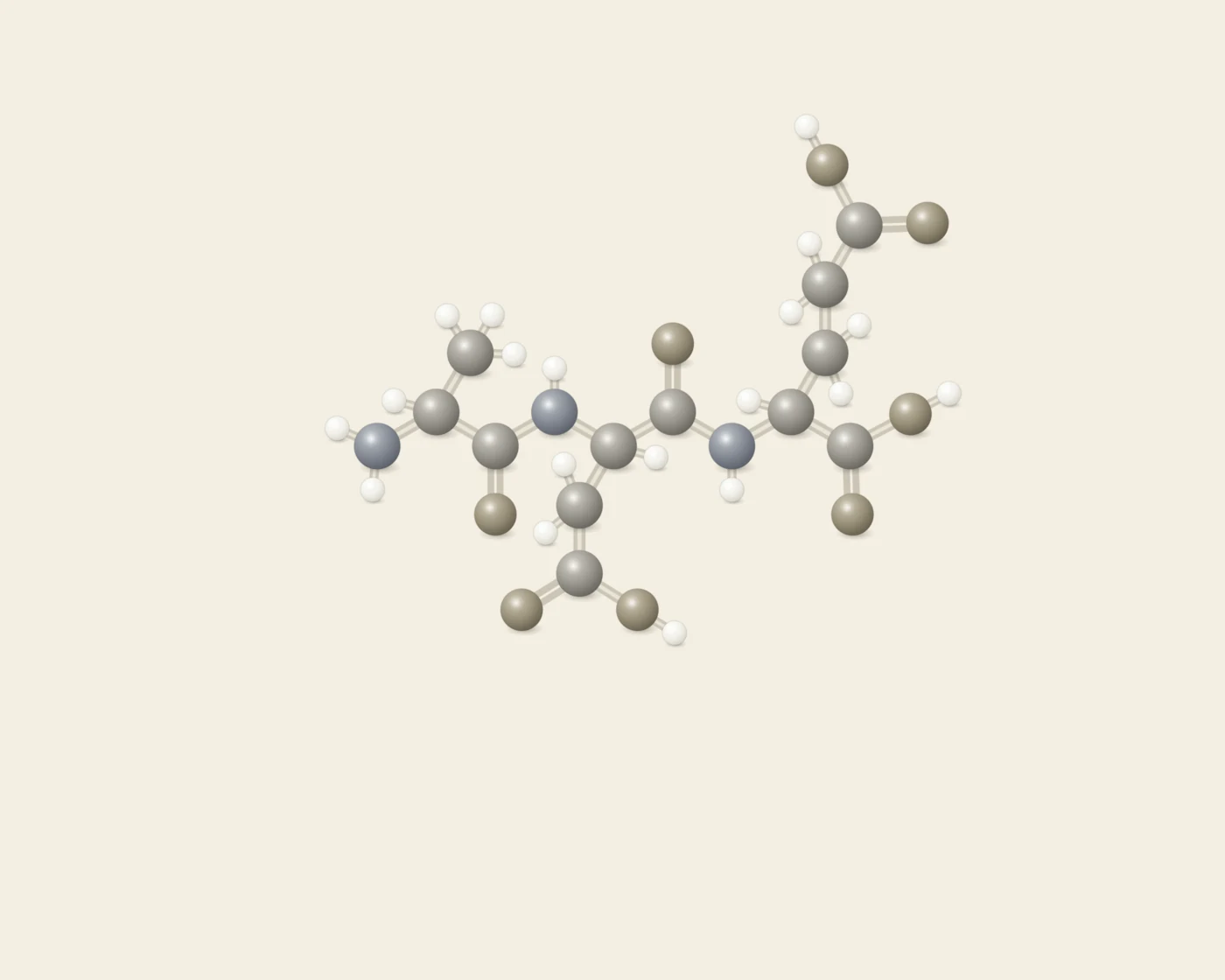
What Svetinorm is
Svetinorm is the oral liver capsule in Khavinson's Cytomax range: a crude peptide fraction (broadly under 10 kDa) extracted from the livers of young cattle, catalogued as A-7. It is not a synthetic molecule and not a single defined sequence. It is a mixture, sold in short courses for "liver support" and healthy liver ageing.
It matters to you, before anything else, that Svetinorm is an organ extract rather than a defined chemical. That is why no certificate of analysis can pin down what is in the capsule, and why its research trail is so easy to blur.
PubMed indexes no study of Svetinorm by name, under any spelling. That puts it at the thin end of an already thin field.
Not Livagen: the distinction vendors smudge
Svetinorm is the crude cattle-liver extract. Livagen is a synthetic liver tetrapeptide, the sequence Lys-Glu-Asp-Ala, made to one defined formula in a lab. Almost every sales listing runs the two together.
Nearly all the citeable liver-peptide research was done on Livagen, or on injectable liver complexes, not on the Svetinorm capsule you would swallow. A vendor who lends Livagen's lab history to a Svetinorm listing is quietly swapping one product for another.
Capsules and Svetinorm Lingual: oral only, and that is the whole problem
Unlike the injectable bioregulators such as Cortexin or Thymalin, Svetinorm comes only as a capsule, with a sublingual version, Svetinorm Lingual, alongside. There is no injectable form.
For a peptide preparation that means the obvious question sits front and centre: how much of a crude protein fraction survives your stomach and reaches the liver intact? For Svetinorm, nobody has published an answer.
02 / MechanismHow Svetinorm is proposed to work
The proposed mechanism is hepatotrophic rather than stimulant: the bioregulator idea that peptides drawn from an organ carry signalling information back to that same organ, nudging ageing cells toward younger patterns of gene expression and protein synthesis. For Svetinorm, the target tissue is the liver.
Every demonstration behind that idea in the liver used a defined synthetic peptide. None used Svetinorm.
The hepatocyte protein-synthesis finding, done on Livagen
The clearest experimental support comes from the synthetic tetrapeptide Livagen, not the extract. In cultured rat hepatocytes, Livagen increased the level of protein synthesis, and the highest effect was seen in cells from old animals.1 Epitalon, a peptide built from a different organ, did not change it.
A liver peptide moving liver cells while a pineal peptide does nothing is what makes the result tissue-specific rather than general. It is also a defined molecule in a dish, and the compound quietly changes when a Svetinorm page cites it.
Tissue-specific liver signalling in the culture dish
The broader mechanism rests on organotypic culture work, where synthetic peptides including Livagen stimulated the outgrowth of explants from the matching organ, liver peptide to liver tissue, with effects described as tissue-specific.2,3 That is the premise the whole range rests on, tested at the smallest scale available.
In a dish, for a synthetic peptide, the tissue-specific signal holds up. The leap the marketing makes is from "Livagen shifts protein synthesis in cultured hepatocytes" to "this liver-extract capsule detoxifies and rejuvenates your liver." That is a leap across the molecule, the format, and the species, not a single step.
The antioxidant and immune claims vendors make for the capsule
Vendors also frame Svetinorm as antioxidant and immune-supporting. That language traces to work on liver complexes and Livagen in damaged-liver models, covered in the evidence section below. It is animal and review-level data on other preparations, not a measured effect of the capsule.
03 / The evidenceWhat the Svetinorm evidence actually shows
For Svetinorm the finding is an absence, and the marketing fills it with somebody else's molecule. Cells first, then animals, then the people nobody has actually tested.
Check the compound named in each study below. Almost none of them used Svetinorm.
The cell and in-vitro studies cited for Svetinorm: every one on Livagen
In cultured rat hepatocytes, the synthetic peptide Livagen (Lys-Glu-Asp-Ala) increased protein synthesis at different ages, with the highest effect in cells from old animals, and increased the amplitude of protein-synthesis fluctuations in old rats.1 This is the strongest liver-peptide result there is, and it is not Svetinorm.
Synthetic peptides including Livagen stimulated the growth of explants from rat liver and other tissues in organotypic culture, producing effects described as tissue-specific.2 A later same-group paper compared these against crude organ extracts across ages.3
Livagen activated ribosomal genes and decondensed heterochromatin in lymphocytes from old people.4 Note what this is: human cells, but blood lymphocytes in a dish, and not the liver. It tells you Livagen touches chromatin, not that a capsule helps your liver.
The cell data tells a coherent story about one synthetic tetrapeptide shifting gene activity and protein synthesis. None of it says anything about swallowing a crude liver extract.
Animal studies on liver complexes and KEDA, not on the capsule
A Khavinson-group review reported that a liver polypeptide complex (Ventvil) and the KEDA tetrapeptide (Lys-Glu-Asp-Ala, which is Livagen) showed hepatoprotective, immunoprotective and antiageing effects in animal models of liver fibrosis and acute and chronic hepatitis, normalising immune and antioxidant status and restoring liver function, with the maximal effect in ageing.5
KEDA is the sequence code for Livagen, so that is the same synthetic molecule again rather than the extract. Ventvil is a separate liver complex, not the oral A-7 capsule.
The review also comes from the originating group, summarising its own experimental models rather than an independent trial. Useful for the class idea; silent on the specific product.
Human studies on Svetinorm (read the small print)
There is no PubMed-indexed human trial of Svetinorm, and Khavinson's own published lists of clinically studied bioregulators leave it out.
The one piece of human data vendors point to is an unpublished, non-randomised report from the producer, never peer-reviewed and not carried in any medical database. We rate a producer's own memo as no evidence at all, whatever the phrase "clinically studied" is doing on the box.
The closest thing to human evidence for this peptide family is the lymphocyte-chromatin work on Livagen,4 and enzyme-inhibition work in human serum where Livagen inhibited enkephalin-degrading enzymes.6 Both are cell and biochemical experiments on the synthetic peptide, not clinical outcomes, and neither is about liver disease.
What remains unproven
No published study has tested the Svetinorm capsule in a person, measured a liver endpoint, or shown that its peptides survive digestion.
The research it leans on belongs to a different, synthetic molecule and to injectable liver complexes, and even that work is early-stage and largely single-source. That does not make the extract fraudulent. It makes it a product whose evidence is borrowed, and you should know from whom.
04 / Benefits by evidenceSvetinorm benefits: the claims, and what the evidence supports
The label sells liver support as one package. The three claims underneath it stand on very different ground, and only one of them has anything behind it at all.
Most plausible, and still thin. It follows from the Livagen protein-synthesis data and the liver-complex animal work, both of which point at ageing cells.1,5 But that is a mechanism shown for other molecules in dishes and rodents, not an outcome shown for this capsule in you.
Partly grounded at the class level. The 2020 review reports normalised antioxidant and immune status in damaged-liver models.5 Grounded for Ventvil and KEDA in rodents; unmeasured for oral Svetinorm.
Least supported, and the vaguest word on the label. No study cited here measured detoxification, and no human data exists for the capsule. Treat "detox" as marketing vocabulary, not a finding.
Detoxification leads the sales copy and comes last on the evidence. We would pay nothing for that word, and the narrow claim beneath it, better liver-cell function in ageing, is the only one with a signal behind it, borrowed though it is.
05 / Dosage and protocolSvetinorm dosage and protocol
Nothing below is a recommendation to dose yourself. No dose-finding trial exists for Svetinorm, so every figure here comes from Cytomax convention and vendor guidance rather than a validated human dose.
The dose and course as marketed
Svetinorm is commonly sold as one to two capsules daily for ten to twenty days, repeated once or twice a year. Those numbers come from the Cytomax range's shared dosing template, applied across organs, rather than from any study of the liver capsule itself.
The oral-survival question for a swallowed peptide capsule
Svetinorm's peptides are swallowed, so they meet stomach acid and gut proteases before any of them could reach the liver. Whether the dose means anything turns on that step.
The Cytomax rationale claims small peptides survive in usable amounts, and the injectable bioregulators sidestep the problem entirely. For an oral crude extract, how much arrives intact is simply unestablished, so treat the course length as tradition, not pharmacology.
What a Svetinorm course is really doing
If a protocol matters to you, understand that the annual-course pattern is inherited from the injectable peptide trials of other bioregulators and pasted onto a capsule that has never been trialled. You are following a ritual, not a validated schedule.
06 / Safety and side effectsSvetinorm safety and side effects
Svetinorm is marketed as well tolerated, with no serious adverse effects reported. For a bovine extract taken in ten-day courses that is plausible, and it is also unchecked.
Why "no side effects reported" says little for an untested capsule
No published safety trial of the capsule exists. A clean record for a product nobody has studied for harm records the absence of looking, in print or anywhere else, rather than the absence of risk.
The likely risks of a bovine liver extract
For an oral bovine-tissue extract the risk sits in the tin rather than the pharmacology. You are eating a crude protein fraction from cattle liver, so source-animal quality, contamination and mislabelling matter, and a capsule gives you no way to inspect any of it.
There is also the quieter risk of false reassurance: relying on an unproven capsule for "liver health" while an actual liver problem goes unexamined. That is the more likely way Svetinorm hurts you.
Who should not use Svetinorm
Anyone who is pregnant or breastfeeding, since it is untested there; anyone with existing liver disease or abnormal liver tests, who needs a diagnosis rather than a supplement; and anyone using it in place of medical assessment.
Before you put an unlicensed animal-tissue capsule to work on your liver, get the liver itself tested by a doctor who can read the result. A vendor cannot do that for you, and neither can we.
07 / SourcingWhere to buy Svetinorm safely in the UK
Sourcing is harder for Svetinorm than for the synthetic peptides. Because it is a crude extract rather than a single sequence, you cannot verify it the way you would a defined molecule.
Why a certificate of analysis proves less for a crude extract
For a synthetic peptide you can demand HPLC and mass-spec identity against an exact sequence. Svetinorm has no single mass to match, so a certificate can show a peptide-content figure at best, never that the capsule holds the active fraction the research implies.
What arrives is often a Cyrillic-labelled box you have to take on trust.
Watch for the Svetinorm bait-and-switch
A listing that cites Livagen cell-culture data, or the KEDA and liver-complex research, under a Svetinorm product is treating three different things as one.
Svetinorm the extract, Livagen the synthetic tetrapeptide, and Ventvil the liver complex are not interchangeable. When you see their evidence merged on one product page, slow down rather than speed up, because someone is borrowing credibility the capsule has not earned.
08 / ComparisonSvetinorm versus Livagen and the injectable bioregulators
Svetinorm is often shelved beside Livagen and the other liver peptides as if they were one offering. They are not. Livagen is the defined synthetic tetrapeptide that carries almost all the citeable liver-peptide research, while Svetinorm is the crude extract that carries almost none of it.
Against the registered injectable bioregulators, Svetinorm also trades away the one thing that gives them weight: the injectables were at least studied in the form they are sold. Svetinorm shares their Cytomax pedigree and inherits none of their trials. We map the whole range, extracts and synthetics, on our types of bioregulators guide.
Frequently Asked Questions
What is the A-7 peptide complex in Svetinorm?
A-7 is the catalogue code for the crude peptide fraction extracted from the livers of young cattle, not a defined sequence. It names a mixture, broadly under 10 kDa, rather than a molecule you could match against a standard. Any listing that treats A-7 as a specific active peptide claims more than the product supports.
Is there clinical evidence for Svetinorm?
None that is published or peer-reviewed. A PubMed search for Svetinorm returns nothing, and Khavinson's own lists of clinically studied bioregulators leave it out. The only human data vendors cite is an unpublished, non-randomised manufacturer report.
Is Svetinorm the same as Livagen?
No, and this is the key confusion. Svetinorm is a crude cattle-liver extract in a capsule. Livagen is a single synthetic tetrapeptide, Lys-Glu-Asp-Ala, made in a lab. Most liver-peptide research used Livagen, not Svetinorm, so vendors often present one product's evidence for the other.
Does Svetinorm actually work for liver health?
Not on any evidence about Svetinorm itself. There is animal and cell data on the synthetic peptide Livagen and on liver complexes in damaged-liver models, but nothing measuring a liver outcome from the capsule, and "detoxification" is a marketing word here, not a tested endpoint.
What is the recommended Svetinorm dosage?
Vendors commonly suggest one to two capsules daily for ten to twenty days, once or twice a year. That is the shared Cytomax dosing template, not a dose established for the liver capsule in any trial.
Do Svetinorm capsules survive digestion?
Unknown. Svetinorm is a crude peptide fraction that has to pass stomach acid and gut proteases before reaching the liver, and no study has measured how much arrives intact. The injectable bioregulators avoid this question; the oral capsule does not answer it.
Does Svetinorm have side effects?
None are reliably documented, and that is the problem: there is no published safety trial of the capsule, so "no side effects reported" mainly reflects the absence of study. As a bovine-tissue extract the practical risks are about source quality, contamination and mislabelling, and about trusting a capsule instead of getting your liver checked.
Is Svetinorm approved or regulated in the UK?
It is sold as a supplement and is not an approved medicine in the UK, US or EU, and not evaluated by the MHRA, FDA or EMA. No regulator has looked at it, so what you buy and what you do with it sit entirely on you.
Where can you buy Svetinorm in the UK?
Only from online specialist sellers, since it is not licensed as a medicine here and no UK pharmacy stocks it. What arrives is often a Cyrillic-labelled box, which is why the sourcing section above matters more than price. We set out how we weigh suppliers on our where to buy page.
How do you spot a fake Svetinorm?
Judge the supplier, not the paperwork: because Svetinorm is a crude extract, no certificate can verify a specific active molecule. Treat any listing that pastes Livagen, KEDA or liver-complex research under a Svetinorm product as a warning, since it is merging three different things.
- Brodskiĭ VYa, Khavinson VKh, Zolotarev YuA, et al. [Rhythm of protein synthesis in cultures of hepatocytes from rats of different ages. Norm and effect of the peptide livagen]. Izv Akad Nauk Ser Biol. 2001;(5):517–521. PMID: 15926314.
- Khavinson VK. Tissue-specific effects of peptides. Bull Exp Biol Med. 2001;132(2):807–808. PMID: 11713572.
- Khavinson VKh, Malinin VV, Chalisova NI, Grigor'ev EI. [Tissue-specific action of peptides in tissue culture of rats of various ages]. Adv Gerontol. 2002;9:95–100. PMID: 12096446.
- Khavinson VKh, Lezhava TA, Monaselidze JG, et al. Effects of Livagen peptide on chromatin activation in lymphocytes from old people. Bull Exp Biol Med. 2002;134(4):389–392. PMID: 12533768.
- Kuznik BI, Khasanova NB, Ryzhak GA, Mezsheriakova IE, Khavinson VK. [The influence of polypeptide liver complex and tetrapeptide KEDA on organism physiological function in norm and age-related pathology]. Adv Gerontol. 2020;33(1):159–164. PMID: 32362099.
- Kost NV, Sokolov OIu, Gabaeva MV, et al. [Effect of new peptide bioregulators livagen and epitalon on enkephalin-degrading enzymes in human serum]. Izv Akad Nauk Ser Biol. 2003;(4):427–429. PMID: 12942748.