What Chelohart is
Chelohart is an oral peptide bioregulator made from cattle heart muscle, sold under the catalogue code A-14 as the cardiac member of the Cytomax range in Vladimir Khavinson's bioregulator family. The target organ is the myocardium, the muscle of the heart.
It matters to you, before the marketing says anything, that Chelohart is an organ extract, not a defined chemical. It is a mixture of peptide fragments pulled from tissue, not a single sequence you can name or verify.
One indexed study has tested the extract by name. Everything else in the cardiac-peptide literature was run on a synthetic molecule that is not in the capsule.
Chelohart is an extract, not a synthetic peptide
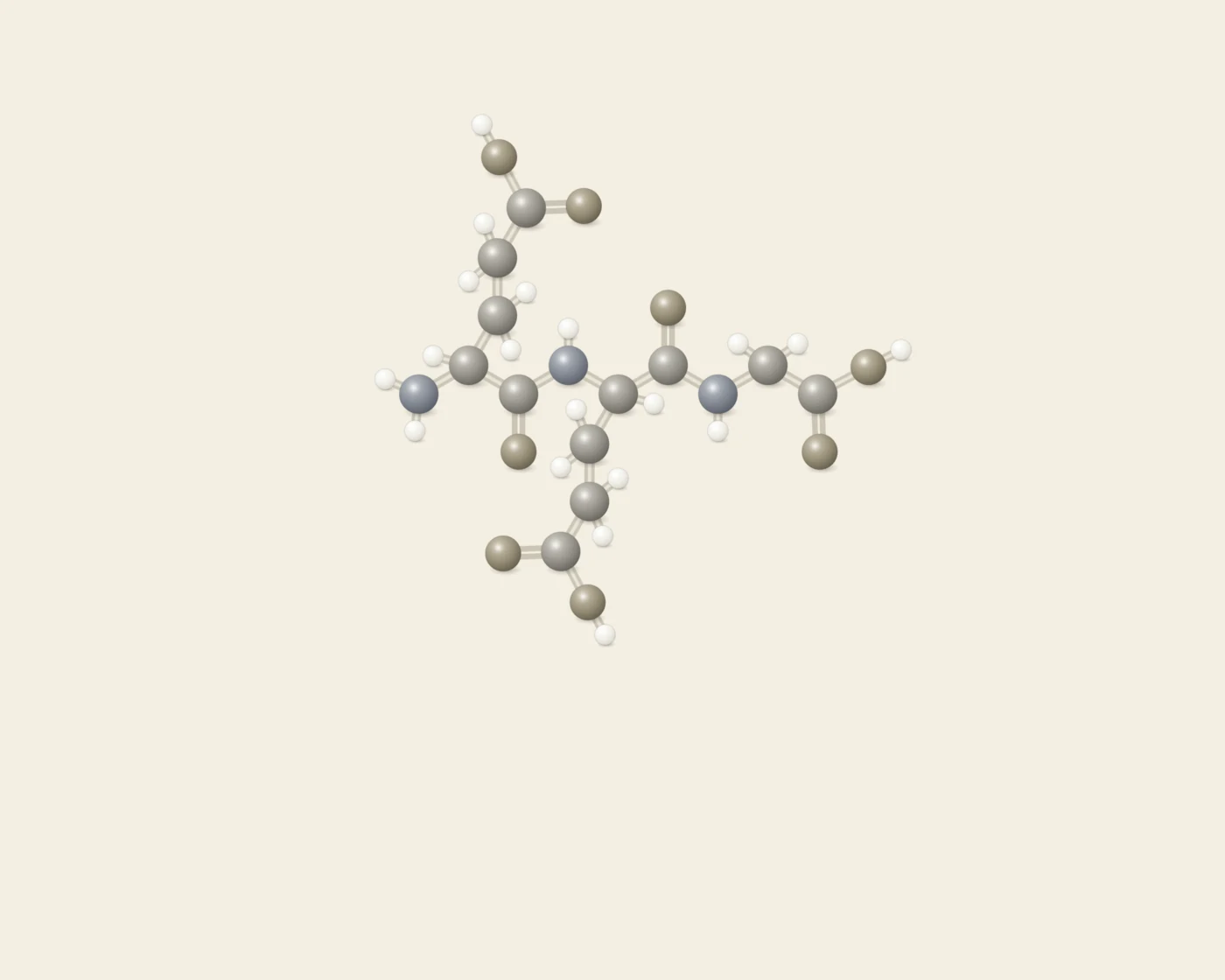
Chelohart is the natural, oral, cattle-derived extract. The synthetic cardiac tetrapeptide Cardiogen, the defined sequence Ala-Glu-Asp-Arg built to a single formula in a lab, is a separate product, and the confusion between them is what vendors trade on.
Some sellers describe Chelohart as "a synthetic tetrapeptide". That is simply wrong, and it is not a harmless slip. It borrows the identity, and the research, of a different product to dress up a capsule that has almost none of its own.
Cytomax extracts versus Cytogen peptides
In Khavinson's scheme the crude preparations pulled from animal organs are the Cytomax extracts, and the short synthetic peptides built to mimic them are the Cytogens. Chelohart is a Cytomax: a low-molecular-weight peptide fraction from bovine heart, broadly under 10 kDa.
So Chelohart is to a synthetic cardiac peptide what the pineal extract epithalamin is to Epitalon: the messy parent, not the clean molecule. You are buying the mixture, and the mixture is the thing barely anyone has studied.
Not a registered medicine in the UK or Russia
Cortexin, the brain extract from the same tradition, is a registered prescription drug in Russia with a hospital history. Chelohart holds no such status, in Russia or anywhere.
There is no MHRA, FDA or EMA authorisation, and no Russian marketing authorisation either. What you can buy is an unlicensed supplement: an oral capsule, with a sublingual liquid variant also sold. It is not an injectable, and no regulator has assessed it.
02 / MechanismHow Chelohart is proposed to work
The mechanism claimed for Chelohart is the general bioregulator hypothesis, aimed at the heart. Nobody has traced it in a myocardium, and the biochemistry usually offered in support was done on a different compound.
The tissue-carries-information idea behind Chelohart
The premise is that short peptides taken from an organ carry regulatory information back to that same organ, nudging its cells towards repair. For Chelohart, heart peptides are meant to signal to heart tissue.
It is a clean story. What it lacks, for the extract specifically, is a demonstrated molecular route. Chelohart is a mixture, so there is no single sequence whose behaviour anyone has traced into a heart cell.
The AEDR biochemistry belongs to Cardiogen, not Chelohart
The molecular evidence people cite is not Chelohart's. The synthetic tetrapeptide AEDR was among short peptides shown to bind fluorescently labelled wheat histones in a test tube, offered as support for an epigenetic, gene-regulating role.5
That is a binding result in a plant-protein model, obtained with a defined synthetic sequence. No one has measured the cattle-heart extract doing anything in a myocardium.
The cardiovascular-ageing framing for heart peptides
The most recent mechanistic case is a 2022 Khavinson-group review. It lists the AEDR tetrapeptide among peptides thought to regulate the signalling molecules behind inflammaging and the senescence-associated secretory phenotype in cardiovascular cells.4
Again, that names the synthetic sequence, not the extract, and it is a review shaping a hypothesis, not an experiment measuring Chelohart. The mechanism you are sold is borrowed twice over.
In a dish, and for a different molecule, the pieces are suggestive: a peptide that binds histones, a review naming it as a cardiovascular candidate. The leap to "Chelohart repairs your heart" crosses every one of those gaps, plus the gap from a synthetic sequence to a crude extract.
What the evidence on Chelohart actually shows
Most of the cardiac-peptide evidence that reaches a Chelohart listing was collected on something else. Sorted by what was actually in the dish, the extract's own file holds one paper.
Cell studies: one on Chelohart, two on Cardiogen
The one study to test the extract by name. Ryzhak and colleagues compared seven calf-organ polypeptides, Chelohart among them, on matching rat organotypic cultures from young and old animals at 0.01 to 100 ng/ml, reporting growth stimulation at 20 to 50 ng/ml with rising PCNA and falling p53.1
Not Chelohart, but the synthetic tetrapeptide Cardiogen. At 10 to the minus 12 molar, it produced a strong stimulating effect on proliferation in myocardial tissue culture from 3- and 24-month-old rats, alongside lower p53 expression, read as inhibited apoptosis in the myocardium.2
Again the synthetic peptide. Cardiogen and three sister peptides, applied to heart, lung, prostate and pancreas explants from young (3-week-old) and aged (18-month-old) rats, stimulated the matching tissue at 0.05 ng/ml relative to control explants.3
The extract has one study to its name, shared with six other organ preparations. The sharper cardiac results, proliferation and p53, all used the synthetic tetrapeptide.
Take the 2015 result at face value and Chelohart nudged cultured heart tissue towards growth in a dish, grouped with six siblings. That is the extract's entire evidentiary footprint, and it is in-vitro, from one lab network.
The missing animal studies
No whole-animal study of Chelohart has been published. The rat tissue in the 2015 paper was cultured outside the body, not treated inside a living animal.1
The usual bridge from cell to organism, a rodent given the compound and measured for an outcome, was never built for this extract. The chain stops at the explant.
Human studies on Chelohart
There are none. No randomised trial, no open-label cohort, no case series of Chelohart in people has been published in the indexed literature.
When a vendor implies clinical support for this heart capsule, what stands behind the phrase is one shared organotypic screen. The human column is empty.
What remains unproven
No study has shown that Chelohart improves heart function, survival or any clinical endpoint, in a person or an intact animal.
Its one direct result is an in-vitro growth signal shared with six other extracts, and the rest of the cardiac story is borrowed from a synthetic molecule Chelohart is not. We would not spend money on this for a heart.
04 / Benefits by evidenceChelohart benefits: the claims, and what the evidence supports
A single organotypic culture experiment is the whole of the Chelohart file, and it ran six sibling extracts in the same batch. Three claims are stacked on top of it.
The only claim with a measurement under it, and that measurement was taken in a dish. One organotypic study reported growth stimulation and lower p53 in cultured tissue, heart included, at 20 to 50 ng/ml.1 It is in-vitro, grouped with six siblings, single-network, and it says nothing yet about your heart.
Hypothesis only, and borrowed. The idea that a cardiac peptide counters inflammaging in vessels and heart comes from a review naming the synthetic AEDR as a candidate,4 not from any experiment on the extract. A seller writing "protects your cardiovascular system" is quoting a shortlist of candidates, not a result.
The one to refuse outright. Nobody has taken Chelohart in a study of any cardiac condition, so a seller framing the capsule as heart therapy is running past both the data and the law.
Put your money where the paper is and you would buy nothing at all. The single documented effect sits in a culture dish shared with six other extracts, and the claim that actually sells the capsule, a treated heart, has no evidence under it.
05 / Dosage and protocolChelohart dosage and protocol
No dose-finding study of Chelohart exists. Every number below came off a label or out of the range's house convention, and none of it is a dose we are recommending to you.
Why culture concentrations are not oral doses
The only real numbers are dish concentrations. The 2015 study bathed cultured tissue at 0.01 to 100 ng/ml and saw its effect at 20 to 50 ng/ml.1 That describes peptide in a well, not a capsule you swallow.
Nobody has translated a nanogram-per-millilitre figure into a systemic oral dose. A vendor calling a Chelohart dose clinically derived has invented the arithmetic.
What vendor Chelohart protocols actually are
Sold as capsules, Chelohart is marketed with short-course instructions that mirror the wider bioregulator range: commonly one to two capsules a day for ten to thirty days, courses sometimes repeated after some months.
These come from vendor labels and community habit, not from any trial of this extract. Called a clinically established regimen, the same numbers become a claim nobody can support.
Oral only: what the Chelohart capsule costs the evidence
Chelohart is oral, which sidesteps the sterility risks of an injectable but raises a different problem. A peptide mixture meets digestion in the gut, and how much survives intact to reach your heart is unestablished.
A 2023 modelling paper argued that transporters could carry short peptides into cells, but it studied defined synthetic sequences by computer, not the extract in your body.6 It answers "could", not "does".
06 / Safety and side effectsChelohart safety and side effects
The safety statement is short: Chelohart has not been studied for safety in humans. Nobody has recorded an adverse event, for the plain reason that nobody has run the study that would record one.
Why the no-side-effects claim is not reassurance
A vendor promise that Chelohart is free of side effects rests on an empty file. No human study has recorded any effect of this extract, favourable or otherwise, so there is nothing in the record to be reassured by.
The risks that are actually likely with an unregulated extract
The practical danger sits in the capsule rather than in the peptides. An oral extract avoids injection risks, but it is an unregulated animal-tissue preparation, open to mislabelling, contamination and simply not containing what the label claims.
Chelohart is aimed at people worried about their hearts, so some buyers already have cardiac disease and a prescription list. Adding an untested supplement to that picture is where a delay in proper care stops being theoretical.
This is a fraction from bovine tissue, so you are also trusting an unregulated supply chain on sourcing and processing you cannot see.
Who should avoid Chelohart
Avoid Chelohart if you are pregnant or breastfeeding, since it is untested there; if you have active heart disease, where you have real treatments to protect; or if you take cardiac medication, where an unknown is one unknown too many.
One shared cell-culture study is the whole case for taking this. Put that in front of a GP or cardiologist who has your notes before you put it anywhere near a repeat prescription.
07 / SourcingWhere to buy Chelohart safely in the UK
Because Chelohart is a crude extract, not a single sequence, you cannot fully verify it the way you could a synthetic peptide. There is no mass and sequence to match, which leaves trust in the supplier doing most of the work.
What you can and cannot verify about a Chelohart capsule
You can check the seller, the labelling and the supply chain; you cannot confirm, by any test available to you, that a capsule holds a genuine cattle-heart peptide fraction rather than filler. That limit is real, and vendors rarely mention it.
Prefer suppliers who publish batch information and third-party testing, and be honest with yourself that even good paperwork verifies less here than it would for a defined molecule.
Know which heart peptide is in your hand
Chelohart is easily confused with the synthetic cardiac peptide Cardiogen and with anything carrying "cardio" branding. If a listing borrows the clinical language of a registered drug like Cortexin, none of that history attaches to this capsule.
The cheapest way to fill a Chelohart capsule is to put very little in it, which is what a price well under the market usually reflects.
08 / ComparisonChelohart vs Cardiogen and the other bioregulators
Chelohart and Cardiogen are routinely shelved together as "the heart peptide", and the shelving hides the most important fact about them: they are not the same molecule. Cardiogen is the synthetic tetrapeptide AEDR; Chelohart is the crude cattle-heart extract.
The irony is that Cardiogen, itself thinly evidenced, has cell studies run on the exact sequence it sells, while Chelohart's cardiac case is largely borrowed from those very studies. We compare the synthetic sibling in full on our Cardiogen guide.
Against Cortexin, a registered prescription drug with a hospital record, Chelohart is a research-grade supplement whose evidence stops at one shared culture screen. Our bioregulator peptide types guide lines the whole range up by format and by how much evidence each one carries.
Frequently asked questions about Chelohart
What is Chelohart made from?
Chelohart is an oral peptide bioregulator, a low-molecular-weight fraction extracted from cattle heart muscle, sold under catalogue code A-14 in Khavinson's Cytomax class of natural organ extracts. It is a mixture from tissue, not a single defined sequence, and it targets the myocardium.
Is Chelohart the same as Cardiogen?
No, and this is the confusion to avoid. Cardiogen is the synthetic cardiac tetrapeptide Ala-Glu-Asp-Arg, a defined molecule built in a lab. Chelohart is the crude cattle-heart extract. Most cardiac-peptide research vendors cite used Cardiogen, not Chelohart, so keep the two apart.
Is there any clinical evidence for Chelohart?
None in humans. One indexed study named Chelohart, grouping it with six other calf-organ extracts in rat organotypic culture, where the polypeptides stimulated growth at 20 to 50 ng/ml with rising PCNA and falling p53.1 No human trial, no whole-animal study, and everything sharper used the synthetic peptide.
What did the Cardiogen cell studies actually show?
In cultured rat heart tissue, the synthetic tetrapeptide Cardiogen stimulated proliferation in young and old explants and lowered p53, read as reduced apoptosis, at 10 to the minus 12 molar and 0.05 ng/ml in a dish.2,3 Those were the synthetic sequence in culture, not Chelohart in a person.
Is Chelohart approved as a medicine in the UK?
No. Unlike Cortexin, a registered drug in Russia, Chelohart holds no marketing authorisation anywhere and is not evaluated by the MHRA, FDA or EMA. It is sold as an unlicensed supplement, which means no regulator has checked the capsule and the risk of taking it is entirely yours.
Does Chelohart actually work?
Nobody knows, because nothing has been measured in a person or an intact animal. The reason the capsule reads as though it works is that the cardiac results being quoted, proliferation and lower p53 in cultured tissue, belong to Cardiogen, a different molecule.
What is the correct Chelohart dosage?
There is no validated dose, because no human study exists. The only real numbers are culture concentrations, not swallowed doses. Vendors suggest one to two capsules a day in short courses, but those are conventions borrowed from the wider range, not clinically established figures.
Is Chelohart safe?
Its safety in humans is unknown, because it has never been tested in people. Claims that it is free of side effects reflect the absence of studies, not proven safety. As an unregulated animal-tissue supplement, mislabelling and contamination are the practical risks.
How do you avoid a fake or mislabelled Chelohart?
Because it is an extract, you cannot verify identity by mass and sequence the way you could a synthetic peptide. Prefer suppliers who publish batch and third-party testing, be wary of prices far below the market, and accept that verification stops well short of what a synthetic peptide allows.
Where can you buy Chelohart in the UK?
Only from online vendors selling it as an unlicensed supplement, because Chelohart holds no MHRA authorisation and there is no UK pharmacy route. It is an extract rather than a defined sequence, so verification is weaker than for a synthetic peptide. We set out what to check on our where to buy page.
- Ryzhak AP, Chalisova NI, Lin'kova NS, Khalimov RI, Ryzhak GA, Zhekalov AN. [Polypeptides influence on tissue cell cultures regeneration of various age rats]. Adv Gerontol. 2015;28(1):97–103. PMID: 26390619.
- Chalisova NI, Lesniak VV, Balykina NA, et al. [The effect of the amino acids and cardiogen on the development of myocard tissue culture from young and old rats]. Adv Gerontol. 2009;22(3):409–413. PMID: 20210190.
- Zakutskiĭ AN, Chalisova NI, Ryzhak GA, et al. [The tissue-specific effect of synthetic peptides-biologic regulators in organotypic tissues culture in young and old rats]. Adv Gerontol. 2006;19:93–96. PMID: 17152728.
- Khavinson V, Linkova N, Dyatlova A, Kantemirova R, Kozlov K. Senescence-associated secretory phenotype of cardiovascular system cells and inflammaging: perspectives of peptide regulation. Cells. 2022;12(1):106. PMID: 36611900.
- Fedoreyeva LI, Smirnova TA, Kolomijtseva GY, Khavinson VKh, Vanyushin BF. Interaction of short peptides with FITC-labeled wheat histones and their complexes with deoxyribooligonucleotides. Biochemistry (Mosc). 2013;78(2):166–175. PMID: 23581987.
- Khavinson VK, Linkova NS, Rudskoy AI, Petukhov MG. Feasibility of transport of 26 biologically active ultrashort peptides via LAT and PEPT family transporters. Biomolecules. 2023;13(3):552. PMID: 36979488.