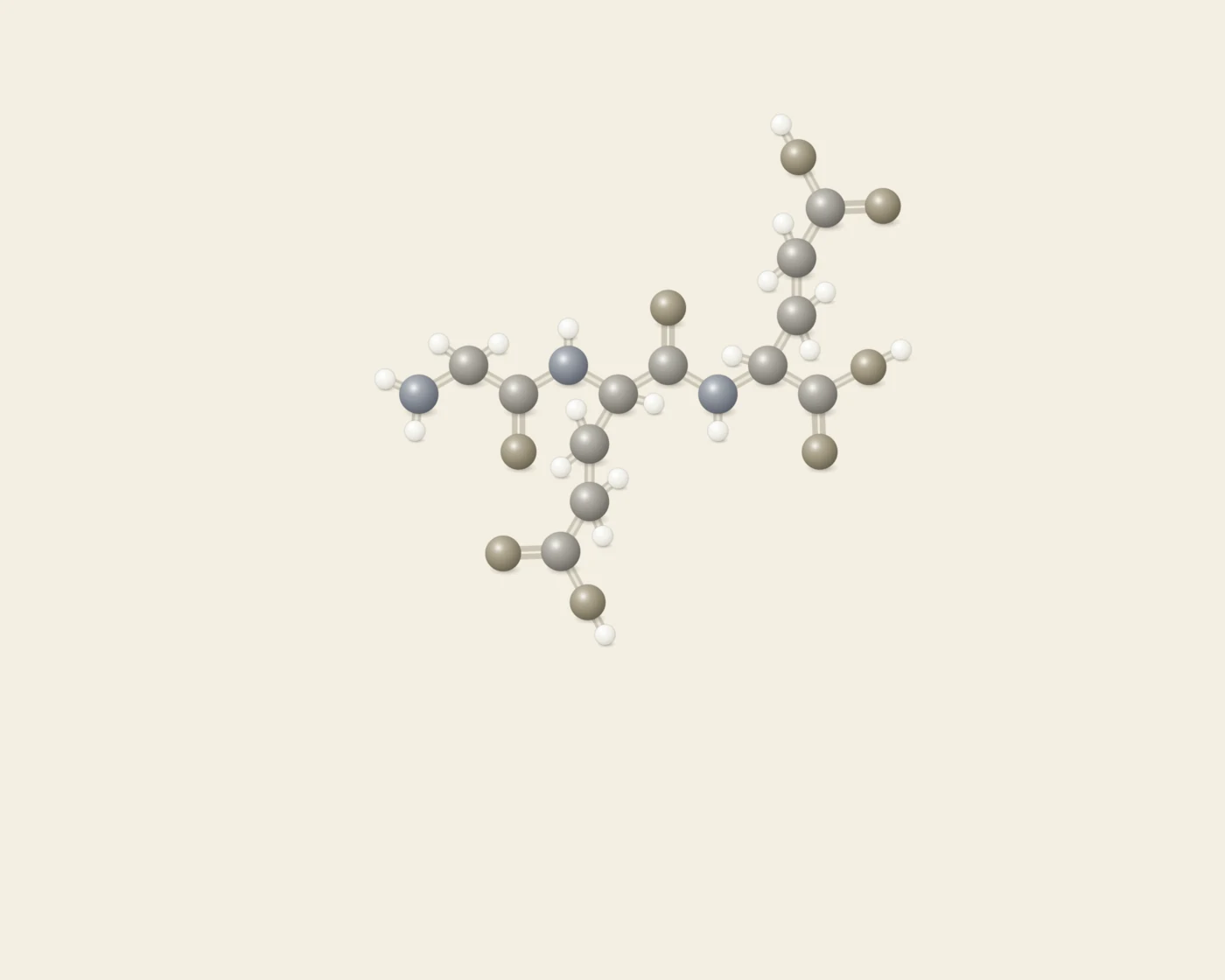
What Ventfort peptide is, and what it is made from
Ventfort is an oral capsule from the Cytomax line of Khavinson bioregulators: a water-soluble fraction of short peptides, broadly under 10 kilodaltons, extracted from the aortic and vascular tissue of cattle under twelve months old. It is pointed at the blood-vessel wall, the endothelium and the smooth muscle of the arteries.
The premise is the one behind the whole class. Peptides drawn from a specific organ are said to carry regulatory information for that same organ in the person who swallows them. For Ventfort, the target tissue is your vasculature.
Vascular ageing is real and largely silent, which is what makes a gentle capsule that "supports the vessel wall" land so well. Nothing published shows the capsule reaching a human artery.
A cattle-vascular extract, not the studied peptide
Ventfort is the crude cattle-vascular extract. The vascular bioregulator actually put in front of cells in a laboratory is KED, the synthetic tripeptide Lys-Glu-Asp, sold separately as Vesugen. That distinction decides how you read every "study" claim attached to the capsule.
They aim at the same tissue, but they are not the same product. The published research is overwhelmingly on the synthetic peptide, not on the capsule you would swallow. When a vendor lends KED's laboratory record to a Ventfort capsule, they are quietly swapping one thing for another.
Where Ventfort sits on regulation and approval
Cortexin, the injectable in this family, is a registered prescription drug in Russia with a hospital history. Ventfort has none of that.
It is not an approved medicine in Russia, the UK, the US or the EU. What you can buy is an unlicensed, food-grade capsule that has passed no regulator anywhere and carries no therapeutic authorisation for any cardiovascular use.
02 / MechanismHow Ventfort is proposed to work in blood vessels
The mechanism story belongs almost entirely to KED, the synthetic peptide, because that is what the laboratory work used. None of it has been shown for the extract in the capsule.
The KED mechanism: epigenetic gene regulation in the vessel wall
The proposed mechanism is that these very short peptides act on gene expression, behaving as epigenetic regulators of the proteins that mark endothelial function. In an in-vitro study of vascular endothelial cells, KED was described as working through epigenetic regulation of endothelium-marker genes.1
In plain terms: the claim is that KED nudges which genes a vessel-wall cell reads, and so shifts the signalling molecules that go wrong as an artery ages. In a dish, on the synthetic peptide, there is a specific version of that claim to point at. In a living human vessel, there is not.
Where senescence and inflammaging fit the Ventfort claim
The wider framing is cellular ageing. A senescence-associated secretory phenotype and low-grade inflammation, "inflammaging", are proposed as conditions for atherosclerosis and coronary disease, with vasoprotective peptides as candidate regulators.2
That review groups KED alongside established vasoprotective drugs as a molecule that might regulate these ageing signals.2 It proposes targets and prospects. It demonstrates nothing about Ventfort in a person.
There is a coherent laboratory hypothesis for the synthetic peptide KED. There is no evidence that swallowing the Ventfort extract reproduces it in your arteries. The gap between those two sentences is where the marketing lives.
What the evidence on Ventfort actually shows
PubMed indexes no study of Ventfort itself, in any language. The extract you would buy has never been tested under its own name.
What follows runs cells, then animals, then people. Read the label on each row, because the peptide tested is rarely the one in the capsule.
In-vitro and cell studies, all on synthetic KED
In vascular endothelial cells modelling atherosclerosis and restenosis, Kozlov and colleagues reported that KED normalised endothelin-1 expression, which rises in these conditions, restored cell interactions through connexin, and increased sirtuin-1, a DNA-repair protein.1 This is the flagship vascular finding, and it is in vitro, in Russian-language print, from the Khavinson institute.
In human mesenchymal stem-cell ageing cultures, KED and its sibling peptides at nanomolar concentrations modulated ageing-related genes: IGF1 expression was enhanced 3.5 to 5.6 fold by the peptides, and KED inhibited FOXO1 expression by 1.6 to 2.3 fold.3 Real numbers, but from bone-marrow stem cells, not blood vessels.
In ageing skin-fibroblast cultures, KED and related peptides inhibited MMP-9 synthesis, which climbs as fibroblasts age, and raised Ki-67 and CD98hc expression.4 A different tissue again, listed here to show the KED evidence is a scatter of dish results across cell types, not a vascular programme.
Taken at face value, the cell data is a modest and internally consistent story about a synthetic tripeptide shifting gene markers in culture. None of it says a swallowed cattle-aorta extract changes anything in your arteries.
Why there are no animal studies on KED or the extract
PubMed indexes no in-vivo animal study of Ventfort, and none of KED against a vascular endpoint. The vascular evidence for this compound stops at the dish, and a page implying otherwise is filling a gap the literature has not filled.
Human studies on Ventfort (read the small print)
There is no peer-reviewed human trial of Ventfort, in any language indexed in the literature. Vendors circulate a manufacturer-associated report, a 2003 to 2004 series of roughly 49 patients with atherosclerosis and senile purpura, but it is not an independently published trial, and we do not treat it as one.
A review from the originating group states that oral KED improved memory and attention in elderly people with functional central-nervous-system disorders, and restored synaptic plasticity in a cell model of Alzheimer's.5 This is the closest thing to human oral-KED data, and it concerns the brain, not the vessel wall, reported as a review claim.
The one human-facing oral-KED claim anyone cites is neurological, and it arrives as a review sentence from the group that developed the peptide. We rate it the strongest human item in this file, and it is not about arteries.
What remains unproven
No study has tested the Ventfort extract itself in a person, or an animal, against any vascular outcome. The vascular mechanism belongs to a different molecule, tested in a dish, by a single research network.
That does not make Ventfort a fraud. It makes it a compound whose entire "vascular science" is one in-vitro paper on a synthetic sibling, plus a couple of cell-ageing studies in unrelated tissues, dressed by vendors as a proven heart-and-artery therapy.
04 / Benefits by evidenceVentfort benefits: the claims, and what the evidence supports
The only citation in this section belongs to KED, the synthetic sibling, in cultured vessel cells. Ventfort is the extract in the capsule. That substitution is what each vascular promise below really rests on.
Most supported, and even this is weak. KED shifted endothelin-1, connexin and sirtuin-1 in cultured vessel cells.1 That is a dish result on the synthetic peptide. Buying Ventfort "for your endothelium" is buying a hypothesis, not a demonstrated effect in you.
Plausible as a mechanism, unproven as an outcome. The senescence framing is a review proposing targets,2 not a trial showing slower vascular ageing in humans given the extract. Treat it as a research direction.
Least supported, and the loudest in the marketing. No human or animal study of Ventfort demonstrates this. A dish finding that KED normalises one signalling molecule is not evidence that a capsule clears a plaque.
Plaque clearance is the loudest claim on the box and the one with nothing behind it. The only statement here carrying a real citation is that a synthetic sibling moved some gene markers in culture.
05 / Dosage and protocolVentfort dosage and protocol
No trial has ever set a dose for Ventfort, because no trial has ever been run on it. The figures below are vendor label and forum convention, reported here rather than recommended.
How many Ventfort capsules a day: the circulating course
The usual pattern sold for the Cytomax capsules is one to two capsules a day, taken before food, across a course of ten to thirty days, repeated two or three times a year. That is a convention carried over from the wider bioregulator range, not a schedule any published study established for this extract.
Why the oral route is the unanswered question
Ventfort is an oral peptide fraction, and the obvious question is how much of a short peptide survives digestion to act anywhere. For Ventfort specifically, that has not been measured.
The one human oral-KED claim anyone points to is about memory, not vessels,5 so it cannot stand in for oral bioavailability at the artery wall. If a protocol matters to you, understand you are dosing on tradition, with no pharmacokinetic data behind the capsule.
06 / Safety and side effectsVentfort safety and side effects
Vendors describe Ventfort as well tolerated, with no notable side effects. The claim rests on nobody having run a safety study.
Why "no side effects reported" tells you little
No clinical trial of Ventfort exists, so there is no adverse-event record to draw on. "No side effects reported" here means no one was appointed to report them, which is a different thing from a capsule that has been checked and cleared.
The likelier risk: an unregulated cattle-tissue extract
The peptide is not the thing most likely to hurt you. The capsule is: an unlicensed animal-tissue extract made to no published standard, arriving through a supply chain nobody inspects, with only the label vouching for the contents.
A crude cattle-tissue extract also raises questions of biological contamination and batch-to-batch variability that a single defined molecule does not. You cannot verify a crude fraction the way you can check a synthetic peptide's mass and sequence.
Who should be especially cautious with Ventfort
Anyone with established cardiovascular disease is the group most likely to be drawn to Ventfort and least able to afford substituting it for real treatment. It is untested in pregnancy and breastfeeding, and untested against any medicine you may already take.
Arteries are not the place to run an experiment on yourself. If you are considering this for a cardiovascular reason, take the question to a doctor who has seen your history and your numbers.
07 / SourcingWhere to buy Ventfort safely in the UK
A crude peptide extract cannot be verified by the buyer, so what you are actually assessing is the seller and the manufacturer behind them.
What you can and cannot verify on a crude extract label
Unlike a synthetic peptide, there is no clean identity test you can demand: a crude fraction has no single mass or sequence to match against a certificate.
Favour sellers who name the manufacturer, show batch and expiry, and do not lean on a "clinically proven" label this compound has not earned. Buying from the UK you are almost always importing, so check the seller ships here and says how customs is handled.
Vesugen or the Ventfort extract: which are you buying?
Be clear which product is in your hand: sellers list this extract as Ventfort A-3 as well as plain Ventfort. If a listing cites the endothelial or gene-marker research, that work used KED, the synthetic tripeptide sold as Vesugen,1,3 not the Ventfort extract. Those are different purchases with different, and differently thin, evidence.
Either is fine to buy with eyes open. Being sold one on the evidence for the other is the most common move in this corner of the market, and we count it the single thing most likely to cost you money here. See our where to buy guide for the sourcing checks that apply.
08 / ComparisonVentfort versus Cortexin and the synthetic sibling
Ventfort is often shelved beside Cortexin as though they carry equal weight. Cortexin is a registered injectable prescription drug in Russia with a clinical and hospital history. Ventfort is an unlicensed oral supplement with no human trial of its own.
Against its own synthetic sibling KED, sold as Vesugen, Ventfort trades a defined, checkable molecule for a crude extract that inherits, without earning, the sibling's dish results. We map the whole family, extracts against synthetics, on our types of bioregulator guide.
Frequently Asked Questions
Is there any clinical evidence or human trial for Ventfort?
No. A PubMed search for Ventfort returns nothing, and there is no peer-reviewed human trial of the extract. Vendors circulate a manufacturer-linked report of roughly 49 patients, but it is not an independently published, peer-reviewed trial, so we do not count it as evidence.
Is Ventfort the same as the A-3 blood vessel peptide, KED or Vesugen?
A-3 is a label sellers put on the same extract, but KED and Vesugen are a different product. Ventfort is a crude extract of cattle vascular tissue. KED (Lys-Glu-Asp), sold as Vesugen, is a synthetic tripeptide designed to mimic it. Almost every "study" cited for Ventfort was actually run on KED, not the extract.
What does the vascular research behind Ventfort actually show?
In cultured vessel cells, KED normalised endothelin-1, restored connexin-based cell interactions and raised sirtuin-1. That is an in-vitro result, in Russian-language print, from the group that developed the peptide. It is a laboratory observation, not a demonstrated effect in a human artery.
Can Ventfort reverse atherosclerosis or protect my heart?
There is no evidence that it can. No human or animal study of Ventfort tests this, and the strongest related finding is a single dish study of a synthetic sibling shifting one signalling molecule. Treat "cardiovascular protection" as a marketing claim, not a proven outcome.
How long should a Ventfort course last, and how often should you repeat it?
The circulating vendor convention is ten to thirty days, repeated two or three times a year. That is tradition, not an established therapeutic schedule: there is no validated course length, because there is no trial.
Does oral Ventfort even reach my blood vessels?
Unknown. No one has measured what fraction of the peptide survives digestion to act at the vessel wall. The only human oral-KED claim is about memory and attention, not the vasculature, so it cannot answer the question for a vascular product.
Is Ventfort legal to buy in the UK?
Yes, you can legally buy it in the UK, as an unlicensed supplement rather than a medicine. It is not an approved medicine in the UK, US, EU or even Russia, where a related peptide like Cortexin is registered. No regulator has assessed it, so the risk sits entirely with you.
Does Ventfort have side effects?
No side-effect record exists, because no safety trial has been run, so "no side effects" is untested rather than established. The bigger practical risk is the unregulated product itself, a crude animal-tissue extract of unverifiable content, and the danger of using it in place of real cardiovascular care.
Can you take Ventfort with Chelohart or other bioregulators?
No study has tested Ventfort alongside Chelohart, Vladonix or any other bioregulator, so stacking is vendor convention rather than tested practice. There is no clinical trial of the extract at all, which leaves nothing to build a combination from. If you are stacking, that is a question for a doctor who knows your history.
Does Ventfort interact with blood pressure medication?
Nobody knows, because no interaction study of any kind has been run on Ventfort. It is untested against any medicine you may already take, there is no pharmacokinetic data behind the capsule, and its oral absorption has never been measured. If you are on blood pressure treatment, ask a doctor who knows your history.
- Kozlov KL, Bolotov II, Linkova NS, Drobintseva AO, Khavinson VKh, Dyakonov MM, Kozina LS. [Molecular aspects of vasoprotective peptide KED activity during atherosclerosis and restenosis]. Adv Gerontol. 2016;29(4):646–650. PMID: 28539025.
- Khavinson V, Linkova N, Dyatlova A, Kantemirova R, Kozlov K. Senescence-associated secretory phenotype of cardiovascular system cells and inflammaging: perspectives of peptide regulation. Cells. 2022;12(1):106. PMID: 36611900.
- Ashapkin V, Khavinson V, Shilovsky G, Linkova N, Vanuyshin B. Gene expression in human mesenchymal stem cell aging cultures: modulation by short peptides. Mol Biol Rep. 2020;47(6):4323–4329. PMID: 32399807.
- Lin'kova NS, Drobintseva AO, Orlova OA, Kuznetsova EP, Polyakova VO, Kvetnoy IM, Khavinson VKh. Peptide regulation of skin fibroblast functions during their aging in vitro. Bull Exp Biol Med. 2016;161(1):175–178. PMID: 27259496.
- Khavinson VK, Lin'kova NS, Umnov RS. Peptide KED: molecular-genetic aspects of neurogenesis regulation in Alzheimer's disease. Bull Exp Biol Med. 2021;171(2):190–193. PMID: 34173097.