What the Libidon peptide is
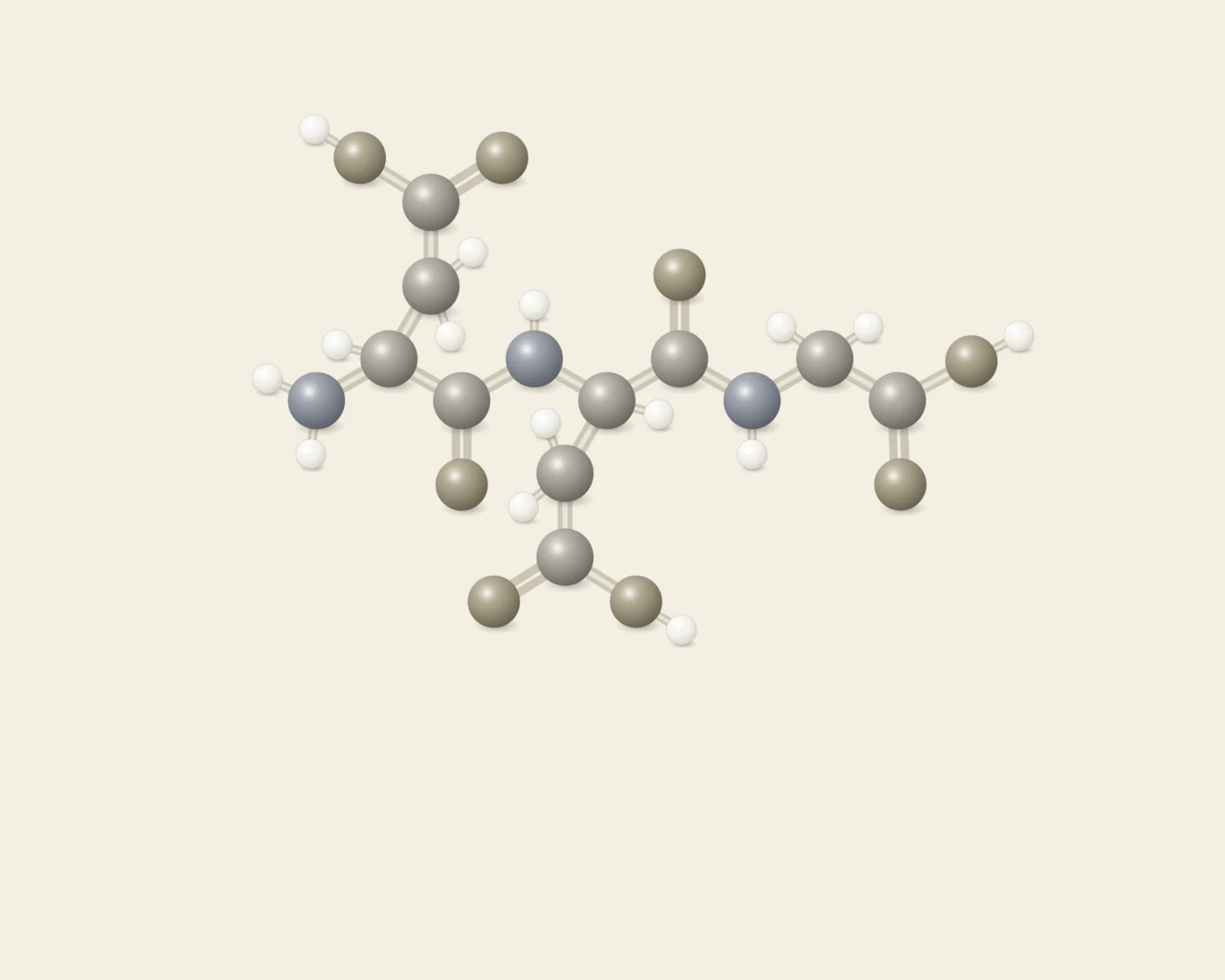
Libidon is an oral capsule of low-molecular-weight peptides extracted from the prostate glands of young cattle. It belongs to the "Cytomax" line of natural bioregulators from Vladimir Khavinson's St Petersburg school, and it is sold at one job: supporting the ageing prostate and male sexual function.
Before anything else, hold on to the format. Libidon is a capsule you swallow, not an injection and not a rectal suppository. Every prostate-peptide study that exists was run on suppositories or injections, of different products.
The name does the marketing for it. "Libidon" reads as libido, and the pitch leans on midlife worries about erections and desire. The evidence points somewhere narrower, and it points at other products.
Libidon is not Prostatilen or Vitaprost
This is the distinction almost every sales page blurs. Libidon is the oral Cytomax capsule. Prostatilen and Vitaprost are separate registered Russian prostate-peptide medicines, given as rectal suppositories, tablets or injection, and they are the products the trial literature is actually about.
All three draw peptides from bovine prostate, which is why vendors treat their evidence as interchangeable. It is not. When a Libidon listing cites "clinical studies", trace the citation and you land on a different drug, by a different route, at a different dose.
Cytomax, cytomedin and the A-16 label
Two words worth learning. A cytomedin is the original crude peptide extract from an organ, the class Prostatilen and Vitaprost belong to. Cytomax is the retail oral-capsule reworking of that idea, and Libidon sits there.
So Libidon is not a defined molecule with a sequence you can check. It is a mixture of short peptides broadly under 5 kDa, sold at around 10 mg of peptide complex per capsule. That undefined nature shapes everything below, from evidence to counterfeiting.
Vendors also list the same capsule as Libidon A-16, or as an "A-16 Prostate Peptide Bioregulator". The code is a catalogue label rather than a different formulation, and no separate evidence attaches to it.
02 / MechanismHow Libidon is proposed to work in the prostate
Every bioregulator rests on the same idea. Peptides drawn from a specific organ are said to carry signalling information back to that same organ, nudging its cells toward more youthful behaviour.
For Libidon the target organ is the prostate. The claim is that bovine prostate peptides, taken by mouth, reach your prostate and normalise how its cells divide and function. The chain has two weak links: surviving the gut, and doing anything once it arrives.
The prostate tissue-signalling claim
In a dish, prostate peptides do something measurable. In organotypic cultures from young and old rats, Prostatilen and related tissue polypeptides stimulated cell growth at 20 to 50 ng/ml, with rising PCNA and falling p53, markers of proliferation and its brake.1
That is a real effect on cultured prostate tissue. It is also Prostatilen, not Libidon, and a rat tissue culture is a long way from your prostate after a swallowed capsule has met your stomach acid.
Prostate peptide research in animal models
In rats with drug-induced prostatic hyperplasia, Prostatilen at 1 mg of total peptides per kilogram prevented the rise in prostate mass and volume and improved the tissue's antioxidant balance.2 A coherent animal signal, and again for the injectable cytomedin, not the oral capsule.
Newer basic work continues in this vein: a 2025 study examined how prostate-extract substances alter the contractile activity of rat lymphatic vessels.3 Interesting biology, no bearing yet on what a Libidon capsule does in you.
The mechanism is not absurd. Prostate peptides act on prostate tissue in cells and rodents. The leap the marketing makes is from "an injected extract changes rat prostate cells" to "this capsule fixes your waterworks", and that leap crosses the gut, the species gap, and the difference between two products.
What the evidence on Libidon actually shows
Search the indexed literature for Libidon and nothing comes back. There is no human trial of the capsule itself, and every clinical figure you will be shown is borrowed from a different prostate-peptide product.
What follows is other people's evidence. Prostatilen and Vitaprost are the products that were actually tested, and the distance between them and a swallowed capsule is the whole question here.
The borrowed evidence: Prostatilen
A St Petersburg clinic reported outcomes for 96 men with benign prostatic hyperplasia, aged 51 to 89, treated with prostatilen and judged it useful for relieving obstruction.4 Note the delivery: dimexide suppositories containing 30 mg of prostatilen. No placebo arm, no blinding, a retrospective clinic series.
A phase III randomised open-label trial in 98 men aged 25 to 45 with chronic abacterial prostatitis compared Prostatilen AC against plain Prostatilen, both rectal suppositories.5 Prostatilen AC raised total motile sperm by 14.3% versus 4.1% for Prostatilen. The comparator is another peptide, not placebo.
These are the better prostatilen studies, and they used a 3 mg registered suppository or a 30 mg dimexide suppository.5 Libidon is a swallowed capsule. We rate that route difference as fatal to the transfer: you are being sold evidence generated by a product that enters the body a different way.
The borrowed evidence: Vitaprost
In 50 men aged 48 to 67 with prostatic adenoma, 30 received vitaprost-forte suppositories for 60 days alongside an alpha-blocker.6 A positive effect was reported in 93.3%, with residual urine cut by 43%. It was given with a proven drug, so the peptide's own contribution is not isolated.
A study of 60 men with BPH and chronic prostatitis split them into two groups of 30; the vitaprost group added the peptide to alpha-blockers and antibiotics.7 Symptoms fell further in that arm. Again combination therapy, small, unblinded, no placebo.
Closest to the Libidon pitch: sexual disorders appeared in 77% of chronic-prostatitis patients, and two months of Vitaprost plus a NeuroDose supplement lifted intercourse duration from 1.1 to 4.1 minutes.8 Combined with a supplement, no placebo, and it is Vitaprost, not Libidon.
The one placebo-controlled trial is not even prostate
When a vendor says "placebo-controlled", one study usually sits underneath. A blind randomised placebo-controlled trial in men aged 62 to 83 did report better urination for a peptide bioregulator in BPH.9
Read the fine print and the drug is Chitomur, a bladder peptide, not a prostate one. It is the best-designed study in this corner of the literature, and it belongs to a different organ's extract.
Where the prostate peptide research comes from
Nearly every study above is Russian-language, from urology and gerontology journals inside the school that developed these peptides, including Khavinson's own review that files Prostatilen among "geroprotectors".10 One 2014 review flatly calls bovine prostate peptides of "proven efficacy", a phrase resting on the same small unblinded series.11
"Proven" is doing heavy lifting there. It means small, mostly unblinded, single-country, combination-therapy studies of suppositories and injections, never independently replicated in the West, and never once conducted on the Libidon capsule you would actually buy.
What remains unproven
No trial has tested oral Libidon for prostate symptoms, sexual function, or anything else. No study has shown that swallowed bovine prostate peptides survive digestion and reach the prostate intact.
The prostate-peptide evidence that exists is modest even for the injectable and suppository products it describes. We grade the oral capsule wearing their reputation at the bottom of this range.
04 / Benefits by evidenceLibidon benefits: the claims, and what the evidence supports
The name is the pitch. Libidon promises libido, and libido is exactly where the evidence runs out. The prostate claim beside it has at least borrowed something real.
The most defensible claim, and still weak for Libidon. Prostatilen and Vitaprost suppositories showed symptom benefit in small unblinded trials, usually alongside standard drugs. Whether an oral capsule reproduces any of that in you is untested.
The headline the name sells, and the softest evidence. The one relevant study paired Vitaprost with another supplement in prostatitis patients, so nothing isolates a peptide effect, let alone an oral one. Buying Libidon "for libido" buys a name, not a finding.
A real but narrow signal, in the wrong product. The 14.3% sperm improvement was for a rectal suppository, Prostatilen AC, in men with prostatitis, and it beat plain Prostatilen, not placebo. It says little about an oral capsule in a general user.
Restored virility, the promise the name sells, has no study of its own behind it at all. Easing urinary symptoms has a retrospective series of 96 men, and that was a suppository.
05 / Dosage and protocolLibidon dosage and protocol
No dose-finding trial exists for Libidon. The figures below are what vendors print and what the wider Cytomax range habitually does, which is not the same thing as a dose anyone has validated in a person.
The marketed Libidon dose and course length
Libidon is typically sold as one to two capsules daily, around 10 mg of peptide complex, taken for a 10 to 30 day course and repeated a few times a year. These numbers come from vendor labels and the wider Cytomax range, not from a study of Libidon.
The prostate peptide doses the research actually used
The trials tell a different story about route and amount. Prostatilen was given as a 3 mg registered suppository, or a 30 mg dimexide suppository, and in rats at 1 mg of peptides per kilogram by injection.2,4,5 Vitaprost trials used suppositories and tablets over weeks.6,7
Not one of those is an oral capsule dosed as Libidon is. A page presenting "10 mg daily" as clinically established has quietly promoted a label figure into a trial result.
Oral Libidon capsules versus suppositories and injections
A suppository or an injection bypasses the gut entirely. A mixture of prostate peptides in a swallowed capsule has to survive stomach acid and digestive enzymes before anything could act.
How much of Libidon survives that trip is simply unestablished. The routes that were studied are the ones you are not using, and the route you are using is the one nobody tested.
06 / Safety and side effectsLibidon safety and side effects
The small studies of prostate peptides reported them as well tolerated, with no adverse effects noted in the elderly BPH work.9 Not one of them was a safety trial.
Why "well tolerated" understates the unknowns about Libidon side effects
They were small, short, looking for benefit rather than harm, and run on suppositories and injections rather than the oral capsule. Absence of reported side effects in a compound barely studied for harm mostly tells you nobody looked hard or long.
The risks that are actually likely: contamination and delayed diagnosis
Neither of the two real risks here is the peptide. An unregulated bovine-tissue extract carries risks of contamination and mislabelling, and there is no way to confirm what a Cytomax capsule contains. Animal-tissue sourcing also raises its own contamination questions.
The bigger danger with Libidon is subtler: using it to self-treat prostate symptoms delays diagnosis. Weak stream and night-time urination can signal benign enlargement, but also infection or prostate cancer, and a capsule cannot tell you which.
Who should not use Libidon
Anyone with new or worsening urinary symptoms who has not been assessed, because the priority is a diagnosis, not a supplement. Anyone with a known or suspected prostate cancer, and anyone dosing without a clinician who has their history.
A prostate you have not had checked is the wrong thing to treat with a capsule. Get the examination and the PSA conversation first, and let the supplement question wait its turn behind them. That order is the one piece of advice on this page we hold to firmly.
07 / SourcingWhere to buy Libidon safely in the UK
Libidon has a verification problem that a defined peptide like Epitalon does not. If you are buying in the UK you are ordering from overseas supplement sellers, not from a UK-licensed supply chain, which makes that problem practical rather than theoretical.
Because it is an undefined mixture of prostate peptides rather than a single sequence, there is no mass or sequence you can demand a lab match against.
Why a certificate of analysis proves less for Libidon
For a synthetic peptide, a good certificate confirms identity by HPLC and mass spectrometry. For a crude extract, the best a certificate can show is a peptide profile and contamination screening, not that the biological activity, whatever it is, is present. You cannot fully verify what you are buying.
What to ask a supplier for anyway: batch testing and tissue source
Prefer suppliers who publish batch testing for identity and microbial and heavy-metal contamination, name the tissue source, and are transparent about manufacturing. A price far below the market tells you about the seller's margins, and about what got left out of the capsule to make them.
Check which product you actually hold. If a listing leans on Prostatilen or Vitaprost trials, that work used suppositories and injections, so an oral Libidon capsule is not the thing that was studied. We see that swap made on almost every listing.
08 / ComparisonLibidon versus Prostatilen, Vitaprost and Prostamax
All three are bovine prostate peptides, but they are not interchangeable. Prostatilen and Vitaprost are registered Russian medicines with the actual, if modest, trial record, delivered as suppositories, tablets or injection. Libidon is the oral Cytomax capsule that borrows their reputation without their studies.
If your interest is the evidence, we would send you to the suppository and injectable cytomedins, not the capsule. If your interest is convenience, the capsule is easier to take and the least tested.
Prostamax is a different class again: a short synthetic prostate peptide made to one formula, not a bovine tissue extract. So it is not a cheaper Libidon, and none of the Prostatilen or Vitaprost record transfers to it either.
We map the whole range, oral Cytomax against the injectable peptides, on our types of bioregulator guide.
Frequently Asked Questions
Has Libidon been tested in human trials?
No. A PubMed search for "Libidon" returns zero results. Every clinical figure attached to it is borrowed from other bovine prostate-peptide products, mainly Prostatilen and Vitaprost, which are given as suppositories, tablets or injection rather than as an oral capsule.
Does Libidon increase libido or testosterone?
The name suggests it, the evidence does not. The one relevant study paired Vitaprost with a separate supplement in prostatitis patients, so nothing isolates a peptide effect, and none of it involved oral Libidon. The libido claim is marketing built on a name, and no study of these prostate peptides measured testosterone at all.
Does Libidon help with benign prostatic hyperplasia (BPH)?
No trial has tested Libidon for BPH. The BPH results people cite belong to Prostatilen and Vitaprost suppositories: a retrospective clinic series in 96 men, and small unblinded studies that added the peptide to alpha-blockers or antibiotics. None of that was an oral capsule, and none of it isolates the peptide's own effect.
Is Libidon the same as A-16?
Yes. A-16 is a vendor catalogue code for the same oral Cytomax capsule, not a different formulation, and no separate evidence attaches to the name. Under either label it is the product that has never been trialled, unlike Prostatilen and Vitaprost, the registered medicines that hold what trial evidence exists.
How long is a Libidon course and how often do you repeat it?
Vendors suggest courses of 10 to 30 days, repeated a few times a year, at one to two capsules daily and around 10 mg of peptide complex. There is no validated human dose; these figures are convention, and the studied prostate peptides used quite different routes and amounts.
Can an oral Libidon capsule actually reach the prostate?
That is the unanswered question. A mixture of short peptides in a swallowed capsule faces stomach acid and digestive enzymes, and how much survives intact is unestablished. The trials that showed benefit used suppositories and injections, which bypass the gut entirely.
Does Libidon have side effects?
Nobody has catalogued side effects for Libidon itself, because it has never been tested. The prostate-peptide studies reported good tolerability, but they were short, small, not designed to detect harm, and they tested other products. The likelier risks with Libidon are an unverifiable bovine-tissue extract and, more importantly, delaying proper diagnosis of prostate symptoms.
Is Libidon safe to take long term?
Nobody knows. The prostate-peptide studies that exist ran for weeks or a couple of months, not years, and none of them tested the oral capsule, so there is no long-term record for Libidon in any form. The repeat-course pattern vendors suggest comes from convention, not from any study of what repeated courses do.
Can you use Libidon instead of seeing a doctor about prostate symptoms?
No, and this is the one firm answer here. Weak stream, urgency and night-time urination can mean benign enlargement, infection, or prostate cancer. A capsule cannot tell them apart, so get assessed first and treat any supplement as a separate question.
Is Libidon legal in the UK?
Libidon is sold in the UK as a supplement or bioregulator, not as a licensed medicine. It is not an approved medicine in the UK, US or EU, and has not been evaluated by the MHRA, FDA or EMA. Buying and using it is unregulated and at your own risk.
- Ryzhak AP, Chalisova NI, Lin'kova NS, et al. [Polypeptides influence on tissue cell cultures regeneration of various age rats]. Adv Gerontol. 2015;28(1):97–103. PMID: 26390619.
- Belostotskaia LI, Nikitchenko IuV, Gomon ON, et al. [Effect of biologically active substances of animal and plant origin on prooxidant-antioxidant balance in rats with experimental prostatic hyperplasia]. Eksp Klin Farmakol. 2006;69(4):66–68. PMID: 16995443.
- Nechaykina OV, Laptev DS, Petunov SG, Bobkov DV. Comparative assessment of the influence of active pharmacological substances of prostate extract on the contractile activity of rat lymphatic vessels. Bull Exp Biol Med. 2025;179(6):718–721. PMID: 41514109.
- Al'-Shukri SKh, Gorbachev AG, Borovets SIu, et al. [Prostatilen effects on voiding disorders in patients with benign prostatic hyperplasia]. Urologiia. 2005;(5):25–26. PMID: 16281835.
- Rybalov M, Borovets S, Petlenko S, et al. Influence of adding zinc arginyle-glycinate to improve efficacy of bioregulatory peptides of the prostate gland in treatment of patients with impaired sperm parameters. Georgian Med News. 2022;(328-329). PMID: 36318852.
- Shafranov DV, Mariupol'skii AA. [Vitaprost-forte in the treatment of patients with prostatic adenoma]. Urologiia. 2011;(6):54,56–59. PMID: 22448483.
- Kuzmenko AV, Vinnik YY, Kuzmenko VV, Gyaurgiev TA. [The use of bioregulatory peptides in the treatment of men with benign prostatic hyperplasia and chronic prostatitis]. Urologiia. 2021;(3):70–74. PMID: 34251104.
- Davidov MI. [Sexual dysfunction in patients with chronic prostatitis and its treatment]. Urologiia. 2020;(1):51–58. PMID: 32191002.
- Gomberg VG, Ryzhak VG, Liutov RV. [Peptide geroprotector application for treatment of elderly and senile patients with prostatic hyperplasia]. Adv Gerontol. 2013;26(3):476–480. PMID: 24640697.
- Khavinson VKh, Kuznik BI, Ryzhak GA. [Peptide bioregulators: the new class of geroprotectors. Message 2. Clinical studies results]. Adv Gerontol. 2013;26(1):20–37. PMID: 24003726.
- Demidko IuL, Gazimiev MA, Baiduvaliev AM, et al. [The use of vitaprost in the treatment of patients with prostate diseases]. Urologiia. 2014;(1):62–67. PMID: 24772777.