What Testoluten is
Testoluten is an oral capsule sold within the Khavinson "peptide bioregulator" range, aimed at the male reproductive system. It belongs to the Cytomax line: preparations described by their makers as a low-molecular-weight peptide fraction isolated from an animal organ, in this case the testes of young cattle.
The premise, shared across the whole range, is that peptides drawn from a specific organ carry signalling cues relevant to that same organ in you. For Testoluten the target tissue is the testes, and the marketed idea is testicular support as you age.
PubMed indexes zero studies carrying the name Testoluten. Not a thin trial or a weak one: none at all. That absence sets the price of everything else on the label.
An oral A-13 extract, not an injectable peptide
Testoluten has no defined molecule you can verify by mass, the way Epitalon does. It is a crude peptide fraction from bovine testis, packaged as a capsule, typically described as around 10 mg of "peptide complex A-13" per dose.
So there is no sequence to check on a certificate, no clean molecular weight to confirm. What you are buying is an extract, and an extract's identity is far harder to pin down than a synthetic peptide's.
Testoluten is not Testagen
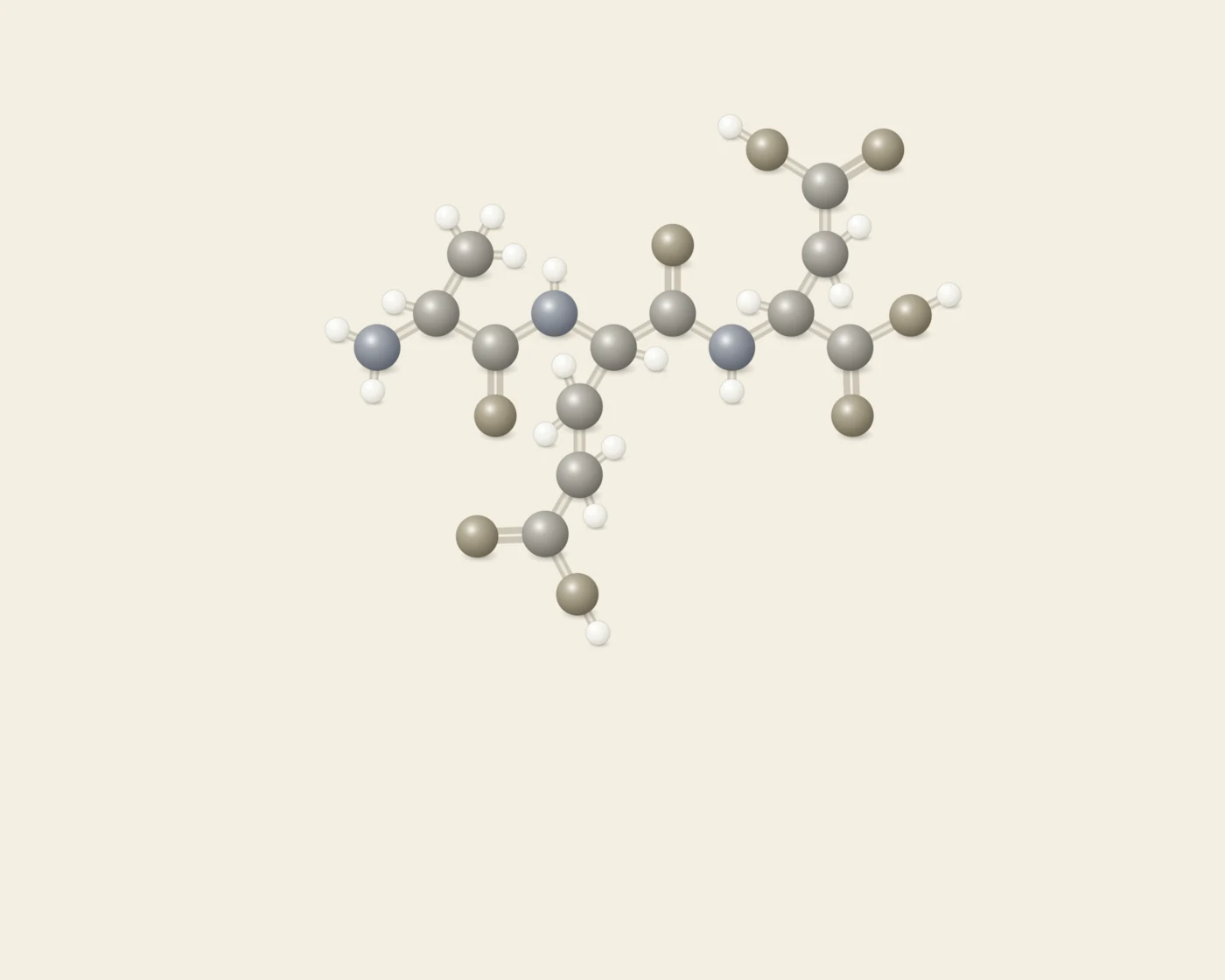
Keep these two apart, because the small amount of real laboratory data attaches to the wrong one for a buyer. Testoluten is the bovine-testis extract, the Cytomax capsule. Testagen is a synthetic tetrapeptide, the sequence Lys-Glu-Asp-Gly, designed as the range's defined-molecule sibling for the same tissue.3
This is the same swap you meet with Epitalon and epithalamin. When a listing lends the synthetic peptide's tidy lab story to the extract in the jar, it is quietly trading one substance for another, and you should notice.
02 / MechanismHow Testoluten is proposed to work
The mechanism claimed for Testoluten is the general bioregulator hypothesis, borrowed wholesale. None of it was worked out on a testis extract, and the sales copy reads differently once you know that.
The tissue-specific signalling idea
The founding programme, run by Vladimir Khavinson's St Petersburg group, proposed that short peptides extracted from an organ stimulate the growth and function of that same organ. Their monograph reported tissue-specific peptides designed for the heart, liver, brain cortex and pineal gland.1
The heart, liver, cortex and pineal are named. The testis is not among the worked examples in the founding design paper, which is a quiet gap under a product sold on exactly that premise.
The DNA and gene-expression claim
The proposed deeper mechanism is that these short peptides enter the cell nucleus and bind DNA, nudging which genes are read. A class-level systematic review from the same group states that short peptides of 2 to 7 amino acid residues can penetrate the nuclei of cells and interact with histone proteins and DNA.2
That is a class claim about short peptides in general, not a finding about Testoluten. It describes what molecules like these are claimed to do, in a dish, not what a testis-extract capsule does in your body.
The mechanism story is coherent as a hypothesis. What it is not, for Testoluten specifically, is tested. Every mechanistic sentence you read about it is imported from work on other peptides, then pointed at the testes by analogy.
The one piece of real data sits with Testagen, not Testoluten
The closest thing to direct evidence touches the synthetic sibling, not the extract. A 2011 study labelled testagen (Lys-Glu-Asp-Gly) with a fluorescent tag and reported that it penetrated HeLa cell nuclei and bound DNA sequences.3 HeLa is a cervical-cancer cell line, not testicular tissue, and this is chemistry, not a demonstration of testicular benefit.
03 / The evidenceWhat the Testoluten evidence actually shows
The indexed literature holds nothing under the name Testoluten, and nothing on a testis peptide geroprotector under any other name. What follows is everything adjacent to it that does exist.
No human, animal or cell studies are named Testoluten
None. A PubMed search for "Testoluten" returns no indexed records at all. There is no human trial, no animal study, and no cell study published under the product's name. The supporting figures you see on vendor pages are manufacturer-published and do not trace to indexed literature.
When a sales page cites "studies" for Testoluten, ask which ones. The indexed record does not hold them.
What exists for the synthetic sibling, Testagen
The peptide most likely to be confused with Testoluten fares only a little better, and not in a way that helps a man hoping for testicular support.
Fedoreyeva and colleagues reported that testagen (Lys-Glu-Asp-Gly) entered HeLa cell nuclei and bound preferentially to CAG-containing DNA sequences.3 A real, indexed result: it is a fluorescence and DNA-binding assay, telling you the peptide can reach a nucleus, not that it restores fertility or testosterone.
The other indexed hit for Testagen is a materials-chemistry paper. It reported that the peptide, as H-Lys-Glu-Asp-Gly-OH, worked as a copper corrosion inhibitor with an efficiency of around 86% in saline.4 That paper is a fair measure of how far the literature carrying this name sits from any testicular claim.
Two indexed papers on the synthetic sibling, one about nuclei in a cancer cell line and one about protecting copper pipes. Neither touches a testis, a hormone or a person. That is the whole traceable file.
What the Khavinson peptide research covers, and what it leaves out
The Khavinson range does have a real body of research, and none of it is about this organ. Studies on other bioregulators report cell effects: one 2020 paper found that the AED peptide activated sirtuin-1, sirtuin-6 and collagen I in ageing human skin fibroblasts.6
The group's own clinical-results review summarises human studies of Timalin, Thymogen, Vilon, Epithalamin, Prostatilen, Cortexin and Retinalamin.5 A testis preparation is not on that list. The prostate one, Prostatilen, is; the testicular product is absent from their own clinical summary.
One more swap sits inside the founding monograph. It does report that a peptide preparation restored reproductive function in old rats, but the preparation was Epithalamin, the pineal extract, not a testis extract.1
What remains unproven about Testoluten
No study shows that Testoluten raises testosterone in a man. None shows it restores fertility. None shows it slows testicular ageing, or does anything at all in a human being.
We grade this thinner than Epitalon, thinner than Thymalin, thinner than anything else in the range. For those you can at least argue over cell data and small cohorts. For Testoluten there is no data under its own name to argue about.
04 / Benefits by evidenceTestoluten benefits: the claims, and what the evidence supports
Men come to this page wanting one number on a blood test to move. Nothing indexed anywhere reports that number in a Testoluten user, and the same emptiness sits under the other two claims.
Unsupported. No study, indexed anywhere, measures testosterone in people taking Testoluten. A claim that a capsule raises your testosterone is the kind a sceptic should distrust hardest without a trial, and here there is no trial.
Unsupported for this product. The reproductive-function result in the founding literature used the pineal extract in rats, not this testis capsule in men.1 Buying Testoluten for fertility is buying a claim that borrows another compound's animal result.
Least supported of all. It leans on the general peptide-theory-of-ageing framing1 rather than any measurement in Testoluten users. Treat "reverses testicular ageing" as a hypothesis wearing the clothes of a finding.
The bolder the promise here, the emptier the file behind it. We would pay nothing for the two loud claims, more testosterone and restored fertility, because nothing indexed sits underneath either of them.
05 / Dosage and protocolTestoluten dosage and protocol
These are the vendor's numbers, and nobody has tested them. No dose-finding study exists for Testoluten, so every figure below is label convention rather than a validated human dose.
The marketed dose: capsules per day and course length
The common vendor instruction is one to two capsules a day, roughly 10 to 20 mg, taken for 10 to 30 days, with courses repeated a few times a year. These numbers come from packaging and community tradition, and no trial has tested whether they do anything.
The oral-capsule absorption problem
Testoluten is sold as a capsule, and that raises a question no vendor answers. A peptide fraction faces digestion in your gut, where proteins and peptides are broken into fragments before absorption.
How much of an intact, active peptide from bovine testis survives that journey and reaches any target tissue is unestablished for this product. The oral route is convenient to sell and hard to defend on evidence.
Why the Testoluten course is not a clinical protocol
A dosing schedule printed on a box can look clinical without being clinical. For Testoluten the schedule was not derived from a trial that measured an outcome in people. If a page presents its capsule count as a proven regimen, it is dressing a convention as a finding.
06 / Safety and side effectsTestoluten safety and side effects
Vendor listings describe Testoluten as "well tolerated" with "no side effects reported". Behind that phrasing sits no study, no cohort and no adverse-event record.
Why "no side effects reported" tells you little
With most peptides you can at least point to small studies that looked for harm and found little. For Testoluten there are no indexed studies to look at, so "no side effects reported" means no one has reported, not that anyone has looked and cleared it.
For a product with no published safety data under its name, an empty complaints column measures the silence around it rather than anything about the capsule.
The risks that are actually likely with a bovine-tissue extract
For an oral bovine-tissue extract, the hazards are in what the jar contains rather than what the peptide does. An animal-tissue preparation raises questions of source-material quality, contamination and honest labelling, and you have no independent test confirming what the capsule contains.
There is also the hormonal angle. A product that really did move testosterone or fertility would carry endocrine consequences that need medical oversight. The evidence does not show Testoluten does that, but you cannot claim the benefit and wave away the corresponding risk.
Who should not use Testoluten
Anyone with a hormone-sensitive condition or a history of testicular or prostate cancer, given the reproductive-system target and the missing data. Anyone pregnant or breastfeeding, which does not apply to the marketed use but rules out household sharing. And anyone hoping to fix a real fertility or hormone problem.
If your testosterone or fertility worries you, the person to see is a doctor who can measure it, not a capsule with no trial behind it. That is a clinical question, and we are not a clinic.
07 / SourcingWhere to buy Testoluten safely in the UK
Sourcing is harder for Testoluten than for a synthetic peptide. Because it is a crude extract rather than a defined molecule, you cannot verify it by sequence or mass the way you can verify Epitalon.
What you cannot confirm about an extract capsule
There is no simple lab test a buyer can demand that proves a capsule holds an active bovine-testis peptide fraction rather than filler. A certificate for an extract can attest to a process, not to a clean identity check. That gap is real, and no vendor closes it for you.
Sensible checks before you buy Testoluten
Prefer a supplier who names the manufacturer and origin rather than one shipping unlabelled blister packs. Ask for any batch documentation they hold, and read it for what it actually certifies. Treat a price far below the market as a warning about what is in the capsule, not a bargain.
Those steps reduce the odds of a relabelled capsule of unknown origin. We would still not call the result verified, because no check available to a buyer can verify an extract.
08 / ComparisonTestoluten versus the rest of the range
Testoluten sits at the thin end of a range that itself is short on human data. Against Epitalon it has no telomerase cell work and no melatonin signal. Against Thymalin it has no immunology cohort. Against Prostatilen, the prostate preparation, it lacks even the clinical mention that the group gives its own products.5
Its nearest relative is Testagen, the synthetic tetrapeptide for the same tissue, and even that has only a DNA-binding assay and a corrosion study to its name.3,4 We map the full oral Cytomax range, and where each product's evidence really sits, on our bioregulator types guide.
Frequently asked questions about Testoluten
Is Testoluten backed by clinical studies?
No. A PubMed search for "Testoluten" returns no indexed records of any kind, human or otherwise. The supporting claims you see are manufacturer-published and do not trace to the indexed literature, so there is nothing independent to check.
Does Testoluten increase testosterone?
No study shows that it does. Nobody has measured testosterone in people taking Testoluten and published it. A capsule that claims to raise your testosterone without a trial is exactly the claim to be most sceptical of, and here the trial does not exist.
Is Testoluten the same as TRT or a testosterone booster?
No. TRT is prescribed testosterone, given and monitored by a doctor. Testoluten is an oral bovine-testis extract, and nobody has published a measurement of testosterone in anyone taking it. If your hormone level is the question, it is a doctor with a blood test who can answer it, not a capsule.
Is Testoluten the same as Testagen?
No. Testoluten is the oral bovine-testis extract, a Cytomax capsule. Testagen is a synthetic tetrapeptide, Lys-Glu-Asp-Gly, from the same programme. The little indexed lab data belongs to Testagen, not to the extract you are likely buying, so keep them apart.
What do the two Testagen studies actually show?
Two indexed papers. One from 2011 reported that testagen penetrated HeLa cell nuclei and bound DNA. One from 2025 reported it inhibited copper corrosion by around 86% in saline. Neither involves testes, hormones or humans.
How many Testoluten capsules per day do vendors suggest?
Vendors typically suggest one to two capsules, around 10 to 20 mg, daily for 10 to 30 days, repeated a few times a year. There is no dose-finding trial behind those numbers, so treat them as label convention rather than a validated dose.
Can you absorb Testoluten from a capsule?
That is the unanswered question. A peptide fraction faces digestion in your gut, and how much survives intact to reach any tissue is unestablished for Testoluten. The oral format is easy to sell and hard to defend on evidence.
Is Testoluten licensed as a medicine in the UK?
No. It is sold as a food supplement or parapharmaceutical, not an approved medicine, and is not evaluated by the MHRA, FDA or EMA. It has cleared no efficacy bar for the reproductive or hormonal claims made around it.
Does Testoluten improve sperm quality or male fertility?
There is no evidence Testoluten improves sperm quality or fertility, and a fertility problem deserves a real diagnosis. The reproductive-function result in this literature came from a pineal extract in rats, not this capsule in men. See a doctor who can investigate the actual cause.
What do Testoluten reviews and Reddit threads actually say?
The material is anecdotal. Vendor testimonials and scattered forum posts report more energy or better libido, with no controlled comparison and nobody blinded. A self-reported effect on an uncontrolled course is exactly what a placebo produces, so none of it substitutes for the trial that does not exist.
- Khavinson VKh. Peptides and Ageing. Neuro Endocrinol Lett. 2002;23 Suppl 3:11–144. PMID: 12374906.
- Khavinson VK, Popovich IG, Linkova NS, Mironova ES, Ilina AR. Peptide Regulation of Gene Expression: A Systematic Review. Molecules. 2021;26(22):7053. PMID: 34834147.
- Fedoreyeva LI, Kireev II, Khavinson VKh, Vanyushin BF. Penetration of short fluorescence-labeled peptides into the nucleus in HeLa cells and in vitro specific interaction of the peptides with deoxyribooligonucleotides and DNA. Biochemistry (Mosc). 2011;76(11):1210–1219. PMID: 22117547.
- Dobriţescu A, Samide A, Cioateră N, et al. The Inhibitory Effect and Adsorption Properties of Testagen Peptide on Copper Surfaces in Saline Environments: An Experimental and Computational Study. Molecules. 2025;30(15):3141. PMID: 40807317.
- Khavinson VKh, Kuznik BI, Ryzhak GA. [Peptide bioregulators: the new class of geroprotectors. Message 2. Clinical studies results]. Adv Gerontol. 2013;26(1):20–37. PMID: 24003726.
- Fridman NV, Linkova NS, Kozhevnikova EO, Gutop EO, Khavinson VK. Comparison of the Effects of KE and AED Peptides on Functional Activity of Human Skin Fibroblasts during Their Replicative Aging. Bull Exp Biol Med. 2020;170(1):154–157. PMID: 33231794.