What Taxorest (A-19) is
Taxorest is the oral respiratory capsule in the Cytomax range: the extracted, non-synthetic half of Vladimir Khavinson's bioregulator programme, designated A-19 and aimed at the bronchi and lungs. It is a crude peptide fraction, not a defined molecule, and it is sold as a supplement rather than a medicine.
The active material is a low-molecular-weight peptide mixture, broadly under 10 kDa, isolated from the bronchial mucosa of young cattle or pigs. That is an organ extract, closer in kind to Cortexin or Thymalin than to a lab-made peptide like Epitalon.
Taxorest is a mixture pulled from animal tissue, with no single sequence to check against a certificate. Nothing on the box can verify it the way a certificate verifies a synthetic peptide.
Taxorest is not Bronchogen
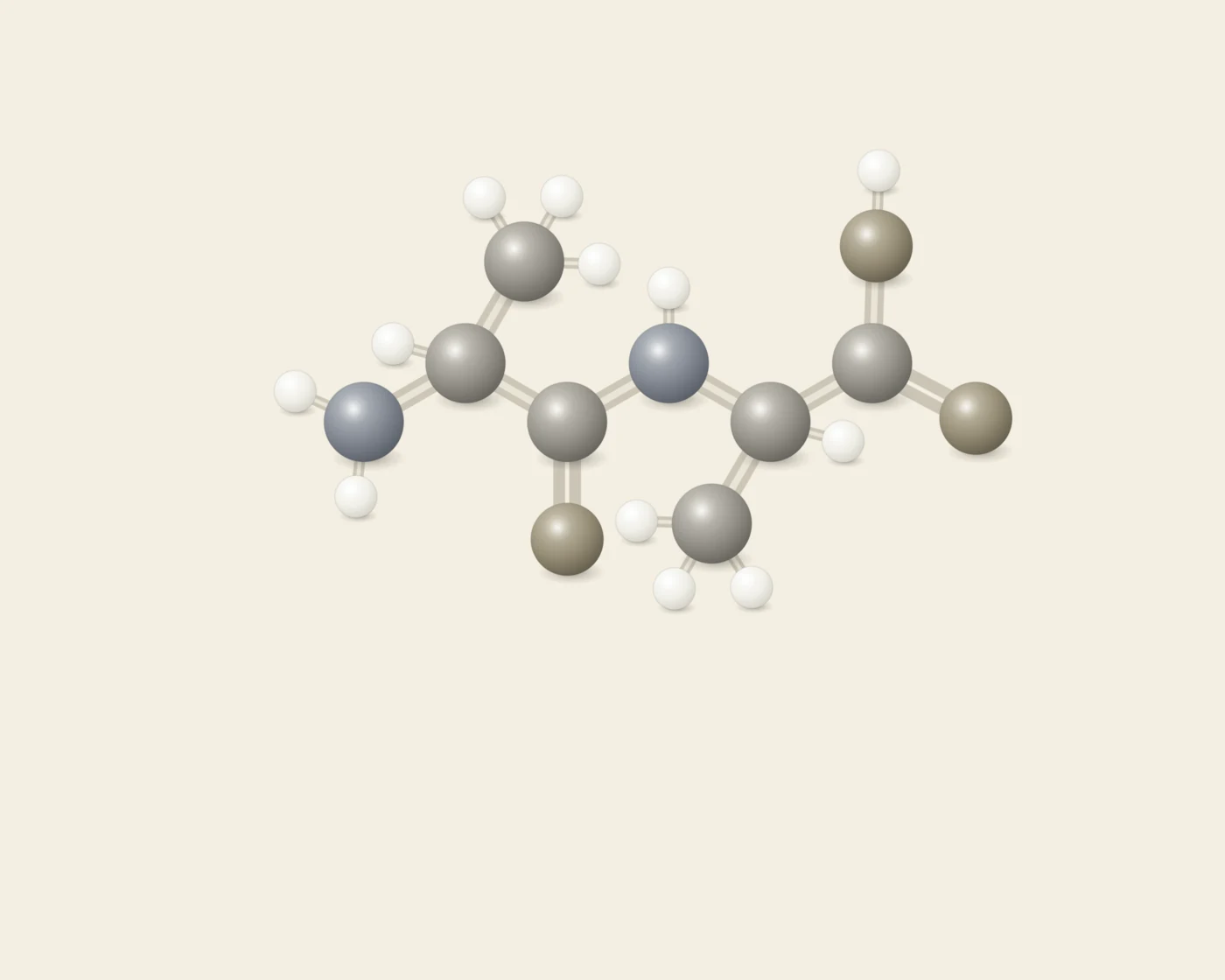
Taxorest is the crude bronchial extract in a capsule. Bronchogen is a synthetic four-amino-acid peptide, sequence Ala-Glu-Asp-Leu (AEDL, written Ala-Asp-Glu-Leu in some papers), made to one defined formula. Almost every listing blurs the two.
Every laboratory study cited for Taxorest was run on Bronchogen, the synthetic peptide, or on the peptide class as a whole. When a vendor lends that research to the capsule, they are quietly swapping one product for another.
Oral Taxorest capsules only, no injectable vials
You will find Taxorest one way: as small capsules taken in short courses. It is not an injectable, and there is no lyophilised vial to reconstitute.
For an oral peptide preparation that matters, because a mixture of short peptides has to survive your gut to do anything systemic, and how much of it does is unestablished. The laboratory work used purified peptide applied to cells or dosed in animals, not a capsule swallowed by a person.
02 / MechanismHow Taxorest is proposed to work in the lungs
The pitch rests on the bioregulator hypothesis: peptides drawn from a given organ carry a tissue-specific signal back to that same tissue, nudging its cells to renew and behave younger. For Taxorest, the target tissue is the bronchial epithelium, the cell layer lining your airways.
The work testing that idea in the airway used the synthetic peptide rather than the extract. The mechanism sold with the capsule is borrowed from a molecule the capsule does not contain in any known amount.
Tissue-specific gene regulation in bronchial cells
In cell culture, the synthetic peptide behaved as the hypothesis predicts. Bronchogen (Ala-Glu-Asp-Leu) tissue-specifically stimulated differentiation factors in bronchial epithelial cells, and the effect was stronger in aged cultures.2
A later study reported that the peptide regulated proliferation and differentiation markers in human bronchial cells, with the strongest push on the oldest cultures.1 Both results are the synthetic peptide in a dish, not your capsule in your lungs.
How Bronchogen binds DNA, in a test tube
The proposed upstream step is that these short peptides enter the cell and bind specific DNA sequences, shifting which genes are read. Bronchogen bound preferentially to CNG-containing sequences in one study,6 and raised the melting temperature of DNA in another.5
In a test tube the mechanism is legitimate. The leap the marketing makes is from "the synthetic peptide binds DNA in a cuvette" to "this bovine-lung capsule renews your airways." Those are separated by several unproven steps, and by a switch of product.
What the Taxorest evidence actually shows
PubMed indexes nothing under the name Taxorest: no trial, no cohort, no case series on the capsule. Every citable study below is on the synthetic peptide or on the class.
Bronchogen in cell and in-vitro studies
Khavinson's group reported that the peptide ADEL regulated Ki67, Mcl-1 and other proteins across the 1st, 7th and 14th passages of human embryonic bronchial epithelial cultures, with the strongest push on proliferation in the "old" cultures.1 This is the closest thing to a human bronchial result, and it is still cells in a dish.
Bronchogen (Ala-Glu-Asp-Leu) tissue-specifically stimulated differentiation factors in bronchial epithelial cells, an effect the authors reported as more pronounced in aged cultures.2 Suggestive of a geroprotective mechanism, in vitro.
Bronchogen acted as a DNA-stabilising agent, raising the melting temperature of DNA from calf thymus and mouse liver by 3.1°C in a narrow concentration range.5 A biophysical result, a long way from an airway.
In organotypic tissue culture, synthetic bronchogen and its siblings showed a stimulating effect on the matching tissue at a concentration of 0.05 ng/ml, in explants from young and aged rats.7 Class-level, not Taxorest.
The cell data hangs together as a modest in-vitro story about the synthetic peptide. Swallowing a bronchial-tissue extract is a different act, and nobody has measured what it does.
Animal studies on Bronchogen in COPD rat models
In rats given a chronic obstructive pulmonary disease model by 60-day intermittent exposure to NO2, administration of tetrapeptide Bronchogen for 1 month was reported to eliminate remodelling changes: goblet cell hyperplasia, squamous metaplasia, lymphocytic infiltration and emphysema, with restored ciliated cells and enhanced secretory IgA.3
A related Russian-language study in the same NO2-induced rat model reported that bronchogen reduced neutrophilic inflammation and restored the bronchial epithelium, with higher secretory IgA and surfactant protein B.4 Single group, from the originating programme.
Both dosed purified synthetic peptide into a chemically injured rat lung, run by the group behind the peptide. We rate them the strongest data in this file, and they are still Bronchogen in rats rather than Taxorest in people.
Human studies on Taxorest (read the small print)
There is nothing PubMed will show you. No randomised trial, no controlled cohort and no indexed human study exists for Taxorest, and none for Bronchogen either. The published science stops at cells and rat lungs.
The one document vendors point to is an open-label, non-randomised manufacturer report: 52 smokers with chronic bronchitis in remission, 31 on Taxorest against 21 controls, never peer-reviewed and not indexed.9 That is the entire human case, and it fails every test we would apply to a real trial.
When Khavinson's own group reviewed the clinical results of the peptide bioregulators, the list ran to Timalin, Thymogen, Vilon, Epithalamin, Prostatilen, Cortexin and Retinalamin.8 The bronchial preparation was not among the peptides with clinical data to summarise.
What remains unproven
No indexed study has tested the Taxorest capsule in a human, an animal or a cell, under that name or as that extract. The only human document is one unblinded report from the maker.
The laboratory evidence attached to it belongs to the synthetic peptide, and even that stops at cells and rat lungs. On the capsule's own airway benefits in people the score is zero.
04 / Benefits by evidenceTaxorest benefits: the claims, and what the evidence supports
Grade a lung claim by what was tested, in what, and by which route. Applied to Taxorest, the broadest promise costs the most and empties out fastest, while the narrowest survives with a rat and a dish behind it.
Most supported, and still weak. It rests on the synthetic peptide in a chemically injured rat lung.3,4 Buying Taxorest "to repair your airways" is buying an animal result on a different molecule, not a demonstrated outcome in you.
Real in vitro, for the synthetic peptide.1,2 It follows from the tissue-specific mechanism, but a proliferation marker rising in an aged cell culture is a dish result, not slower ageing of your lungs.
Least supported. This is the catch-all wellness claim on the sales pages, and only that single manufacturer report speaks to it at all.9 Treat it as marketing, not a finding.
General respiratory support is the loudest line on the box and the emptiest for the capsule. What little evidence exists sits under the narrow technical result, epithelial changes in cultured cells, and even that belongs to the other product.
05 / Dosage and protocolTaxorest dosage and protocol
None of this is a recommendation to dose yourself. No dose-finding study exists for Taxorest, so every figure below comes off the vendor label and out of Cytomax tradition rather than a validated human dose.
How the Taxorest protocol is marketed
Vendors typically suggest 1 to 2 capsules daily for 10 to 30 days, one to three times a year. That pattern is inherited from the wider Cytomax range, not from any trial of the bronchial capsule, so a page presenting it as an established dose is converting a convention into a claim.
Why the research doses do not transfer to the capsules
The numbers in the studies are not capsule doses. The cell work used purified peptide at nanogram concentrations,7 and the animal work dosed the synthetic peptide directly.3 Neither tells you how many capsules of a bovine-lung extract to swallow, or whether any of it reaches your airways.
Nobody has established a protocol for this product. What you would be following is a marketing schedule, and knowing that before you buy is worth more than the schedule itself.
06 / Safety and side effectsTaxorest safety and side effects
Vendors describe Taxorest as gentle and well tolerated, and the small manufacturer report noted no serious problems.9 Both statements trace back to the same 31 treated smokers.
Reported side effects, and why "well tolerated" tells you little
That report recorded no side effects at all. It is also the only safety observation on record: one unblinded study, run by the maker, never published.
A clean sheet from one small group nobody checked tells you how hard the looking was. Harm that has never been searched for has not been ruled out.
The likelier risk is the bronchial extract, not the peptide
The manufacturing should worry you more than the molecule. This is a crude extract of bovine or porcine bronchial tissue, sold as an unregulated supplement with no published identity or purity testing. What is in the capsule is not guaranteed, and no lab you can name has checked it.
Because it is an animal-tissue preparation rather than a defined molecule, you also cannot confirm which peptides, or what else, came across in the extraction. That uncertainty is inherent to the format, and no certificate resolves it the way it can for a synthetic peptide.
Who should not use Taxorest
Anyone who is pregnant or breastfeeding, since it is untested there; anyone with a respiratory condition who might otherwise delay proper care; and, frankly, anyone minded to self-treat a breathing problem with a supplement.
A persistent cough, breathlessness or any change in your breathing is a reason to see a doctor, not to reach for a capsule. Take the question to a clinician who knows your breathing history before an unlicensed extract goes anywhere near it. No vendor can answer it, and nor can we.
07 / SourcingWhere to buy Taxorest safely in the UK
We rate the Khavinson and Cytomax name as the main thing on sale here, since the capsule brings no evidence of its own. Because the product is a crude extract, you have far less to verify it with than you would for a synthetic peptide.
In the UK you are ordering an unlicensed supplement from overseas sellers and specialist resellers, not a medicine from a pharmacy, and no UK approval stands behind it. Our where to buy guide sets out what that means before you order.
Why a certificate of analysis cannot verify a tissue extract
With a defined peptide you can demand a certificate of analysis showing identity and purity against a known sequence. A mixture from bronchial mucosa has no single sequence to match, so a certificate confirms little more than that the capsule contains some protein. Prefer suppliers who publish third-party testing, but know its limits here.
Check whether the listing sells Taxorest or Bronchogen
Read the listing carefully. If it leans on rat-lung or bronchial-cell research, that work used synthetic Bronchogen, so a Taxorest capsule is not the thing that was studied. If it promises airway repair or immune support, ask which study on the capsule it is citing, because only one exists and it is unpublished.
Neither product is wrong to buy with open eyes, but you should know which is in your hand, and that the evidence you were shown probably belongs to the other one.
08 / ComparisonTaxorest versus Bronchogen
Taxorest and Bronchogen aim at the same tissue from opposite ends of the range. Taxorest is the crude oral extract, unverifiable by sequence and with only one unpublished report under its own name. Bronchogen is the defined synthetic peptide that carries all the cell and animal work, none of it yet in humans.
So the peptide with the evidence is the one most buyers are not actually taking, and the capsule most buyers reach for has almost none of its own. We map the extracted Cytomax capsules against their synthetic counterparts across the range on our types of bioregulator guide.
Frequently asked questions about Taxorest
Is Taxorest A-19 the same peptide as Bronchogen?
No. Taxorest is a crude peptide extract from animal bronchial tissue, sold as an oral capsule. Bronchogen is a synthetic four-amino-acid peptide, Ala-Glu-Asp-Leu. They target the same tissue and are constantly conflated, but they are different products, and the research is on Bronchogen.
What is Taxorest made from?
Taxorest is a low-molecular-weight peptide mixture, broadly under 10 kDa, extracted from the bronchial mucosa of young cattle or pigs and sold as an oral capsule. An organ extract is a mixture rather than a defined sequence, so what you are swallowing cannot be pinned down the way a synthetic peptide can.
Is there clinical evidence for Taxorest?
Nothing on PubMed. There is no indexed human trial for Taxorest, and none for Bronchogen either. The only human document is a small, open-label manufacturer report of 52 smokers that was never peer-reviewed. The published science is all cell and animal work on the synthetic peptide.
What are the benefits of Taxorest peptide?
None are demonstrated for the capsule. Studies on the synthetic peptide reported effects on bronchial-cell proliferation markers in culture and reduced remodelling in a chemically injured rat lung. That is a signal in cells and animals for a different molecule, not proof that the capsule helps your airways.
How long should you take Taxorest for?
Vendors suggest a course of 10 to 30 days, repeated one to three times a year, at 1 to 2 capsules daily. That schedule is Cytomax convention rather than a validated course, because no trial of this capsule has established one. Treat it as a marketing pattern, not a clinical one.
Can you take Taxorest with other bioregulators?
Nobody has studied it. No indexed study has tested the Taxorest capsule at all, so any stacking protocol you are shown is vendor convention rather than a tested combination. Combining untested extracts multiplies the unknowns, not the benefits, and the person to ask is a clinician who knows your history.
Does Taxorest help with chronic bronchitis, asthma or COPD?
No. The COPD data is in rats given the synthetic peptide, the only bronchitis document is the unpublished manufacturer report, and there is nothing at all on asthma. A breathing problem needs a doctor, not a supplement, and treating one yourself with Taxorest would be acting on evidence that does not exist.
Is Taxorest safe?
Nobody has independently studied its safety, so "well tolerated" reflects one unpublished report rather than a clean bill of health. The bigger risk is the product: a crude animal-tissue extract, unregulated, with no verifiable identity or purity testing you can inspect.
Is Taxorest legal to buy in the UK?
Buying it is legal. Approval is a separate question, and Taxorest has none. Vendors ship it as a supplement, so no prescription and no licence stands behind what arrives.
No medicines regulator has looked at Taxorest: not the MHRA here, not the FDA, not the EMA. It reaches the UK as a dietary supplement or parapharmaceutical, so the risk of taking it lands on you.
How do you know if Taxorest is genuine?
You largely cannot. Because it is a mixture rather than a defined sequence, no certificate can confirm identity the way it can for a synthetic peptide. Prefer suppliers who publish third-party testing, and be sceptical of a name doing the selling.
- Khavinson VKh, Tendler SM, Vanyushin BF, et al. Peptide regulation of gene expression and protein synthesis in bronchial epithelium. Lung. 2014;192(5):781–791. PMID: 25015171.
- Khavinson VKh, Linkova NS, Polyakova VO, et al. Peptides tissue-specifically stimulate cell differentiation during their aging. Bull Exp Biol Med. 2012;153(1):148–151. PMID: 22808515.
- Kuzubova NA, Lebedeva ES, Dvorakovskaya IV, et al. Modulating effect of peptide therapy on the morphofunctional state of bronchial epithelium in rats with obstructive lung pathology. Bull Exp Biol Med. 2015;159(5):685–688. PMID: 26468022.
- Titova ON, Kuzubova NA, Lebedeva ES, et al. [Antiinflammatory and regenerative effect of peptide therapy in the model of obstructive lung pathology]. Ross Fiziol Zh Im I M Sechenova. 2017;103(2):201–208. PMID: 30199201.
- Monaselidze JR, Khavinson VKh, Gorgoshidze MZ, et al. Effect of the peptide bronchogen (Ala-Asp-Glu-Leu) on DNA thermostability. Bull Exp Biol Med. 2011;150(3):375–377. PMID: 21240358.
- Fedoreyeva LI, Kireev II, Khavinson VKh, Vanyushin BF. Penetration of short fluorescence-labeled peptides into the nucleus in HeLa cells and in vitro specific interaction of the peptides with deoxyribooligonucleotides and DNA. Biochemistry (Mosc). 2011;76(11):1210–1219. PMID: 22117547.
- Zakutskii AN, Chalisova NI, Ryzhak GA, et al. [The tissue-specific effect of synthetic peptides-biologic regulators in organotypic tissues culture in young and old rats]. Adv Gerontol. 2006;19:93–96. PMID: 17152728.
- Khavinson VKh, Kuznik BI, Ryzhak GA. [Peptide bioregulators: the new class of geroprotectors. Message 2. Clinical studies results]. Adv Gerontol. 2013;26(1):20–37. PMID: 24003726.
- Report on the clinical study of the peptide bioregulator Taxorest. St. Petersburg Institute of Bioregulation and Gerontology. (Open-label, non-randomised; n=52, 31 on Taxorest vs 21 controls; smokers with chronic bronchitis in remission.) Manufacturer-associated, not peer-reviewed, not PubMed-indexed.