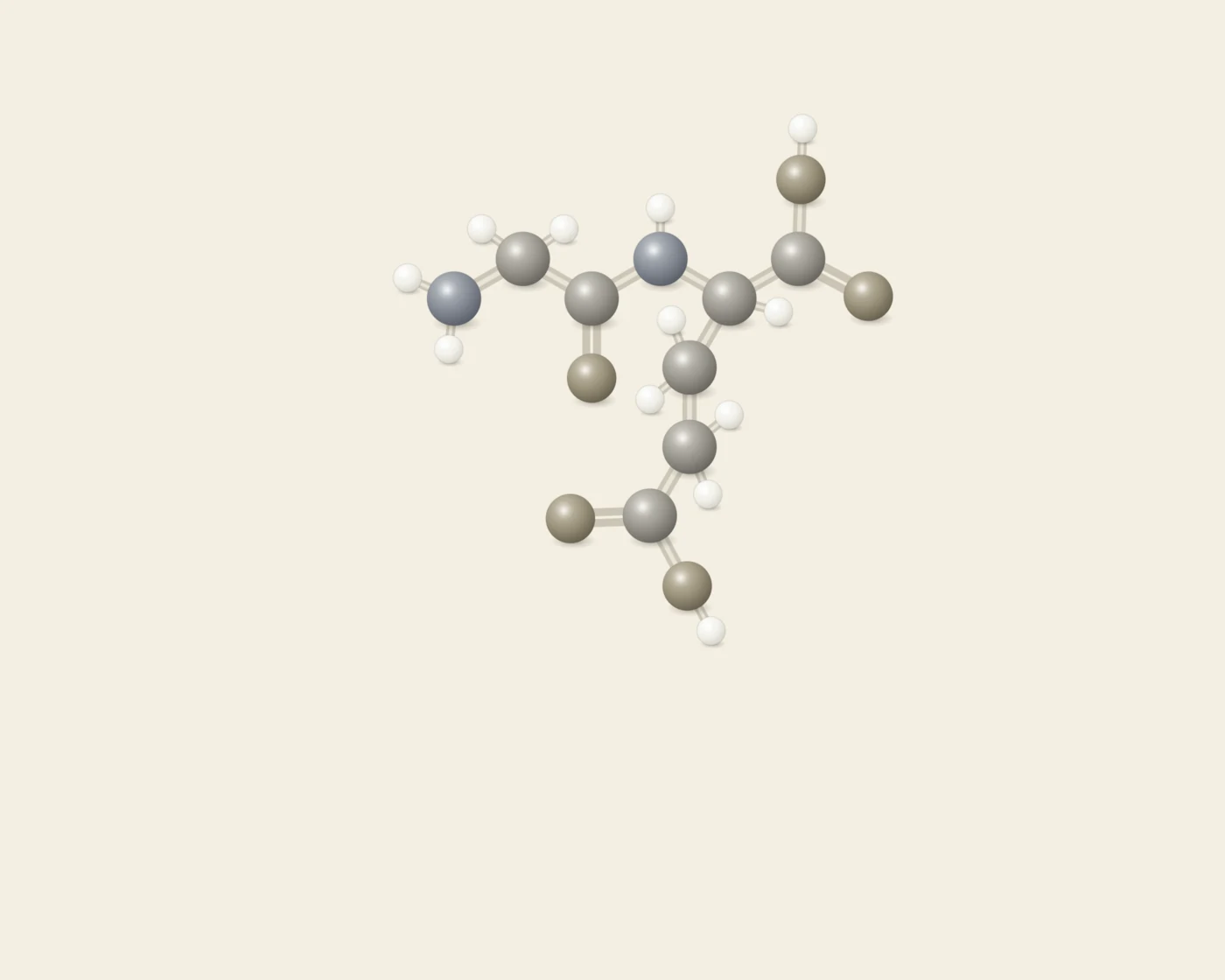
What Bonomarlot is
Bonomarlot is the bone-marrow entry in the oral Cytomax range: a small capsule, taken in short courses, made from a crude peptide fraction extracted from the bone marrow of young cattle. It carries the catalogue code A-20 and is sold as a "blood builder" or haematopoietic support.
It matters to you, before anything else, that Bonomarlot is an animal-organ extract rather than a defined molecule. It is not a single sequence you can weigh or verify, and it is not synthetic. What you swallow is a mixture of low-molecular-weight peptides, broadly under 10 kDa, whose exact composition no vendor publishes.
An extract cannot be characterised, so it cannot be studied as itself. That is why the evidence below is all borrowed from peptides that are not in the capsule.
The bone-marrow premise behind the Bonomarlot pitch
Your bone marrow makes every red cell, white cell and platelet, and its output declines with age. The pitch follows from there: a peptide drawn from marrow should help marrow keep working.
No published study has given the Bonomarlot capsule to a person and measured a blood count. The idea has never been tested in the form you would buy it.
A-20 Cytomax extract, not a short peptide
Keep Bonomarlot, sold under the catalogue code A-20, separate from the synthetic short peptides that share this programme. Epitalon or Vilon are defined sequences of a few amino acids, made to one formula. Bonomarlot is the crude parent-style preparation: an extract, batch-variable, and impossible to characterise the way a single peptide can be.
When a listing lends Bonomarlot the research history of the named short peptides, it is quietly swapping one kind of product for another, and you should know which one is in your hand.
02 / MechanismHow Bonomarlot is proposed to work in bone marrow
One mechanism is claimed for Bonomarlot, and it remains a hypothesis. Nothing has been demonstrated for this product in a person, so what follows is what the bioregulator idea proposes rather than what anyone has shown.
The bone-marrow signalling mechanism Khavinson proposed
The governing idea across the whole Khavinson range is that peptides extracted from a given organ carry signalling information relevant to that same organ in the recipient. For Bonomarlot the target tissue is bone marrow, so the claim is that its peptides nudge marrow cells back toward a more youthful pattern of activity.
The proposed upstream step is that short peptides enter the cell and bind specific DNA sequences, shifting which genes are read. That is the bioregulator hypothesis in miniature, and a hypothesis is all it is. Nobody has shown it happening in a person who swallowed this capsule.
What has actually been measured in bone-marrow cells
The nearest real work is not on Bonomarlot at all. It is on defined short peptides added to bone-marrow cell cultures. In human embryo bone-marrow mesenchymal stem cells, the peptides AED, KED and KE modulated the expression of ageing-related genes at nanomolar concentrations.1
That is a mechanism signal in a dish, using single defined sequences, not the cattle-marrow extract you would be buying. Nobody has shown that those sequences are what a marrow extract actually delivers.
The mechanism is plausible on paper and untested in the product. Nothing published shows that swallowing a bone-marrow extract changes gene expression, blood counts, or anything else measurable in a living person.
What the Bonomarlot evidence actually shows
PubMed indexes no studies of Bonomarlot by name, in any language. Everything below is class-level work on other peptides, laid out so you can see what is being borrowed and from where.
In-vitro and cell studies, none of them on Bonomarlot
Ashapkin and Khavinson added the short peptides AED, KED and KE to human embryo bone-marrow mesenchymal stem cells. TERT expression showed an eightfold increase in the "stationary" ageing model, IGF1 was enhanced 3.5 to 5.6 fold, and KED inhibited FOXO1 by 1.6 to 2.3 fold.1 It used single synthetic peptides, not the extract.
An Italian and Russian group tested five Khavinson peptides, Epitalon, Vilon, Thymogen, Thymalin and Chonluten, on the human THP-1 monocyte line and reported effects on proliferation and inflammatory signalling.2 Note the roster: no bone-marrow peptide is among the five that get studied.
Thymalin, a thymus extract, reduced the stem-cell markers CD44 and CD117 by 2 to 3 times and increased the mature T-lymphocyte marker CD28 by 6.8 times in cultured human haematopoietic stem cells.3 It is the nearest blood-forming-cell result in this literature, and it belongs to a thymus peptide, not a bone-marrow one.
Take that cell work at face value and we read a modest, mostly single-institute story about defined peptides doing measurable things to cells. What none of it is, is evidence that a cattle bone-marrow capsule does anything in you.
Animal studies: marrow results borrowed from other peptides
In senescence-accelerated SAMP-1 mice, bone-marrow chromosome aberrations ran 1.8 times higher than in one control strain. Treatment with Epitalon (Ala-Glu-Asp-Gly) reduced aberrations by 20% in SAMP-1, 30.1% in SAMR-1 and 17.9% in SHR mice.4 This measured bone-marrow cells, but the peptide dosed was the pineal tetrapeptide, not a bone-marrow preparation.
The developers' own summary of experimental data reports that peptide bioregulators increased lifespan and inhibited carcinogenesis in laboratory animals.7 That is a claim about the class, gathered largely by one group, and it names no bone-marrow-specific animal study for you to check.
We rate the mouse marrow result the strongest thing in this file, and it is still the wrong peptide. Nobody has published a comparable animal study on Bonomarlot itself.
Human studies on Bonomarlot (there are none)
This is the caveat that reframes the page. There is no human trial of Bonomarlot. The nearest human work with any blood-related peptide used thymalin, the thymus extract, added to standard COVID-19 care, where it was reported to speed the fall in inflammatory markers.5
That is a different peptide, from a different organ, in a different disease, run by the originating group. Lending its clinical history to a bone-marrow capsule is exactly the swap we flag on every page.
The Khavinson clinical list this product is missing from
Look at what the developers themselves put forward. When Khavinson's group reviewed the bioregulators with real clinical results, it listed seven: Timalin, Thymogen, Vilon, Epithalamin, Prostatilen, Cortexin and Retinalamin.6 A bone-marrow bioregulator is not among them.
When the people who created the range showcase their clinical evidence, Bonomarlot does not appear. We read that silence from its own developers as a stronger signal than anything a vendor page will tell you.
04 / Benefits by evidenceBonomarlot benefits: the claims, and what the evidence supports
Bonomarlot is sold as a bundle of benefits, so take the claims apart and price each one separately. For this product that is short work, because almost nothing attaches to the capsule itself.
The headline claim, and the least supported. No study has shown that the Bonomarlot capsule raises red cells, white cells, platelets or any blood marker in a person. The nearest blood-forming-cell data belongs to thymalin in a dish.3
Real in cell culture for defined short peptides, which modulated ageing-related genes in bone-marrow cells at nanomolar concentrations.1 This is a dish result for single sequences, not a demonstrated effect of the extract you would swallow.
The one honest tick. A capsule is easy to take and, in the small uses reported for these preparations, well tolerated. That is a statement about convenience, not about efficacy, and you should not read it as one.
The hierarchy runs the opposite way to the marketing. The boldest promise, rebuilding your blood, carries no product evidence, while the only thing you can bank on is that a capsule is easy to swallow.
05 / Dosage and protocolBonomarlot dosage and protocol
Read this as a description of what is sold, not as a recommendation to dose yourself. There is no dose-finding study for Bonomarlot, so every figure here is vendor label and Cytomax tradition, not a validated human dose.
The course as marketed: dose and length
The common pattern on sales pages is one to two capsules daily for ten to thirty days, repeated once or twice a year. That schedule is inherited from the wider oral bioregulator range, not derived from any trial of this particular extract.
Why the dosage numbers carry no weight
A dose means something when a study has tied it to an outcome. For Bonomarlot no such study exists, so the milligram figure on the box is a manufacturing convention, not evidence that any amount does anything.
Treat any page presenting this schedule as "the recommended course" as converting a habit into a claim. You are looking at tradition dressed up as guidance.
Do oral Bonomarlot capsules survive digestion?
Because Bonomarlot is swallowed, its peptides meet stomach acid and digestive enzymes before they could reach any tissue. How much of a crude peptide mixture survives the gut intact, and in active form, is unestablished for this product.
Vendors also sell a sublingual version, Bonomarlot Lingual, which dissolves under the tongue and sidesteps the gut by design. No published comparison shows that route delivers more of anything.
That matters to you directly: the whole premise depends on intact peptides reaching your marrow, and that step has never been shown for an oral bone-marrow extract.
06 / Safety and side effectsBonomarlot safety and side effects
Oral bioregulators are generally described as well tolerated, with no serious adverse events reported in the small uses on record. That reads as reassuring until you notice how little it actually rules out.
Why "well tolerated" says little about Bonomarlot
There has been no safety trial of Bonomarlot, because there has been no trial of Bonomarlot at all. "No side effects reported" for a product nobody has formally studied mostly tells you that nobody has looked. Absence of reported harm is not evidence of safety.
The bovine bone-marrow origin caveat
Bonomarlot is a bovine tissue extract, so it inherits the honest concerns that attach to any animal-derived preparation: batch-to-batch variability that is hard to control in a crude mixture, and the theoretical contamination questions that come with animal source material.
A single synthetic peptide sidesteps most of this. An undisclosed extract from cattle marrow does not, and no vendor certificate you are likely to see resolves it.
The anaemia risk that actually matters
The capsule is unlikely to hurt you. What it might delay is another matter. Real problems with blood-cell production, anaemia, low platelets, a marrow disorder, are diagnosed with blood tests and managed by a haematologist.
If you have symptoms that make a "blood builder" appealing, that is a reason to see a doctor, not to buy a supplement. Reaching for an unproven capsule instead of a diagnosis is where a harmless product can cause real harm.
Who should not take Bonomarlot (contraindications)
Anyone who is pregnant or breastfeeding, since it is untested there; anyone with a known or suspected blood or marrow condition, who needs proper investigation; and anyone tempted to self-treat a symptom that belongs in a clinic. Vendor labelling adds one more, individual intolerance of the preparation itself.
Before you put an unlicensed extract into your body, the person to ask is a doctor who knows your history, not a vendor and not us.
07 / SourcingWhere to buy Bonomarlot safely in the UK
Bonomarlot's sourcing problem is baked into what it is. Because it is a crude extract rather than a defined molecule, you cannot verify it the way you can verify a synthetic peptide, and that limits what any honest check can do for you.
Why a certificate of analysis proves less for Bonomarlot
For a single peptide you can demand a certificate of analysis with identity and purity by HPLC and mass spectrometry, and match it to a known sequence and mass. For an undisclosed extract there is no single sequence to confirm, so a certificate cannot tell you the contents are right.
The Khavinson name as a selling tool
Much of Bonomarlot's appeal is borrowed authority: the Khavinson programme, the decades of St Petersburg research, the "bioregulator" label. None of that reputation was earned by this capsule, which its own developers leave off their clinical list.6
When a listing leans on the programme's history, ask what evidence attaches to the specific product, not the brand around it. For Bonomarlot, we can only report that the honest answer is none by name.
Practical checks before you buy Bonomarlot
Prefer a seller who is transparent about batch, origin and storage, and be suspicious of any capsule trading purely on the Khavinson name. You are buying trust in a supplier, because the molecule itself gives you little to hold onto.
08 / ComparisonBonomarlot vs Thymalin and Epitalon: which has the real data
Shelved next to the rest of the range, Bonomarlot is one of the thinnest-evidenced products in it. The peptides it sits beside, thymalin for the immune and blood-forming system, epitalon for the pineal-telomerase work, at least have cell and small-cohort studies to point to.3,5 Bonomarlot points to none of its own.
If a haematopoietic angle is what draws you, notice that the actual blood-forming-cell research in this literature runs through thymalin, a thymus extract, not the bone-marrow capsule. We map the oral Cytomax extracts against the injectable short peptides, and where each one's evidence really sits, on our types of bioregulator guide.
Frequently Asked Questions
Does Bonomarlot boost blood cell production?
Not on any published evidence. No study has tested whether the Bonomarlot capsule changes red cells, white cells, platelets or any blood marker in a person. The "blood builder" label is a marketing premise drawn from the source tissue, not a measured effect of the product.
Has Bonomarlot ever been tested in a human trial?
No. A PubMed search for "Bonomarlot" returns zero indexed studies. The nearest human work with a blood-related peptide used thymalin, a thymus extract, in COVID-19 care, which is a different peptide from a different organ.
What is Bonomarlot made from?
It is a crude, water-soluble fraction of low-molecular-weight peptides, broadly under 10 kDa, extracted from the bone marrow of young cattle. It is not a single defined molecule and it is not synthetic, which is why it cannot be verified like a short peptide.
What is the difference between Bonomarlot and Epitalon or Vilon?
Epitalon and Vilon are synthetic short peptides: defined sequences made to one formula. Bonomarlot is a crude animal extract. The named short peptides have the cell studies; Bonomarlot borrows from them, so keep clear which product a claim actually refers to.
What is the usual Bonomarlot dosage and course length?
Sales pages commonly suggest one to two capsules daily for ten to thirty days, once or twice a year. That schedule is inherited from the wider oral bioregulator range, not derived from any trial of this extract, so treat it as convention rather than a validated dose.
What is the difference between Bonomarlot capsules and Bonomarlot Lingual?
The capsule is swallowed; the Lingual version dissolves under the tongue, which vendors sell as a way around digestion. No published study compares the two, and nothing shows either route delivers intact peptides to your marrow. Choose on convenience if you must, because the evidence does not separate them.
Does Bonomarlot have side effects?
None have been formally reported, and that is because nobody has studied Bonomarlot, not because it has been shown to be clean. Oral bioregulators are generally called well tolerated, but there has been no safety study of this one. It is also a bovine extract, so batch variability and animal-origin concerns apply.
Does Bonomarlot help with anaemia?
No, and this is the important one. Problems with blood-cell production are diagnosed with blood tests and managed by a haematologist. If a "blood builder" appeals because of real symptoms, that is a reason to see a doctor, not to buy a capsule.
Is Bonomarlot legal and approved in the UK?
Bonomarlot is not an approved medicine in the UK, US or EU, and is not evaluated by the MHRA, FDA or EMA. It is sold as a dietary supplement, so no medicines regulator has assessed it for efficacy, and using it is unregulated and at your own risk.
Can you take Bonomarlot with other bioregulators like Vladonix or Thymalin?
Vendors sell these as combined courses, but no interaction study of any kind exists, so a stack is untested rather than known to be safe. Vladonix is the lymph-node extract in the same oral range. Stacking also multiplies cost and makes it impossible to attribute anything you notice to one product.
- Ashapkin V, Khavinson V, Shilovsky G, Linkova N, Vanyushin B. Gene expression in human mesenchymal stem cell aging cultures: modulation by short peptides. Mol Biol Rep. 2020;47(6):4323–4329. PMID: 32399807.
- Avolio F, Martinotti S, Khavinson VK, et al. Peptides regulating proliferative activity and inflammatory pathways in the monocyte/macrophage THP-1 cell line. Int J Mol Sci. 2022;23(7):3607. PMID: 35408963.
- Khavinson VK, Linkova NS, Kvetnoy IM, et al. Thymalin: activation of differentiation of human hematopoietic stem cells. Bull Exp Biol Med. 2020;170(1):118–122. PMID: 33237528.
- Rosenfeld SV, Togo EF, Mikheev VS, et al. Effect of epithalon on the incidence of chromosome aberrations in senescence-accelerated mice. Bull Exp Biol Med. 2002;133(3):274–276. PMID: 12360351.
- Khavinson VK, Kuznik BI, Trofimova SV, et al. Results and prospects of using activator of hematopoietic stem cell differentiation in complex therapy for patients with COVID-19. Stem Cell Rev Rep. 2021;17(1):285–290. PMID: 33575961.
- Khavinson VKh, Kuznik BI, Ryzhak GA. [Peptide bioregulators: the new class of geroprotectors. Message 2. Clinical studies results]. Adv Gerontol. 2013;26(1):20–37. PMID: 24003726.
- Khavinson VKh, Kuznik BI, Ryzhak GA. [Peptide bioregulators: the new class of geroprotectors. Communication 1. Results of experimental studies]. Adv Gerontol. 2012;25(4):696–708. PMID: 23734519.