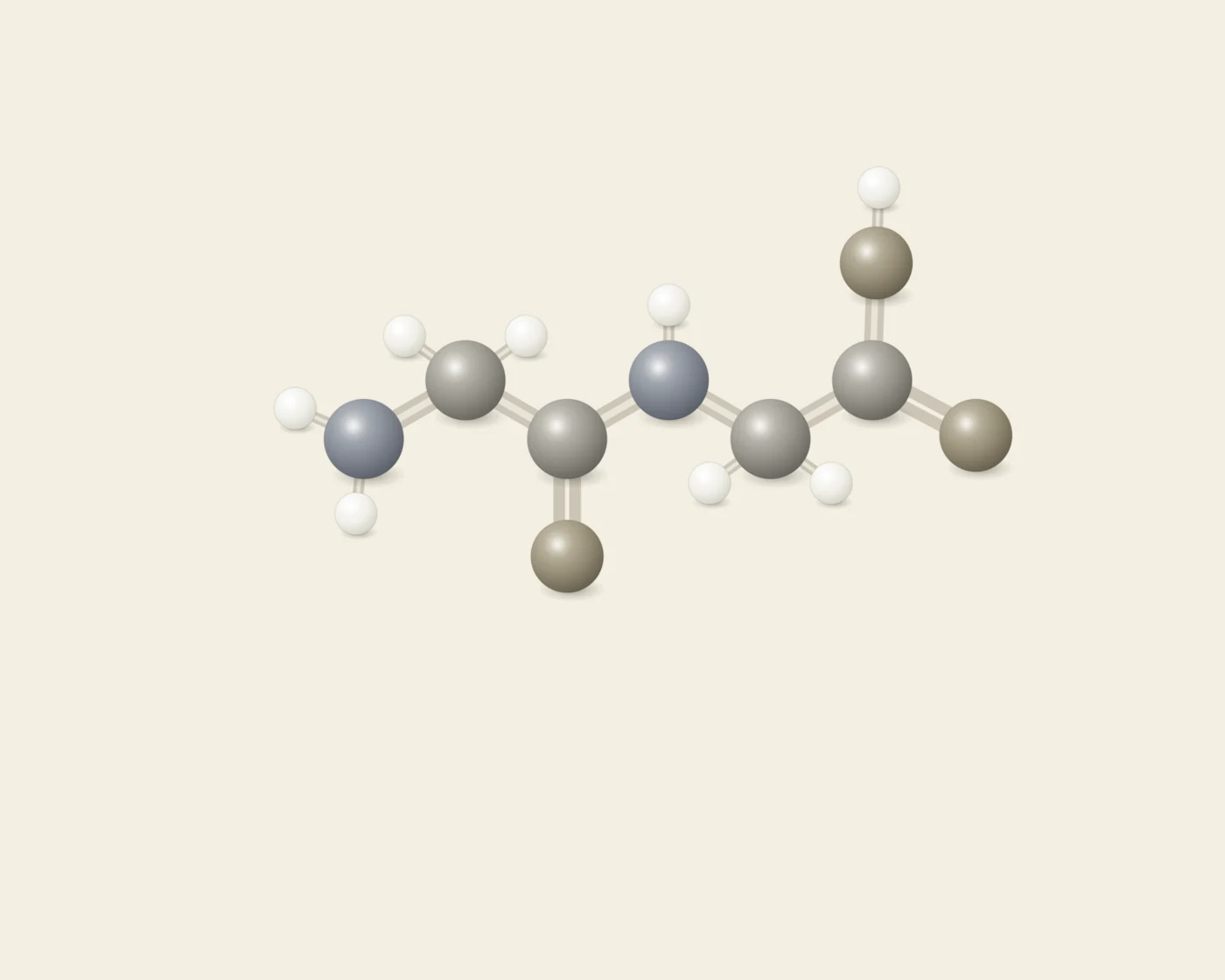
What Visoluten is
Visoluten is one of the oral Cytomax capsules in the Khavinson bioregulator range: a low-molecular-weight peptide fraction pulled from the eye and retinal tissue of young cattle, packed into a capsule, and sold under the trade designation A-11 for retinal and general eye health.
Most of this range targets an organ you never see. Visoluten points at something you can feel going wrong: failing near vision, tired eyes, the slow creep of retinal ageing.
It matters to you, before anything else, that Visoluten is a crude tissue extract rather than a defined molecule. It cannot be verified the way a single peptide sequence can, and the evidence attached to it belongs to other products.
Visoluten is not Retinalamin
Visoluten is the oral capsule. Retinalamin is a separate, injectable retinal peptide preparation used in Russian ophthalmology clinics. Almost every sales page blurs the two.
The retinal-peptide research vendors point to was generated with injectable Retinalamin or with the pineal tetrapeptide Epitalon, not with the capsule you would swallow. A listing that lends that clinical history to Visoluten is swapping one product for another.
The oral capsule, not an injection
You take Visoluten by mouth, in short courses. The retinal studies that give the category its reputation were done with intramuscular injections or with peptides dropped straight onto cells and tissue.
For any oral peptide the question is how much survives the gut intact to reach the eye. No published human trial has answered it for Visoluten.
02 / MechanismHow Visoluten is proposed to work
Visoluten is sold on the general bioregulator hypothesis, pointed at the eye. Nobody has demonstrated any of it for the capsule, so read what follows as the argument rather than the result.
The eye-peptide bioregulator idea
The Khavinson programme rests on a simple proposition: peptides drawn from a specific organ carry signalling information relevant to that same organ in the recipient. Heart peptides for the heart, brain peptides for the brain, and for Visoluten, eye peptides for the retina.
Khavinson designed a single common tetrapeptide, Ala-Glu-Asp-Gly (Epitalon), for both the retina and the pineal gland, reasoning from their shared embryonic origin.7 That design choice is why so much of the eye evidence is Epitalon evidence.
The retinal-peptide mechanism, on borrowed data
A Russian review frames the mechanism as epigenetic: retinal peptides are said to promote restoration of the physiological activity of the retina by regulating the synthesis of protein markers of neuronal and pigment-epithelium differentiation.8
That description is drawn from cell and animal work, and it recurs across the group's papers. No quantified clinical effect of the Visoluten capsule in a person sits behind it.
The mechanism work almost always uses the injectable peptide or Epitalon, not the oral capsule. Presenting that mechanism as the outcome, and borrowing the injectable's data to do it, skips the hard part twice over.
The mechanism is not fringe. The missing step is the one that would matter to you: evidence that swallowing this bovine extract reproduces any of it in a human eye.
03 / The evidenceWhat the Visoluten evidence actually shows
No published study has tested the Visoluten capsule itself. What follows runs cells, then animals, then people, with the product actually used named on every row.
Retinal peptides in cell and in-vitro studies
Khavinson and colleagues applied the retinal polypeptide Retinalamin to early gastrula ectoderm from the frog Xenopus laevis. Neuronal differentiation of that tissue, including brain, retina and pigment epithelium, depended on Retinalamin concentration.3 A clean inductive signal, in an amphibian embryo, with the injectable-class preparation.
Taken at face value, it shows a retinal peptide steering cell fate in a dish. It says nothing about a capsule, a human retina, or an oral dose surviving digestion.
Animal studies: Epitalon in retinal degeneration
In Campbell rats with hereditary pigmentary retinal degeneration, epithalon given from birth protected the retina's morphological structure, increased its bioelectrical activity, and improved its function.2 A real protective signal in a genetic-disease model, using the peptide, not the eye-tissue capsule.
A companion report found that Epitalon in Campbell rats intensified the bioelectric and functional activity of the retina through preservation of its morphological structure.1 Consistent with the study above, and again this is Epitalon, the pineal tetrapeptide, not Visoluten.
We rate the rat retina work the most consistent part of the retinal-peptide story. It is entirely injected or applied peptide, in a genetic-disease model, which is a long way from an oral bovine extract in you.
Human studies on retinal peptides, all injectable, none on Visoluten
There is real human retinal-peptide work, some of it randomised. Every study below used an injectable preparation. None used the Visoluten capsule.
Khavinson's group reported that Epitalon therapy in patients with degenerative retinal lesions produced a positive clinical effect in 90% of cases.1 It is the headline number vendors lean on. It is small, open-label, single-source, and it used injected Epitalon.
In 33 children aged 4 to 7 with retinal abiotrophy, Retinalamin was followed by improved visual acuity in 82% of patients, enlarged visual fields and reduced central scotomas in 54%, and improved electroretinography in 37%.4 Uncontrolled, no comparison group, injectable Retinalamin.
The strongest design in the set: 147 patients with early open-angle glaucoma (249 eyes) randomised into a Retinalamin group (69 patients, 119 eyes) and a control group (78 patients, 130 eyes) over 24 months.5 Nerve-fibre-layer thickness fell in controls, from 83.5 to 76.7 micrometres, and held in the treated group.
A recent controlled study gave intramuscular Retinalamin to 28 of 56 patients (112 eyes) with diabetic retinopathy and reported objective structural and functional improvement in the treated group.6 Recent and controlled, and again injectable, and again not the capsule.
Two review papers gather this literature and describe peptide bioregulators as retinoprotective, supporting the structural and functional homeostasis of retinal cells.8,9 Reviews restate the primary studies; they do not add a Visoluten trial that is not there.
What remains unproven
There is no published human trial of the oral Visoluten capsule for any eye condition, endpoint, or dose.
Every human figure a vendor can quote belongs to injectable Retinalamin or injectable Epitalon, most of it from the originating St Petersburg institute, and none of it tells you what an oral bovine eye extract does once it meets your stomach.
04 / Benefits by evidenceVisoluten benefits: the claims, and what the evidence supports
Everything the eye peptides have shown, they showed through a needle. Visoluten is a capsule. Two of the three promises below need that swap to hold, and nobody has tested them after it.
Most plausible, and still indirect. Injectable retinal peptides show protective signals in rat models and small human eye studies.2,4,5 That supports the class as an idea, not the capsule as a product.
Unproven. No study tested the oral capsule, and the visual-acuity and field gains on record came from injections in different conditions.4,5 Buying Visoluten to sharpen your vision is buying an injectable's data.
Least supported. Nothing in the human literature measured retinal ageing as an endpoint for this capsule. Treat any anti-ageing eye claim for Visoluten as marketing, not a finding.
The category has a real, if narrow, injectable evidence base. The capsule you can buy has none of its own, and the boldest of those three claims, reversing retinal ageing, has no measured endpoint behind it at all.
05 / Dosage and protocolVisoluten dosage and protocol
Nothing below is a recommendation. No dose-finding study exists for the Visoluten capsule, so every figure here is seller convention rather than a validated human dose.
What vendors suggest for Visoluten dosage
Sellers commonly suggest one to two capsules a day, taken before food, in courses of roughly ten to thirty days, sometimes repeated a few times a year. These numbers come from vendor labels and community habit, not from any published trial of the capsule.
What the retinal-peptide research actually dosed
The human studies you might see cited did not use capsules at all. Retinalamin was given by injection in short clinical courses, and Epitalon was injected in the retinitis pigmentosa work.1,4,5
The route that generated the evidence is injection. The route you are being sold is a capsule. Nobody has shown the two are interchangeable.
Why the oral Visoluten capsule is the open question
A mixed fraction of tissue peptides faces digestion in the gut like any other protein. How much reaches the bloodstream, let alone the retina, is unestablished for Visoluten, so treat any page presenting a capsule schedule as a proven dose as converting a convention into a claim.
06 / Safety and side effectsVisoluten safety and side effects
The retinal-peptide studies that exist reported their injectable preparations as well tolerated, with no serious adverse events noted. Those studies used injections, and none of them used the capsule.
Why "well tolerated" tells you little about the capsule
They were small, short, mostly single-institute studies looking for benefit rather than harm. We read "well tolerated" there as a note about injections in a clinic, and it carries no information about a bovine extract you swallow at home.
The Visoluten risks that are actually likely
What is likely to go wrong is the bottle, not the biology. This is an unregulated animal-tissue extract, so batch-to-batch consistency, mislabelling and contamination are live concerns, and nothing guarantees what is in yours.
Because Visoluten is derived from bovine tissue, it also raises theoretical immunogenicity and sourcing-quality questions that a defined synthetic peptide does not. These are reasons to care a great deal about who made your bottle, not reasons to panic.
When the honest answer is an optometrist, not a capsule course
Failing vision, new floaters, or a shrinking visual field are signals to see an eye specialist, not to start a capsule course. Real retinal disease has real treatments, and delay costs sight.
Anyone who is pregnant or breastfeeding, and anyone with an active eye condition, should treat Visoluten as untested for them, because it is. Sight is the thing at stake, so take the question to an eye clinician before you take the capsule.
07 / SourcingWhere to buy Visoluten safely in the UK
Because Visoluten is a crude extract rather than a single sequence, you cannot verify it by mass and purity the way you could with Epitalon. Sourcing is therefore harder to police here than for any synthetic peptide in the range.
What you can and cannot verify about a Visoluten batch
You can check the maker, the batch documentation, storage, and the retailer's track record. What you cannot do is confirm identity and potency by HPLC and mass spectrometry against a known sequence, because there is no single sequence to match. That limit is inherent, so weight your trust in the manufacturer accordingly.
Do not let the injectable data sell you the capsule
A listing that cites retinitis pigmentosa results, visual-acuity percentages, or glaucoma trials is citing injectable Retinalamin or Epitalon.1,4,5 None of that is evidence for the capsule in your hand.
Buying the capsule with your eyes open is a reasonable choice. Buying it believing you have bought the injectable's clinical record is the mistake this market is built to produce.
08 / ComparisonVisoluten versus the injectables it borrows from: Retinalamin and Epitalon
Visoluten sits at the weak end of a spectrum. Injectable Retinalamin has the richer human record, including a randomised glaucoma study and controlled diabetic-retinopathy work, while Epitalon carries the animal and retinitis pigmentosa data.2,5,6 The oral capsule inherits their reputation and none of their trials.
Against the rest of the oral Cytomax bioregulators, Visoluten is typical: a tissue-specific capsule with a plausible mechanism and no dedicated human evidence. We line it up beside the other eye and organ peptides on our types of bioregulators guide, so you can see where the evidence is thin across the whole range.
Frequently Asked Questions
Has Visoluten ever been tested in a human trial?
No. No published human study has tested the oral Visoluten capsule for any eye condition or endpoint. The human evidence vendors cite was generated with injectable Retinalamin or injectable Epitalon, which are different products.
Is Visoluten the same as Retinalamin?
No. Visoluten is the oral eye-tissue capsule, designated A-11. Retinalamin is a separate injectable retinal peptide preparation used in Russian clinics. Most of the retinal-peptide research attached to Visoluten actually used Retinalamin, so keep the two apart.
Can Visoluten improve your eyesight?
There is no evidence that the capsule improves eyesight. The visual-acuity gains you may see quoted, such as 82% in one small study, came from injected Retinalamin in children with retinal abiotrophy, not from swallowing this capsule.
How long should you take a course of Visoluten for?
Vendors typically suggest courses of roughly ten to thirty days, at one to two capsules daily, sometimes repeated a few times a year. There is no validated human dose, because no trial has tested the capsule. Treat the schedule as convention, not clinically established guidance.
Does the retinal-peptide research prove Visoluten works?
Not for the capsule. The research shows injectable retinal peptides producing protective signals in rats and small human eye studies. None of it used the oral capsule, so it supports the idea of the class, not the product you would buy.
Is Visoluten safe to take?
Its long-term safety in humans is largely unstudied. Injectable retinal peptides were reported as well tolerated in small trials, but that is not the capsule, and being a bovine-tissue extract raises sourcing-quality and theoretical immunogenicity questions worth taking seriously.
Should I use Visoluten instead of seeing an eye doctor?
No. New or worsening vision problems need an optometrist or ophthalmologist, because real retinal disease has real treatments and delay can cost sight. A capsule with no human trial is not a substitute for a diagnosis.
Is Visoluten an approved medicine?
No. Visoluten is sold as a food supplement, not a licensed medicine, and is not approved by the MHRA, FDA or EMA. Nobody has assessed it for efficacy, and nobody is checking the capsules on your behalf.
What is the difference between Visoluten capsules and Visoluten Lingual?
The difference is the delivery format, not the evidence behind it. Both are oral products from the same range: Visoluten as a capsule, Visoluten Lingual as a sublingual drop form. Neither has been tested in a published human trial, and the sublingual route does not resolve the absorption question.
Where can you buy Visoluten in the UK?
Not from a UK pharmacy. Visoluten is sold as a food supplement rather than a licensed medicine, so buyers use specialist online retailers instead. That leaves the checking to you: maker, batch documentation, retailer's record. Our where to buy page lists the sellers we have looked at, with the affiliate arrangement disclosed.
- Khavinson V, Razumovsky M, Trofimova S, Grigorian R, Razumovskaya A. Pineal-regulating tetrapeptide epitalon improves eye retina condition in retinitis pigmentosa. Neuro Endocrinol Lett. 2002;23(4):365–368. PMID: 12195242.
- Khavinson VKh, Razumovskii MI, Trofimova SV, et al. Effect of epithalon on age-specific changes in the retina in rats with hereditary pigmentary dystrophy. Bull Exp Biol Med. 2002;133(1):87–89. PMID: 12170316.
- Khavinson VKh, Malinin VV, Trofimova SV, Zemchikhina VN. Inductive activity of retinal peptides. Bull Exp Biol Med. 2002;134(5):482–484. PMID: 12802458.
- Khvatova AV, Khlebnikova OV, Meshkova GI, et al. [Polypeptide bioregulators in the treatment of different-type abiotrophy of the retina]. Vestn Oftalmol. 2005;121(2):19–21. PMID: 15881150.
- Strakhov VV, Egorov EA, Erichev VP, et al. [The influence of long-term retinal protective therapy on glaucoma progression according to structural and functional tests]. Vestn Oftalmol. 2020;136(5):58–66. PMID: 33056965.
- Malakhova AI, Strakhov VV, Malakhova YA. [Objective structural and functional monitoring of polypeptide retinal neuroprotective therapy in diabetic retinopathy]. Vestn Oftalmol. 2024;140(5):97–104. PMID: 39569781.
- Khavinson VKh. Peptides and Ageing. Neuro Endocrinol Lett. 2002;23 Suppl 3:11–144. PMID: 12374906.
- Khavinson VKh, Proniaeva VE, Lin'kova NS, Trofimova SV, Umnov RS. [Molecular-physiological aspects of peptide regulation of function of the retina in retinitis pigmentosa]. Fiziol Cheloveka. 2014;40(1):129–134. PMID: 25272779.
- Derkach AV, Trofimova SV. [Modern approaches to the retinitis pigmentosa treatment in the older age patients (literature review)]. Adv Gerontol. 2019;32(6):1017–1022. PMID: 32160443.