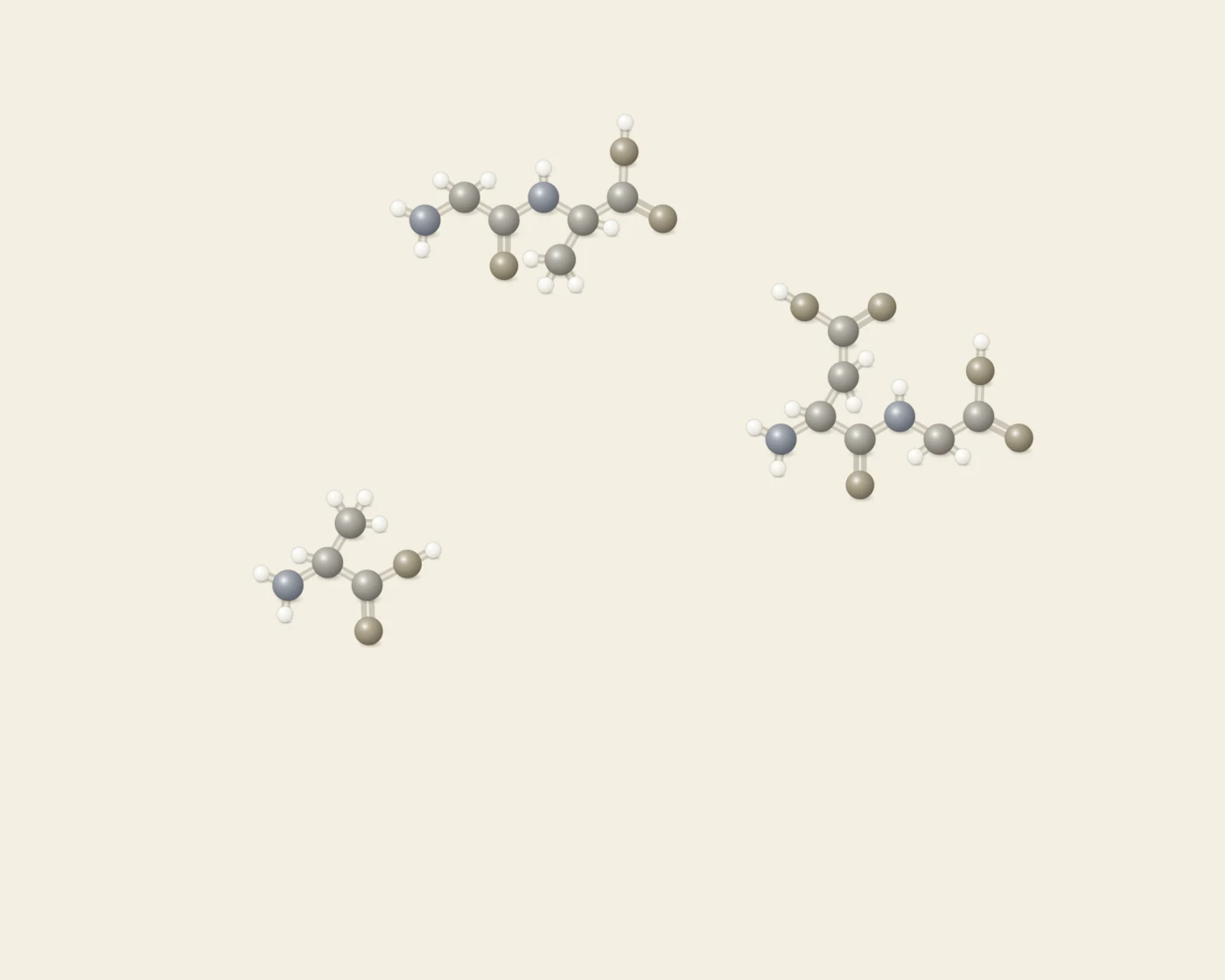
What Thymalin is
Thymalin is a water-soluble mixture of short polypeptides extracted from the thymus glands of young calves, developed in the Soviet Union in the 1970s by Vladimir Khavinson and Vyacheslav Morozov as an immune-restoring medicine. It is the thymic member of the bioregulator range, and it is a mixture rather than one peptide.
Thymalin peptide is an organ extract rather than a defined chemical, which is the opposite of Epitalon. That changes how you should read every claim, every certificate, and every price attached to it.
We rate its human file the strongest in the whole range, including a multi-year mortality study. Real clinical signal on top of an unverifiable extract is exactly where a careful buyer has to slow down.
A calf-thymus extract, not a synthetic peptide
Because Thymalin is a crude fraction rather than one sequence, no two batches are guaranteed identical, and you cannot confirm what is in the vial with a simple sequence check. Its declared active components are two dipeptides, Lys-Glu and Glu-Trp, but the preparation is more than those two.3
A lab can verify a four-amino-acid synthetic like Epitalon against its mass. An extract like Thymalin you largely have to take on the manufacturer's word, which makes the manufacturer the whole question.
Oral capsules vs injectable Thymalin
Thymalin ships as a lyophilised powder that you reconstitute and inject intramuscularly. It is not one of the oral Cytomax capsules, and it never was in the research.
So capsules labelled Thymalin are not an underdose, they are the wrong product.
02 / MechanismHow Thymalin is proposed to work
Thymalin's mechanism starts with an organ that measurably shrinks with age rather than with a longevity metaphor, which is more than most of its neighbours can offer.
Thymic involution, the problem it targets
The thymus is the small gland behind your breastbone where T-lymphocytes, the immune cells that recognise threats, finish maturing. From early adulthood it shrinks and loses function, a process called thymic involution, and your naive T-cell output falls with it.
Thymalin's premise is the core bioregulator idea in one line: peptides drawn from an organ carry signals relevant to that same organ, so thymic peptides should nudge a tired thymus back toward younger behaviour.
What Thymalin is claimed to do to T-cells
The concrete claim is that Thymalin raises the functional activity of T-lymphocytes and helps immature cells mature. In cell work, Thymalin pushed human haematopoietic stem cells toward differentiation and raised expression of CD28, a marker of mature T-cells, by nearly sevenfold.2
A named marker moving by a measured amount is the most credible thing in the mechanism story, and it happened in cultured cells rather than in anyone's immune system.
Lys-Glu, Glu-Trp and the DNA-binding idea
Work on the two active dipeptides, Lys-Glu and Glu-Trp, reports that they can dock into specific DNA sequences and shift the expression of genes tied to inflammation, behaving loosely like the bioregulator hypothesis predicts.3 Glu-Trp is also the exact sequence sold separately as Thymogen.
The mechanism is plausible and, in a dish, partly demonstrated. The leap the marketing makes is from "restores T-cell markers in cultured cells" to "rebuilds your ageing immune system and extends your life." Those are separated by several steps nobody has closed in a person.
What the evidence for Thymalin actually shows
Thymalin earns its reputation here, and gets quoted most selectively here too. Cells first, then animals, then the human work that drives the hype.
Thymalin in cell and in-vitro studies
Khavinson and colleagues reported that Thymalin drove human haematopoietic stem cells toward differentiation, cutting stem markers and raising the mature T-cell marker CD28 roughly 6.8-fold.2 A clean, specific in-vitro effect, and the mechanistic backbone of the COVID work below.
A molecular and cell study of the two active dipeptides modelled their DNA binding and tested them on inflamed human blood cells, reporting effects on cytokine-related genes.3 The human-cell part rested on blood from four donors, so read it as a mechanistic lead, not a clinical result.
The cell data give Thymalin a coherent immune-differentiation story. Whether an injection rebuilds immune function in your body over years is a separate question, and a dish cannot answer it.
Animal studies on the thymic dipeptide Lys-Glu
Anisimov and Khavinson dosed fifty female CBA mice for life with a synthetic thymic dipeptide (Lys-Glu) or a pineal peptide.6 The thymic dipeptide's benefit here was fewer spontaneous lung adenomas, while the small lifespan gain, about 5.3 percent mean survival, belonged to the pineal peptide beside it.
Marketing lends Thymalin a lifespan halo this study pins on the pineal peptide instead. We read the thymic component's animal case as an anti-tumour signal, and nothing more.
Human studies on Thymalin (read the small print)
On human data Thymalin outreaches every other bioregulator in the range. Nearly all of it comes from the originating St Petersburg group, unblinded in practice, and not independently replicated.
Khavinson and Morozov followed 266 people over 60 for six to eight years, dosing only in the first two to three.1 Mortality fell 2.0 to 2.1-fold in the Thymalin group versus control, and 4.1-fold in a subgroup given Thymalin plus pineal peptide annually. It is the source of every "extends life" headline.
Added to standard COVID-19 care, Thymalin was reported to accelerate the decline in the inflammatory markers IL-6, C-reactive protein and D-dimer, and in T-cell-system indicators, which the authors linked to reduced blood-clot risk.4 A real clinical report, but single-group, single-source, and not placebo-controlled to Western trial standards.
In severe COVID-19 patients, a Russian group reported hospital mortality of 20.6 percent with added Thymalin, against 40.9 percent on basic therapy and 28.4 percent with tocilizumab.5 A striking figure, from a non-randomised comparison in the peptide's home research network.
What remains unproven
No randomised, blinded, independently run trial shows that Thymalin extends human lifespan or durably rebuilds an ageing immune system.
The mortality and COVID results are real papers, not inventions, and they are better than anything Cortexin or Cardiogen can show. They are also single-source and unblinded, which is precisely the distance between "reported" and "proven" that the sales pages quietly cross.
04 / Benefits by evidenceThymalin benefits: the claims, and what the evidence supports
Thymalin is one of the few products on this site where the leading claim is also a defensible one. That does not make the three on the label equal, and the order below is not the order a listing puts them in.
Most plausible. It follows from the thymic mechanism, the CD28 differentiation data, and its registered Russian use as an immunomodulator. This is the claim with the tightest chain from mechanism to human report.
Reasonably supported, with the COVID-19 reports as the clearest human signal. The catch is that every one of those reports comes from the same research network, so treat the effect size as promising rather than settled.
Least earned. It rests on one unblinded cohort where the biggest number belongs to a Thymalin-plus-pineal combination, not Thymalin alone. Treat "extends lifespan" as a hypothesis carried by a single group.
The pattern repeats across this field: the quiet claim, immune support, holds up best, while the loud claim, longer life, leans on the thinnest independent footing. We would buy on the first, not the second.
05 / Dosage and protocolThymalin dosage and protocol
Nothing here is a recommendation to dose yourself. Thymalin at least has clinical protocols behind its figures, which is more than the synthetic peptides can say, and that still does not make self-injection a validated plan for you.
Doses used in the research and clinic
The registered use runs to roughly 10 mg intramuscularly, once daily, in short courses of five to ten days, sometimes repeated once or twice a year. The mortality cohort dosed only in the first two to three years of follow-up, then simply watched.1
Typical vendor dosing protocols
Sold to the longevity market, Thymalin is commonly suggested at 5 to 10 mg per day intramuscularly across a ten-day course, run a few times a year. These sit close to the clinical courses, which is unusual for this range.
Even so, if a page presents a number as "the proven anti-ageing dose," it is converting a short-course immune protocol into a lifespan claim the dosing was never tested for. That is a rounding-up you should catch.
Why there is no oral Thymalin
There is no oral Thymalin in the evidence base, and a mixture of polypeptides faces the same gut digestion problem as any peptide. If you see oral Thymalin, you are looking at a repackaging, not the studied product.
The reconstitution step is also yours to get right: a sterile powder, mixed by you, injected by you, with the sterility resting on your technique and the vial's real contents.
06 / Safety and side effectsThymalin safety and side effects
The Russian clinical literature reports Thymalin as well tolerated, with no serious adverse events flagged across decades of registered use. That is more reassuring than the record for most peptides here, and it still comes with real caveats.
Why "well tolerated" is not the whole safety story
Most of these reports were looking for benefit, not systematically hunting harm, and almost all sit inside one research tradition. A long registration history is genuine evidence of tolerability, but it is not the same as the adverse-event monitoring a Western-approved drug carries.
The bovine-thymus risks marketing skips
Thymalin is bovine tissue. That raises two honest questions a synthetic peptide avoids: batch-to-batch variability, and the theoretical immunogenicity and prion-safety concerns of animal-derived material. Pharmaceutical manufacture is built to control these, which is exactly why the manufacturer matters.
A grey-market vial of "thymus extract" with no traceable maker strips out the one safeguard that made the safety record possible in the first place.
Who should not use Thymalin
Anyone pregnant or breastfeeding, since it is untested there; anyone with an autoimmune condition, given that the whole point is immune stimulation; and anyone dosing an injectable extract without a clinician who knows their history.
Before you inject an unlicensed animal-derived peptide, put the decision to a doctor who can see your full picture. It is not a call a vendor can make for you, and not one we can make either.
07 / SourcingWhere to buy Thymalin safely in the UK
Thymalin poses a harder sourcing problem than the synthetic peptides, because an extract cannot be verified the way a defined sequence can.
Why you cannot verify Thymalin the way you verify a synthetic
With Epitalon you can demand a mass-spec result matching a known sequence. Thymalin is a mixture, so a certificate can show peptide content and sterility but cannot prove the biological activity of the specific fractions. You are trusting the process and the maker, not a single verifiable number.
What to ask a vendor before you buy
Prefer genuine pharmaceutical Thymalin from the registered manufacturer over generic "thymus peptide" vials. Ask for provenance, batch documentation, sterility and endotoxin testing, and be wary of anything that only offers a generic peptide-purity figure.
Treat a price far below the pharmaceutical product as a warning, not a bargain. What arrives cheaply is often a Cyrillic-labelled vial with no traceable maker, and no lab has checked what is inside.
08 / ComparisonThymalin vs Thymogen
Thymalin is constantly shelved next to Thymogen, and the two are related rather than rival products. Thymogen is the synthetic dipeptide Glu-Trp, one of the two active fragments identified inside Thymalin itself, isolated and made to a defined formula.3
So the trade is the familiar one. Thymalin is the messy extract with the real clinical history, including the mortality and COVID data; Thymogen is the clean, verifiable single molecule that inherits far less of that human record on its own.
We compare them in full on our Thymalin vs Thymogen guide, and you can see where Thymalin sits among the injectable and oral bioregulators on our types of bioregulator overview.
Thymalin vs thymosin alpha-1
The harder comparison is with thymosin alpha-1, because it is the one Thymalin loses. Thymosin alpha-1 is a single defined molecule, a 28-amino-acid peptide originally isolated from the thymus, and its synthetic form, thymalfasin, is registered as a medicine in more than 35 countries for hepatitis B and C and as an immune enhancer.7
That is a different class of evidence. Thymosin alpha-1 has been trialled in named conditions including hepatitis B and C, HIV, DiGeorge syndrome, melanoma and non-small cell lung cancer.7 Thymalin's record is a few unblinded studies from one Russian network, registered nowhere outside Russia and some CIS states.
Two cautions before you read that as a recommendation. Registration in 35 countries means a regulator somewhere accepted a dossier for hepatitis and immune support. It is not evidence for the anti-ageing use either peptide gets sold on, and it does not include the UK.
The two are also not rival products with a winner. Thymosin alpha-1 is the one a lab can verify, which is a fair reason to prefer it, but it inherits none of the longevity claims Thymalin is bought for, and neither has earned them.
Frequently Asked Questions
Is Thymalin the same as Thymogen?
No. Thymalin is the crude calf-thymus extract, a mixture of polypeptides. Thymogen is a synthetic single dipeptide, Glu-Trp, which is one of the active fragments found inside Thymalin. The extract holds the human clinical history; the synthetic is a defined, verifiable molecule.
Does Thymalin really extend lifespan?
One study reported lower mortality in elderly people given Thymalin over several years, which is real and better than most bioregulators can show. It is also unblinded, from the originating group, and the largest reduction belonged to a Thymalin-plus-pineal combination. Treat lifespan extension as a hypothesis, not a proven outcome.
What is the typical Thymalin dosage?
The registered clinical use is around 10 mg intramuscularly once daily in short courses of five to ten days, sometimes repeated annually. Vendors of the longevity product often suggest 5 to 10 mg per day in similar courses. These are immune-course protocols, not validated anti-ageing doses.
Is Thymalin injected or taken orally?
The research used injection only. There is no oral Thymalin in the evidence base, and a mixture of polypeptides faces gut digestion like any peptide. If you are offered oral Thymalin capsules, you are being sold a repackaging, not the studied product.
Is the COVID-19 evidence for Thymalin reliable?
Real reports exist of Thymalin added to COVID-19 care speeding the fall in inflammatory markers and lowering hospital mortality in one severe-patient comparison. Every one comes from the same Russian research network and none is a large randomised placebo-controlled trial, so read them as promising, not conclusive.
Is Thymalin safe?
Decades of registered Russian use report it as well tolerated, which is a real signal. Because it is a bovine extract, it also carries variability and theoretical immunogenicity and prion concerns that pharmaceutical manufacture controls for. A grey-market vial removes that safeguard, and autoimmune conditions are a specific reason for caution.
Is Thymalin FDA approved or legal in the UK?
Thymalin is a registered pharmaceutical in Russia and some CIS states, but it is not approved in the UK, US or EU and is not evaluated by the MHRA, FDA or EMA. Outside those registrations nobody regulates what you buy or what you do with it.
How can you tell real Thymalin from a generic thymus peptide?
Prefer the registered pharmaceutical product over generic "thymus peptide" vials, and ask for provenance, batch documentation, and sterility and endotoxin testing. Because it is an extract, no single test proves activity, so the maker's traceability is the thing you are really buying.
What is the difference between Thymalin and thymosin alpha-1?
They are different kinds of product. Thymosin alpha-1 is a defined synthetic peptide with a known sequence, so a lab can verify what is in the vial. Thymalin is an undefined calf-thymus extract, and its human record comes almost entirely from one Russian research group, unblinded.
Is Thymalin the same as thymulin?
No, and the confusion is mostly a name collision. Thymulin is a naturally occurring zinc-dependent thymic hormone your own body makes. Thymalin is a manufactured polypeptide extract of calf thymus. Note too that "thylamin" is a common misspelling of Thymalin, not a separate product.
- Khavinson VKh, Morozov VG. Peptides of pineal gland and thymus prolong human life. Neuro Endocrinol Lett. 2003;24(3–4):233–240. PMID: 14523363.
- Khavinson VK, Linkova NS, Kvetnoy IM, et al. Thymalin: activation of differentiation of human hematopoietic stem cells. Bull Exp Biol Med. 2020;170(1):118–122. PMID: 33237528.
- Linkova N, Khavinson V, Diatlova A, et al. The influence of KE and EW dipeptides in the composition of the Thymalin drug on gene expression and protein synthesis involved in the pathogenesis of COVID-19. Int J Mol Sci. 2023;24(17):13377. PMID: 37686182.
- Khavinson VK, Kuznik BI, Trofimova SV, et al. Results and prospects of using activator of hematopoietic stem cell differentiation in complex therapy for patients with COVID-19. Stem Cell Rev Rep. 2021;17(1):285–290. PMID: 33575961.
- Kuznik BI, Shapovalov KG, Smolyakov YN, et al. [Morphological compound and indicators of the blood clotting system in severe COVID-19 patients of middle aged and elderly during treatment of Tocilizumab and Thymalin]. Adv Gerontol. 2022;35(3):368–374. PMID: 36169363.
- Anisimov VN, Khavinson VK, Mikhalski AI, Yashin AI. Effect of synthetic thymic and pineal peptides on biomarkers of ageing, survival and spontaneous tumour incidence in female CBA mice. Mech Ageing Dev. 2001;122(1):41–68. PMID: 11163623.
- Dominari A, Hathaway III D, Pandav K, et al. Thymosin alpha 1: A comprehensive review of the literature. World J Virol. 2020;9(5):67–78. PMID: 33362999.