What Pinealon is: the EDR tripeptide sold for the brain
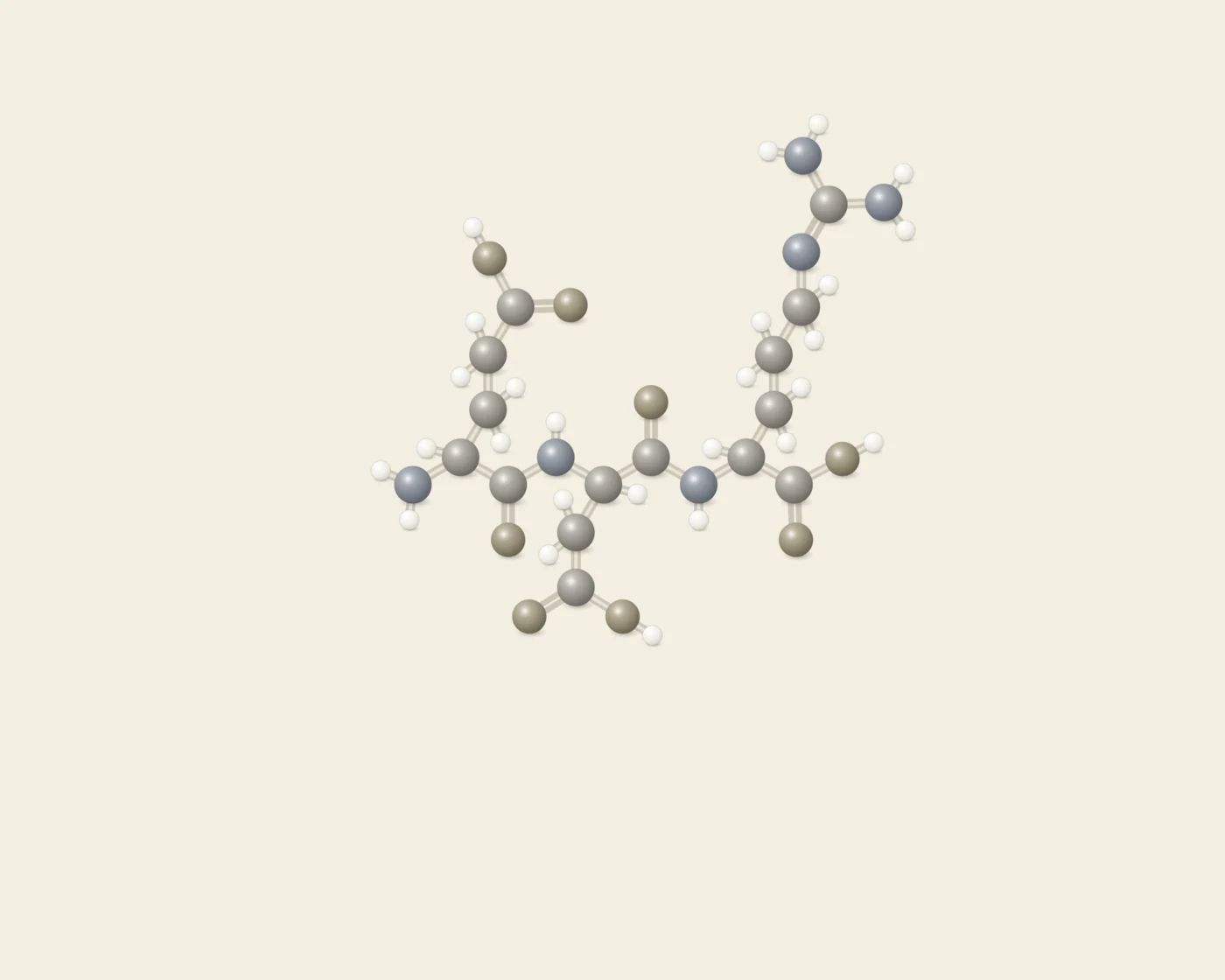
Pinealon is a synthetic tripeptide: three amino acids, glutamate-aspartate-arginine, abbreviated EDR and made to a single defined formula in a lab. It comes from the same St Petersburg bioregulator programme that produced Epitalon and Cortexin, and it is sold for the brain.
It matters to you, before any claim, that Pinealon is a defined chemical rather than an organ extract. It belongs to Khavinson's "Cytogen" class, the ultra-short synthetic peptides built as clean counterparts to the tissue-derived bioregulators.
That makes it cheap to make, consistent batch to batch, and easy to test in a dish. It also means the marketing can point to real laboratory papers, then stretch them a long way past what they measured.
Pinealon is not Cortexin, and not a tissue extract
Cortexin is a crude peptide fraction pulled from cattle brain tissue, with animal-origin and batch-variability caveats. Pinealon is a single three-amino-acid sequence, so it carries none of those.
It cuts the other way too. Cortexin, for all its weaknesses, is a registered pharmaceutical in Russia with a decades-long clinical record and at least one sizeable stroke trial. Pinealon has neither, and its evidence has never had to clear a regulatory bar anywhere.
The two formats sold: capsules and injectable powder
You will find Pinealon two ways: as small oral capsules in the retail Cytogen line, typically 500 micrograms each, and as a lyophilised powder that research-chemical vendors sell for reconstitution and injection.
What most buyers actually receive is the oral capsule. Keep that in mind throughout, because none of the underlying research was done on a human swallowing a 500-microgram capsule, and how much of a tripeptide survives your gut intact has not been answered.
02 / MechanismHow Pinealon is proposed to work
Two mechanisms are claimed for Pinealon. One is measured in cells; the other is a hypothesis about what happens inside them.
The antioxidant effect in cultured nerve cells
The best-documented effect is antioxidant. In cultured nerve-type cells, Pinealon produced a dose-dependent reduction in reactive oxygen species, the destructive molecules that build up under oxidative stress, and reduced necrotic cell death.1
The proposed route runs through antioxidant enzymes and cell-signalling. The review from Khavinson's group frames it as activation of protective enzymes such as SOD2 and GPX1, alongside changes to the MAPK/ERK pathway and to apoptosis proteins like caspase-3 and p53.3 That is a coherent cell-biology story, and it is all upstream of any human benefit.
Does the EDR peptide really bind DNA?
In a test tube, yes. In a person, nobody has shown it.
The bolder claim is that this short peptide slips into the cell and binds DNA directly, behaving a little like a transcription factor and shifting which genes are read. The original cell paper inferred genome interaction because higher doses kept modulating the cell cycle after the antioxidant effect had saturated.1
A separate biophysics study did show that EDR binds DNA in vitro, and mapped how salts change that binding.5 That is a real measurement in a test tube. It is not evidence that swallowing Pinealon reprograms genes in your brain, and you should treat any page that says so with suspicion.
In a dish, the antioxidant effect is real and repeatable. The leap the marketing makes is from "reduces free radicals in a cerebellar cell culture" to "protects your ageing brain." That is a leap across the gut, the bloodstream, the blood-brain barrier and a human trial, none of which has been shown for Pinealon.
What the Pinealon evidence actually shows
Pinealon's evidence runs cell cultures, one rat study, and then nothing. Sales pages flatten that hierarchy into a single word, research.
Almost every study below comes from Khavinson's institute or its close collaborators in St Petersburg, and none has been independently replicated by an unconnected group. That single-institute origin counts for more than any individual result in the file.
The EDR tripeptide in cell and in-vitro studies
The foundational paper. Pinealon gave a dose-dependent restriction of reactive oxygen species in cerebellar granule cells, neutrophils and PC12 cells, and cut necrotic death, with a delayed ERK 1/2 time course.1 This is the study the whole neuroprotection pitch rests on, and it is cell culture.
In organotypic pineal cell cultures, short peptides including EDR altered expression of signalling molecules.6 A mechanistic dish result, useful for the hypothesis, silent on whether any of it happens in a person.
Bioregulatory tripeptides affected cultured skin cells from young and old rats.7 Skin, not brain, though it sits in the same body of work and gets counted towards it.
The most recent and most interesting. In neurons made from the skin cells of elderly donors, EDR promoted dendrite growth and reduced oxidative DNA damage, but had no effect on mitochondria, lysosomes or the ageing marker p16.4 A partial protection, honestly reported, still in a dish.
At face value the cell data tells a consistent antioxidant-and-dendrite story. None of it reaches past the culture dish to a person who has swallowed a capsule.
The one animal study on Pinealon
The one animal study worth its space. When pregnant rats were loaded with methionine to induce hyperhomocysteinemia, giving Pinealon improved their offspring's spatial learning and made cerebellar neurons more resistant to oxidative stress.2 A real in-vivo signal, in a specific stress model, from the originating group.
We rate that the strongest result Pinealon has, and it stays one rodent study in an artificial prenatal-stress model, measuring learning and cell resilience rather than lifespan, unreplicated outside its home institute.
Human studies on Pinealon: read the small print
No completed, controlled human efficacy trial of Pinealon exists. When a sales page says "improves memory," the claim leads back to a dish, a rat, or a review asserting a benefit with no trial to cite.
Khavinson's own review states that EDR "improves memory issues in elderly patients."3 That sentence is doing a lot of work on vendor pages. It is a claim inside a review, not a reference to a randomised, blinded, published efficacy trial you can read and check.
A Russian-language review discussed neuroprotective effects of peptide bioregulators across ages.8 A summary of the group's own work, not new controlled data, and not specific efficacy evidence for Pinealon in humans.
What remains unproven
No randomised, blinded, independently run human trial shows that Pinealon improves memory, protects the ageing brain, or slows cognitive decline in you.
Nothing shows that the oral 500-microgram capsule, the format you are most likely to buy, delivers an active dose to the brain at all.
We would not call Pinealon a scam. It has a real antioxidant mechanism in cells, one supportive rodent study, and a plausible neuroprotection hypothesis. It also has a human evidence file that is, as of this review, empty.
04 / Benefits by evidencePinealon benefits: the claims, and what the evidence supports
Pinealon is sold as a set of benefits that stand or fall together. They do not. Each sits on a different quality of evidence, and the distance between the best-supported and the boldest is the whole decision.
Most plausible. It follows directly from the 2011 and 2024 cell work and the rat-offspring study. But "plausible in cells and one rodent model" is the ceiling of the claim, not a demonstrated effect in your brain.
Unproven in humans. The mechanism is suggestive and the animal learning result is real, but no human trial supports a cognitive benefit. Buying Pinealon "for memory" is buying a hypothesis.
Least supported. It rests entirely on cell and animal work from one group, plus a review sentence. Treat "reverses central nervous system ageing" as marketing, not a finding.
A younger brain is the promise on the front of the box and the one with nothing behind it. The antioxidant effect in cultured cells barely gets a mention, and it is the only claim carrying data.
05 / Dosage and protocolPinealon dosage and protocol
No dose-finding trial for Pinealon exists in humans. Every figure below comes off a vendor label or out of forum habit, and none of it is a recommendation to dose yourself.
Doses used in the research
The cell and animal studies used concentrations in a dish or injected doses in rats, on schedules the researchers chose. None of that converts into a number of capsules, and no study set out to establish a human dose.
Typical vendor dose and cycle length
Sold as the oral Cytogen capsule, Pinealon is commonly taken at 1 to 2 capsules a day, roughly 500 micrograms to 1 milligram, for a 10 to 30 day course, repeated a few times a year.
These numbers come from vendor labels and community tradition, not from a trial. Treat any page that presents them as "the clinically established dose" as converting a convention into a claim it has not earned.
Oral Pinealon capsules versus injections: what survives the gut
The oral capsule is marketed hardest because it is the easiest thing to sell, but a three-amino-acid peptide faces digestion in the gut, and then the blood-brain barrier before it could act on neurons.
How much survives both is unestablished. If a route matters to you, know that neither the oral capsule nor the injectable has a human efficacy trial behind it, so you are choosing between two unvalidated formats, not a proven one and a convenient one.
06 / Safety and side effectsPinealon safety and side effects
The small studies that exist did not report serious adverse effects, and the Cytogen capsules are sold as well tolerated. Neither statement comes from anyone who was looking for harm.
Why "well tolerated" is not the same as no side effects
None of these were safety trials. They were small cell and animal studies looking for benefit, not harm, with no human safety cohort at all. For a compound that has essentially never been studied for harm in people, absence of reported side effects mostly tells you that nobody has looked.
The risks that are actually likely with an unregulated capsule
The tripeptide is not the part likely to hurt you. An unregulated capsule or vial carries mislabelling, underdosing and contamination risks, and reconstituting an injectable powder on your own worktop adds a sterility problem you create yourself. Nothing guarantees the contents match the label.
Because Pinealon is sold on a brain claim, the group most drawn to it includes people worried about cognition or ageing, and that is exactly the group that should not self-treat a real concern with an unproven capsule. Do not let a supplement stand in for a proper neurological assessment.
Who should not use Pinealon
Anyone pregnant or breastfeeding, since it is untested there and the one animal study deliberately used a pregnancy stress model rather than proving safety; anyone with a neurological condition that deserves a real diagnosis; and anyone dosing without a clinician who knows their history.
Cell studies are not grounds for putting an unlicensed peptide into your body. Take the question to a doctor who knows your history and can order the tests a capsule cannot.
07 / SourcingWhere to buy Pinealon safely in the UK
Pinealon trades heavily on the Khavinson name. Because it is a single defined sequence, a lab can confirm that what arrived is Glu-Asp-Arg, which is more than the crude extracts elsewhere in the range will ever allow.
How to verify Pinealon purity
Insist on a certificate of analysis showing identity and purity by HPLC and mass spectrometry, with the sequence and mass matching Glu-Asp-Arg. Prefer suppliers who publish third-party testing, and for any injectable powder ask about sterility and endotoxin testing. A price far below the market is a warning to you, not a bargain.
What actually arrives: capsules, Cyrillic labels, no COA
A typical order arrives as a blister of small capsules or a vial with a Cyrillic label, no certificate of analysis, and a name borrowing the credibility of published research the product itself was never tested against.
You have no independent way to know what is in it, and no lab has checked. Buying the oral capsule, understand that you are paying for a 500-microgram dose whose absorption into your brain has never been demonstrated.
08 / ComparisonPinealon versus Epitalon and Cortexin
Pinealon is usually shelved next to Epitalon, the other short synthetic peptide from the same programme. Epitalon has the far richer evidence base of the two, including replicated telomerase work in cells and human melatonin data, while Pinealon rests on thinner cell and animal studies with no human trial at all.
Against Cortexin the difference is pedigree, not format. Cortexin is a messy tissue extract and a registered drug with a real clinical record; Pinealon is a clean molecule with almost no human evidence. Given the choice we would take the messy pedigree, because only one of the two has been given to patients.
We compare the two synthetic peptides in depth on our Epitalon vs Pinealon guide, and you can see where every bioregulator sits on our types of bioregulator peptides overview.
Frequently Asked Questions
Is there any human research evidence that Pinealon works?
No completed, controlled human efficacy trial of Pinealon exists. The "improves memory in elderly patients" line traces to a review sentence, not to a randomised, blinded, published trial. All the direct evidence is in cells and one rat study.
What is Pinealon peptide, and what does EDR stand for?
Pinealon is a synthetic tripeptide, the sequence glutamate-aspartate-arginine, abbreviated EDR. It belongs to Khavinson's Cytogen class of ultra-short peptides and is marketed for the brain and central nervous system.
Is Pinealon the same as Cortexin?
No. Cortexin is a crude peptide extract from cattle brain and a registered drug in Russia with a clinical record. Pinealon is a single synthetic sequence with no registered-drug history and no human efficacy trial. They are different products with very different evidence.
What is the correct Pinealon dosage and cycle length?
There is no validated human dose. Vendors of the oral Cytogen capsule commonly suggest 1 to 2 capsules a day, about 500 micrograms to 1 milligram, in 10 to 30 day courses a few times a year. These are conventions, not clinically established doses.
Is Pinealon better as capsules or as an injection?
Neither, on the evidence: no human efficacy trial exists for either route. Most buyers get the oral capsule, and how much of a three-amino-acid peptide survives digestion and reaches the brain is unestablished. You are choosing between two unvalidated formats.
Does Pinealon actually work for memory?
Not on any human evidence. The antioxidant mechanism is real in cell culture and one rat study showed improved learning in a stress model, but no trial has shown a cognitive or neuroprotective benefit in people. Treat memory claims as a hypothesis.
Does Pinealon help with sleep?
No. Nothing in the Pinealon literature measures sleep or circadian outcomes at all. The sleep and melatonin story belongs to Epitalon and the pineal gland, and Pinealon inherits it by name alone: see our Epitalon vs Pinealon guide.
Is Pinealon legal and approved?
Pinealon is not an approved medicine in the UK, US or EU, and is not evaluated by the MHRA, FDA or EMA. It is sold as a supplement or research chemical, so no regulator has checked either the claims on the box or what is inside it before it reaches you.
How do I spot fake Pinealon?
Ask for a certificate of analysis with HPLC and mass-spec identity matching Glu-Asp-Arg, prefer third-party-tested suppliers, and be suspicious of prices far below the market. For injectable powder, ask about sterility and endotoxin testing.
Is Pinealon 20mg the same as the 500 microgram capsules?
Treat them as different products rather than two strengths of one. The retail Cytogen capsule is around 500 micrograms, and we cannot verify what any given milligram listing contains. No human dose-finding trial stands behind either figure, so ask for a certificate of analysis before you believe a label.
- Khavinson V, Ribakova Y, Kulebiakin K, Vladychenskaya E, Kozina L, Arutjunyan A, Boldyrev A. Pinealon increases cell viability by suppression of free radical levels and activating proliferative processes. Rejuvenation Res. 2011;14(5):535–541. PMID: 21978084.
- Arutjunyan A, Kozina L, Stvolinskiy S, Bulygina Y, Mashkina A, Khavinson V. Pinealon protects the rat offspring from prenatal hyperhomocysteinemia. Int J Clin Exp Med. 2012;5(2):179–185. PMID: 22567179.
- Khavinson V, Linkova N, Kozhevnikova E, Trofimova S. EDR peptide: possible mechanism of gene expression and protein synthesis regulation involved in the pathogenesis of Alzheimer's disease. Molecules. 2020;26(1):159. PMID: 33396470.
- Kraskovskaya N, Linkova N, Sakhenberg E, et al. Short peptides protect fibroblast-derived induced neurons from age-related changes. Int J Mol Sci. 2024;25(21):11363. PMID: 39518916.
- Silanteva IA, Komolkin AV, Morozova EA, Vorontsov-Velyaminov PN, Kasyanenko NA. Role of mono- and divalent ions in peptide Glu-Asp-Arg-DNA interaction. J Phys Chem B. 2019;123(9):1896–1902. PMID: 30762356.
- Khavinson VKh, Linkova NS, Chalisova NI, Dudkov AV, Koncevaya EA. Effect of short peptides on expression of signaling molecules in organotypic pineal cell culture. Bull Exp Biol Med. 2011;152(1):138–141. PMID: 22803060.
- Voicekhovskaya MA, Chalisova NI, Kontsevaya EA, Ryzhak GA. Effect of bioregulatory tripeptides on the culture of skin cells from young and old rats. Bull Exp Biol Med. 2012;152(3):357–359. PMID: 22803085.
- Umnov RS, Lin'kova NS, Khavinson VKh. [Neuroprotective effects of peptides bioregulators in people of various age]. Adv Gerontol. 2013;26(4):671–678. PMID: 24738258.