What Cortexin is
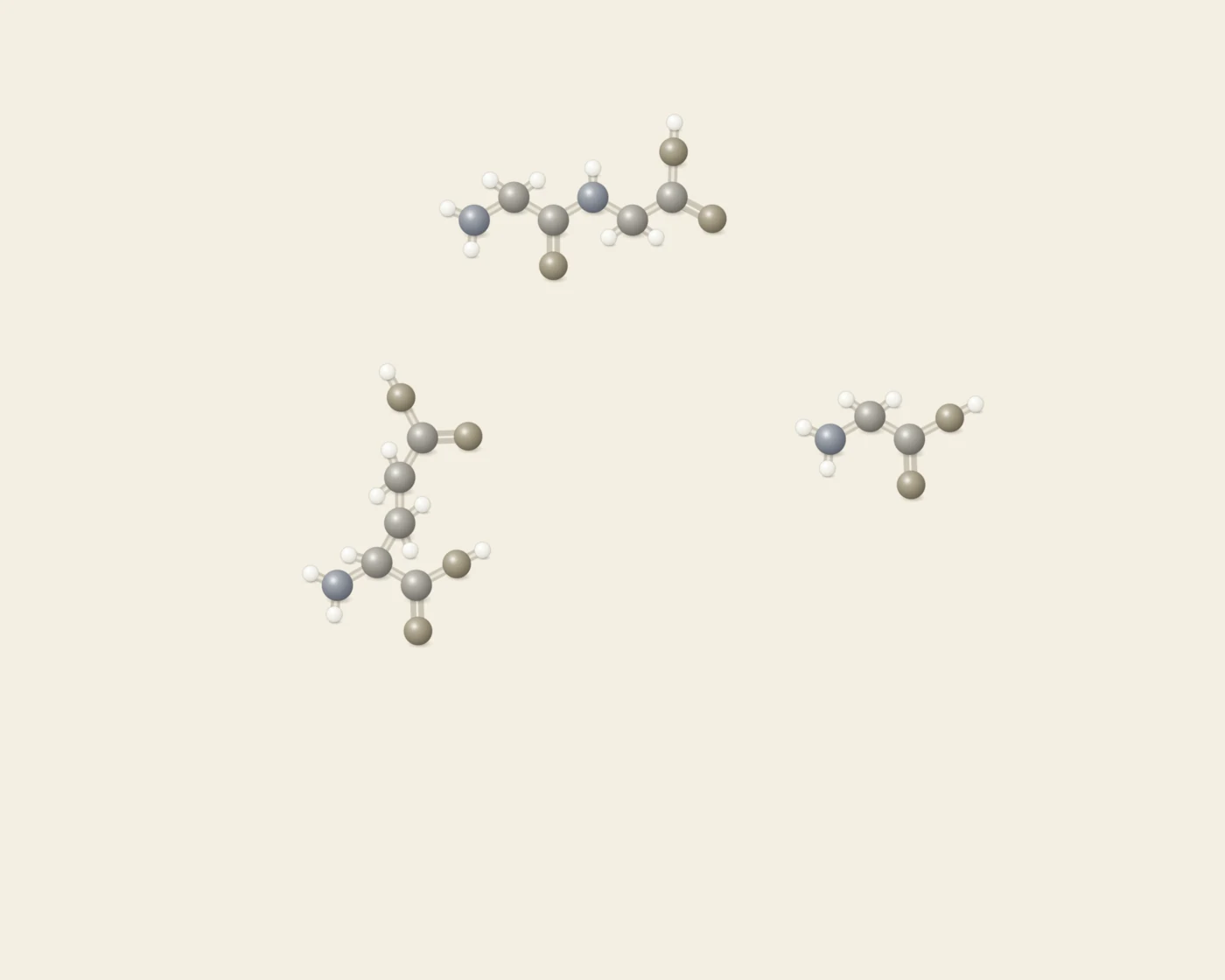
Cortexin is not a single peptide. It is a mixture of low-molecular-weight polypeptides (broadly under 10 kDa) and amino acids, extracted from the cerebral cortex of cattle and pigs. Among the bioregulators, it is the one that became a registered drug.
That registration should shape how you read everything else here. In Russia and several CIS states, Cortexin is a prescription medicine made by Geropharm, indicated for ischaemic stroke, traumatic brain injury, encephalopathy and developmental disorders in children.
None of that means it is approved where you live. The FDA, EMA and MHRA have never evaluated it. So a UK or US buyer is purchasing an unlicensed foreign drug, whatever the box says.
Cortexin is injectable, and that is the trap
The Cortexin that went through Russian trials is a lyophilised powder, reconstituted and given by intramuscular injection. It is not an oral capsule.
If a vendor ships you capsules labelled "Cortexin", you are not looking at an underdose of the studied drug. You are looking at a different product wearing its name, with none of its evidence attached to it.
Where it sits among the Khavinson bioregulators
Cortexin belongs to the same Khavinson bioregulator family as Cerluten, Pinealon and the oral Cytomax capsules. The premise is that peptides drawn from an organ carry signals for that same organ, and here the target tissue is your brain.
Almost every sales page runs the studied injectable and the grey-market capsule together as one product. We treat them as two, because that blur is where your money goes wrong.
02 / MechanismHow Cortexin is proposed to work
Because Cortexin is an extract rather than a defined molecule, its mechanism is harder to pin down than a single peptide's. The most useful data comes from one 2021 rat study that actually looked at what it binds.
Glutamate receptor binding: the concrete mechanism
In that study, Cortexin bound a panel of neuronal receptors in vitro: strongly to AMPA (80%) and kainate (74%) glutamate receptors, and moderately to mGluR1, GABA-A and mGluR5.2
That points to a glutamatergic and GABAergic action, the same signalling systems that go haywire in the minutes after a stroke. It is a specific, plausible mechanism for an anti-ischaemic effect, and, unusually for this field, it is checkable.
Cortexin and the blood-brain barrier
The same team reported that radiolabelled Cortexin crossed the blood-brain barrier in mice, reaching 6–8% of blood concentration, and improved antioxidant enzyme activity in brain tissue.2
So Cortexin can reach the brain and touch the receptors that matter after a stroke. Whether it reaches far enough to give you an effect you would notice is the separate question the human data has to answer.
The Khavinson gene-signalling claim, and its limit
The marketing borrows the Khavinson "peptides talk to your genes" story wholesale. For a defined peptide like Epitalon, that hypothesis at least has cell-culture support. For an undefined cortical extract you cannot even say which molecule is doing what, so treat the gene-signalling pitch as decoration on a real, receptor-level mechanism.
What the Cortexin evidence actually shows
Cortexin has more human data than any other bioregulator, and that volume is exactly what misleads people. We rate one trial in the file as properly designed, and the rest as small, open-label and single-source.
The headline human trial in ischaemic stroke
A multicentre, prospective, double-blind, placebo-controlled trial enrolled 272 patients with acute ischaemic stroke. Cortexin, given intramuscularly in 10-day courses, was compared against placebo, and the two-course arm was reported as most effective.1 This is a properly designed trial, and it is the strongest card Cortexin holds.
It was published in a Russian neurology journal, in Russian, from the drug's home research community, and the abstract reports "high efficacy" without the endpoint effect sizes a sceptic needs to weigh it. No Western group has replicated it.
The independent Cortexin test nobody quotes
A group at Henry Ford Hospital in Detroit ran a prospective, randomised, blinded, placebo-controlled comparison of neuropeptide preparations in a rat embolic-stroke model. Cortexin at 1.7 mg/kg gave functional outcomes no different from saline; only Cerebrolysin improved neurological outcome.3
When an independent Western lab tested Cortexin head-to-head against a placebo, it did not beat the placebo. The positive record is almost entirely in-house, and the one outside test was negative.
Rat stroke studies, from the makers' side
In acute and chronic rat brain-ischaemia models, Cortexin at 1–3 mg/kg for 10 days reduced tissue necrosis and improved recovery of neurological function.2 Encouraging, but two authors were employed by a firm tied to the manufacturer, and it remains animal work.
A rat haemorrhagic-stroke study reported effects of Cortexin on blood paramagnetic markers of oxidative stress.6 A mechanistic animal result, single-source, not an outcome you can carry to a person.
Cortexin vs Cerebrolysin: the class-level warning
Cortexin shares a drug class with Cerebrolysin: a low-molecular-weight peptide mixture from mammalian brain, used for stroke across the post-Soviet world. Cerebrolysin has been through a proper Cochrane review, and Cortexin has not.
The Cochrane review of Cerebrolysin for acute ischaemic stroke found, at moderate certainty, probably no benefit on death, and a possible increase in non-fatal serious adverse events.5 Cortexin is not Cerebrolysin, but it is the nearest well-audited relative, and that audit is not reassuring.
A 40-patient randomised comparison in early stroke recovery found Cellex outperformed Cortexin on the stroke scale (NIHSS) and cognition (MMSE).4 Small, but a rare head-to-head, and Cortexin was the weaker arm.
Beyond stroke, Cortexin appears in Russian studies of post-stroke epilepsy7 and quality of life during rehabilitation.8 These widen the indication list without deepening the evidence: small, open-label, single-source.
04 / Benefits by evidenceCortexin benefits: the claims, and what the evidence supports
The Russian indication list is long, and its entries do not carry equal weight. Taken separately they fall into three tiers, and only the first has a trial under it.
Best supported, and still shaky. One decent 272-patient trial backs it, one independent animal test contradicts it, and the whole positive signal is single-country. This is a supervised hospital use, not a home protocol.
Widely prescribed in Russia, thinly evidenced elsewhere. The supporting trials are mostly small, open-label and Russian-language. Plausible in principle, unproven to a Western standard, and not something you should self-direct.
Least supported. No trial tested Cortexin as a cognitive enhancer in healthy people. Buying it to sharpen a working brain is buying an indication that was never studied.
The use with real trial support is the medical one: stroke, given in hospital, by injection, under supervision. The use being sold to you, a capsule for a healthy brain, has no trial behind it at all, and we would not spend money on it.
05 / Dosage and protocolCortexin dosage and protocol
Cortexin is a prescription injectable in the countries that licence it, so the numbers below come from a drug label and from trial protocols. They describe what clinicians have given under supervision, not a schedule for you to run.
The registered 10 mg injection protocol
The standard adult dose in the Russian authorisation is 10 mg, reconstituted and given by intramuscular injection once daily for 10 days, with courses sometimes repeated after a few months.
Children's dosing is weight-based, around 0.5 mg/kg, which tells you plainly that this is handled as a supervised medicine, not a supplement you titrate at home.
What the stroke trials actually dosed
The 272-patient stroke trial used a heavier schedule: 10 mg three times daily, in two 10-day courses.1 The Cellex comparison used 10 mg once daily for 10 days.4
So even the studied dose is not one number. If a vendor quotes you "the clinical dose" as a single figure, they are tidying a messier reality into a claim.
Oral Cortexin: tablets and capsules
Oral "Cortexin", sold as tablets or capsules, is easy to ship, but no trial used the oral route. A polypeptide mixture faces digestion in the gut, and how much survives to reach your brain is unestablished.
The route the evidence used is injection under medical supervision. That is not a route you should improvise for yourself at a kitchen table.
06 / Safety and side effectsCortexin safety and side effects
The Russian trials describe Cortexin as well tolerated, with few adverse events noted. That reassurance is thinner than it first sounds.
What "well tolerated" leaves out about the injection
Those were efficacy trials: short, small, and looking for benefit rather than harm. Hypersensitivity reactions to the injection are the main documented risk, which matters because what you are injecting is an animal-derived protein.
Bovine and porcine cortex: the animal-origin questions
Cortexin is extracted from cattle and pig brain. That raises real, if controllable, issues: batch-to-batch variability in an extracted product, immunogenicity from foreign protein, and the theoretical prion concern that always attaches to bovine neural tissue.
Pharmaceutical manufacture is built to control these. An unlabelled vial from a grey-market reseller gives you no such guarantee, and no way for you to check.
The Cerebrolysin safety signal worth weighing
Set the in-house "well tolerated" verdict beside the Cochrane finding quoted earlier on Cerebrolysin, the nearest well-audited relative: a possible rise in non-fatal serious adverse events.5 Unblinded trials that were not designed to find harm are the weakest place to look for it.
Who should not use Cortexin
Anyone pregnant or breastfeeding, since it is untested there; anyone with a known peptide or protein hypersensitivity; and anyone weighing it for a serious neurological condition without a clinician running the case.
Everywhere Cortexin is licensed, it is licensed as a prescription drug, which means a prescriber decides. If you are weighing it anyway, have that conversation with a doctor who knows your history before the vial arrives.
07 / SourcingWhere to buy Cortexin safely in the UK
Because Cortexin is a registered pharmaceutical rather than a research chemical, the counterfeit problem here has a particular shape, and one check disarms most of it.
Cortexin injection or tablet: check the format first
Before purity, check format. Genuine Cortexin is a vial of powder for injection, boxed by Geropharm, labelled 10 mg or 5 mg. A blister of tablets or capsules is not the studied drug, whatever the listing calls it.
Nothing else on the listing counts until that question answers correctly. Purity and provenance checks on a capsule are checks on the wrong object.
What a legitimate Geropharm vial looks like
Real product carries Geropharm branding, a batch number, and Russian regulatory markings. Because Cortexin is an extract, not a defined sequence, you cannot verify it by mass spectrometry the way you can verify Epitalon, so provenance matters more, not less.
A price far below the pharmacy norm is information about the vial, not a discount. So is a seller who cannot produce the original Geropharm packaging.
Cortexin in the UK: the unlicensed reality
There is no licensed UK route to Cortexin, so what often arrives from a reseller is a Cyrillic-labelled vial with no certificate, no cold-chain guarantee, and no way to confirm it holds what the box claims. You are trusting a supply chain the MHRA has never inspected.
08 / ComparisonHow Cortexin compares with Cerluten and the oral bioregulators
Cortexin is often shelved beside Cerluten, the oral cerebral-cortex bioregulator from the Cytomax line. They are not equivalents. Cortexin is an injectable pharmaceutical with real clinical trials, flawed as they are; Cerluten is an oral capsule with essentially no human efficacy data.
We compare them in full on our Cortexin vs Cerluten guide, and map where each compound sits across the range on our bioregulator types overview.
If your instinct was that the injectable and the capsule are two doses of one thing, that is the exact confusion the market leans on. They share a target organ and almost nothing else that should matter to your decision.
Frequently Asked Questions
What is Cortexin made from?
It is a fraction of low-molecular-weight polypeptides and amino acids extracted from the cerebral cortex of cattle and pigs. That animal origin is why hypersensitivity is the main documented risk, and why batch-to-batch variability is a fair question to ask of any vial.
Are Cortexin tablets the same as the injection?
No. Cortexin is an injectable pharmaceutical extracted from cattle and pig cortex. Tablets and capsules sold under similar branding are a different product carrying none of Cortexin's trial evidence. Look for a powder-for-injection vial, not a blister of capsules.
Does Cortexin actually work for stroke?
The best evidence is one 272-patient Russian double-blind trial reporting benefit. Against it sits an independent Detroit rodent study where Cortexin was no better than saline, and a Cochrane review of its nearest relative finding no mortality benefit. It is used in Russian hospitals; it is not proven to a Western standard.
Is Cortexin approved by the MHRA or FDA?
No. It is a registered medicine in Russia and several CIS countries, but the MHRA, FDA and EMA have not evaluated it. Buying it in the UK or US means buying an unlicensed foreign drug at your own risk.
What is the standard Cortexin dosage?
The registered adult protocol is 10 mg by intramuscular injection once daily for 10 days. The large stroke trial used 10 mg three times daily in two courses. These are supervised medical protocols, not self-dosing guidance for you to copy.
How long is a course of Cortexin treatment?
The registered course is one 10 mg intramuscular injection daily for 10 days, with courses sometimes repeated after a few months. The 272-patient stroke trial ran two 10-day courses on a heavier schedule. Both describe what has been given under medical supervision, not a cycle for you to plan yourself.
Is Cortexin a nootropic?
No trial has tested Cortexin as a cognitive enhancer in healthy people. Every human study is in patients with stroke or neurological disease, so using it to boost a healthy brain is an off-label guess, not an evidenced use.
What are the side effects of Cortexin?
Hypersensitivity to the injected animal-derived protein is the main documented risk. Trials describe it as well tolerated, but they were short and not designed to find harm, so long-term human safety is simply not established.
Is Cortexin safe for children?
It is prescribed to children in Russia for developmental disorders, dosed by weight at around 0.5 mg/kg. That is a supervised prescription use with a clinician running the case, not something a parent should arrange privately. The supporting trials are small, open-label and single-country, so read Russian practice as practice, not proof.
Why are Cortexin capsules cheaper than the injection?
Because the capsules are not the studied drug. Oral "Cortexin" is easy to make and ship, but no trial used the oral route, and a peptide mixture faces digestion before it can act. The low price reflects a different, unevidenced product.
- Aliferova VM, Dadasheva MN, Doronin BM, et al. [Clinical efficacy and pharmacoeconomic characteristics of the neuroprotection with low doses of cortexin in the treatment of acute ischemic stroke]. Zh Nevrol Psikhiatr Im S S Korsakova. 2014;114(4):41–46. PMID: 24874316.
- Kurkin DV, Bakulin DA, Morkovin EI, et al. Neuroprotective action of Cortexin, Cerebrolysin and Actovegin in acute or chronic brain ischemia in rats. PLoS One. 2021;16(7):e0254493. PMID: 34260655.
- Zhang L, Chopp M, Wang C, et al. Prospective, double blinded, comparative assessment of the pharmacological activity of Cerebrolysin and distinct peptide preparations for the treatment of embolic stroke. J Neurol Sci. 2019;398:22–26. PMID: 30665068.
- Khabirov FA, Khaibullin TI, Granatov EV, et al. [Comparison of the efficacy of Cellex and Cortexin in patients in the early recovery period of ischemic stroke]. Zh Nevrol Psikhiatr Im S S Korsakova. 2020;120(12 Pt 2):11–15. PMID: 33449527.
- Ziganshina LE, Abakumova T, Nurkhametova D, Ivanchenko K. Cerebrolysin for acute ischaemic stroke. Cochrane Database Syst Rev. 2023;10:CD007026. PMID: 37818733.
- [Experimental hemorrhagic stroke: the effect of the peptide preparation cortexin in the formation of Hb-NO-complexes and other blood paramagnetic centers]. Zh Nevrol Psikhiatr Im S S Korsakova. 2011. PMID: 22224248.
- [Cortexin in the complex treatment of post stroke epilepsy]. Zh Nevrol Psikhiatr Im S S Korsakova. 2010. PMID: 20873481.
- [Effect of cortexin on the quality of life in the early rehabilitative period after hemispheric ischemic stroke]. Zh Nevrol Psikhiatr Im S S Korsakova. 2016. PMID: 27459764.